Skip to Content
Merck
CN

441090

2,2′-Azobis(2-methylpropionitrile)

98%

Synonym(s):

α,α′-Azoisobutyronitrile, AIBN, Azobisisobutyronitrile, Free radical initiator

Sign In to View Organizational & Contract Pricing.

Select a Size

Change View

About This Item

Linear Formula:
(CH3)2C(CN)N=NC(CH3)2CN
CAS Number:
Molecular Weight:
164.21
UNSPSC Code:
12162002
NACRES:
NA.23
PubChem Substance ID:
EC Number:
201-132-3
Beilstein/REAXYS Number:
1708400
MDL number:
Technical Service
Need help? Our team of experienced scientists is here for you.
Let Us Assist


Quality Level

assay

98%

form

powder

mp

102-104 °C (dec.) (lit.)

storage temp.

2-8°C

SMILES string

CC(C)(\N=N\C(C)(C)C#N)C#N

InChI

1S/C8H12N4/c1-7(2,5-9)11-12-8(3,4)6-10/h1-4H3/b12-11+

InChI key

OZAIFHULBGXAKX-VAWYXSNFSA-N

Application

2,2′-Azobis(2-methylpropionitrile) can be used as an initiator in the preparation of:
  • Polystyrene by soap-free emulsion polymerization.
  • Molecularly imprinted polymer(MIP) using 1-vinyl imidazole. MIP can be used to quantify acid violet 19 dye in river water samples.

Preparation Note

Warning: these products are subject to the Explosives Act and must be transported refrigerated - additional costs for transport will apply.


Still not finding the right product?


pictograms

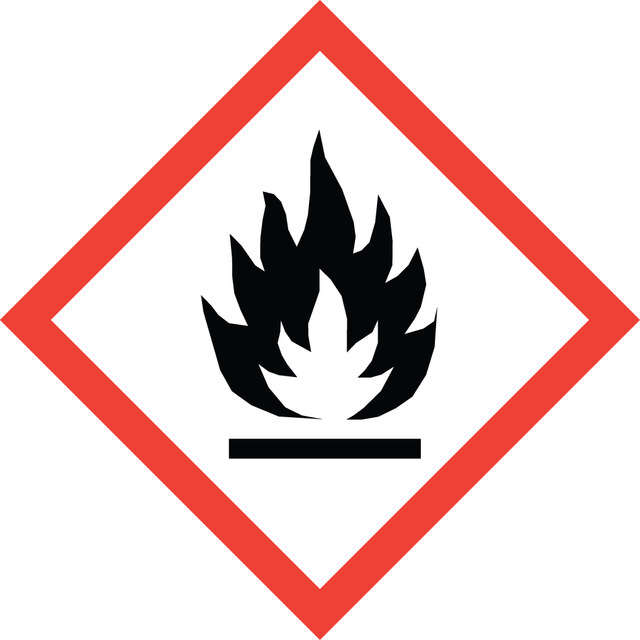
FlameExclamation mark

signalword

Danger

Hazard Classifications

Acute Tox. 4 Inhalation - Acute Tox. 4 Oral - Aquatic Chronic 3 - Self-react. C

supp_hazards

Storage Class

4.1A - Other explosive hazardous materials

wgk

WGK 2

flash_point_f

122.0 °F

flash_point_c

50 °C

ppe

dust mask type N95 (US), Eyeshields, Faceshields, Gloves, type P3 (EN 143) respirator cartridges

Regulatory Information

监管及禁止进口产品

This item has


Choose from one of the most recent versions:

Certificates of Analysis (COA)

Lot/Batch Number

Don't see the Right Version?

If you require a particular version, you can look up a specific certificate by the Lot or Batch number.

Already Own This Product?

Find documentation for the products that you have recently purchased in the Document Library.

Visit the Document Library


Protocols

RAFT(可逆加成-断裂链转移)是一种活性自由基聚合反应,在有适合的连转移(RAFT)试剂存在下发生的非传统的取代单体自由基聚合反应。

We present an article about RAFT, or Reversible Addition/Fragmentation Chain Transfer, which is a form of living radical polymerization.

Polymerization via ATRP procedures demonstrated by Prof. Dave Haddleton's research group at the University of Warwick.

View All Protocols

Articles

RAFT(可逆加成断裂链转移)聚合是一种可逆的去活化自由基聚合(RDRP),是给自由基聚合赋予活性的通用方法之一。

Monomers for ophthalmic use aim for purity, reliability, and comfort, driving innovation for affordable contact lenses.

RAFT polymerization offers living characteristics to radical polymerization, contributing versatility to reversible deactivation radical polymerization methods.

View All Articles

Tetrahedron Letters, 48, 5585-5585 (2007)
Lianghui Liu et al.
Organic letters, 14(22), 5692-5695 (2012-10-31)
In the presence of a catalytic amount of radical initiator AIBN, primary amines are oxidatively coupled to imines and tertiary amines are cyanated to α-aminonitriles. These "metal-free" aerobic oxidative coupling reactions may find applications in a wide range of "green"
Bor-Shiunn Lee et al.
Journal of endodontics, 37(2), 246-249 (2011-01-18)
We have developed new urethane acrylate-based root canal sealers using polycarbonate (PC) as polyol and 2,2-azobis(2-methyl)butyronitrile (AMBN) as a thermal initiator. The purpose of this study was to compare the properties among a group of seven sealers: (1) polybutyleneadipate (PBA)


Global Trade Item Number

SKUGTIN
441090-100G04061835571598
441090-1KG04065274119229
441090-25G04061835563104