Skip to Content
Merck
CN

V3409

1-Vinyl-2-pyrrolidinone

contains sodium hydroxide as inhibitor, ≥99%

Synonym(s):

1-Vinyl-2-pyrrolidone

Sign In to View Organizational & Contract Pricing.

Select a Size

Change View

About This Item

Empirical Formula (Hill Notation):
C6H9NO
CAS Number:
Molecular Weight:
111.14
UNSPSC Code:
12162002
NACRES:
NA.23
PubChem Substance ID:
EC Number:
201-800-4
Beilstein/REAXYS Number:
110513
MDL number:
Technical Service
Need help? Our team of experienced scientists is here for you.
Let Us Assist


vapor density

3.8 (vs air)

Quality Level

vapor pressure

0.1 mmHg ( 24 °C)

assay

≥99%

autoignition temp.

685 °F

contains

sodium hydroxide as inhibitor, 100 ppm sodium hydroxide as inhibitor (added to bulk material)

expl. lim.

10 %

refractive index

n20/D 1.512 (lit.)

bp

92-95 °C/11 mmHg (lit.)

density

1.04 g/mL at 25 °C (lit.)

storage temp.

2-8°C

SMILES string

C=CN1CCCC1=O

InChI

1S/C6H9NO/c1-2-7-5-3-4-6(7)8/h2H,1,3-5H2

InChI key

WHNWPMSKXPGLAX-UHFFFAOYSA-N

General description

1-Vinyl-2-pyrrolidinone is a colorless to yellow liquid, with a characteristic odor. Its melting point is around 13.5oC and boils at about 90-92oC. VP is completely miscible in water and in most organic solvents but partially miscible in aliphatic hydrocarbons. Industrial production of VP by reacting 2-pyrrolidone with acetylene at high pressure and temperature has been reported. The vinylation process proceeds in liquid phase and is catalyzed by 3-pyrrolidone -potassium hydroxide.

Application

1-Vinyl-2-pyrrolidinone (VP) is used in the study of macrophotoinitiator characteristics of poly (vinylchloride) type molecules. Also, used to study the genotoxicity of polyvinylpyrrolidone coated silver nanoparticles.


Still not finding the right product?

Explore all of our products under 1-Vinyl-2-pyrrolidinone

signalword

Danger

Hazard Classifications

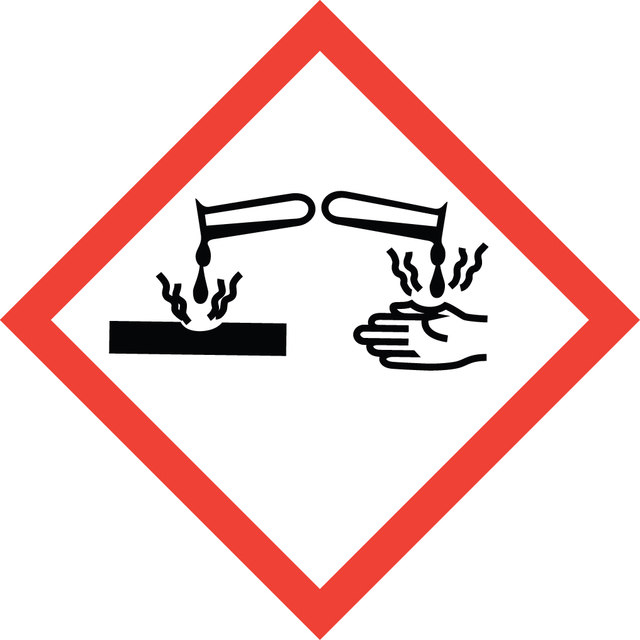
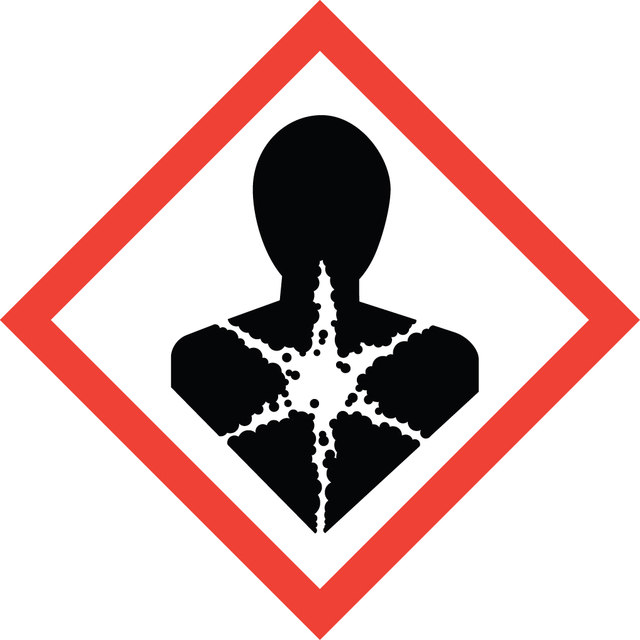
Acute Tox. 4 Dermal - Acute Tox. 4 Inhalation - Acute Tox. 4 Oral - Carc. 2 - Eye Dam. 1 - STOT RE 2 - STOT SE 3

target_organs

Respiratory system

Storage Class

10 - Combustible liquids

flash_point_f

203.0 °F - closed cup

flash_point_c

95 °C - closed cup

ppe

Eyeshields, Faceshields, Gloves, type ABEK (EN14387) respirator filter


Choose from one of the most recent versions:

Certificates of Analysis (COA)

Lot/Batch Number

Don't see the Right Version?

If you require a particular version, you can look up a specific certificate by the Lot or Batch number.

Already Own This Product?

Find documentation for the products that you have recently purchased in the Document Library.

Visit the Document Library


Articles

Monomers for ophthalmic use aim for purity, reliability, and comfort, driving innovation for affordable contact lenses.


Synthesis and characterization of poly (vinylchloride) type macrophotoinitiator comprising side-chain thioxanthone via click chemistry.
Akat H and Ozkan M
Express Polymer Letters, 5(4), 318-326 (2011)
Sorour Sadeghzade et al.
Journal of the mechanical behavior of biomedical materials, 101, 103445-103445 (2019-10-01)
One of the significant challenges in bone tissue engineering is the fabrication of highly porous scaffolds with interconnected pores and appropriate mechanical properties. Artificial scaffolds which used in the field of medicine are usually made of single phase of polymer
Hiroshi Ohno et al.
Chemistry (Weinheim an der Bergstrasse, Germany), 16(34), 10409-10417 (2010-07-14)
Recombinant antifreeze proteins (AFPs), representing a range of activities with respect to ice growth inhibition, were investigated for their abilities to control the crystal formation and growth of hydrocarbon hydrates. Three different AFPs were compared with two synthetic commercial inhibitors


Global Trade Item Number

SKUGTIN
V3409-1KG04061837480867
V3409-18KG04061837841569
V3409-250G04061837841576
V3409-5G04061837841583