
Determination of Hormones in Drinking Water by Solid Phase Extraction (SPE) and LC-MS/MS by EPA Method 539
LC-MS/MS workflow for testing of 7 EPA regulated Hormones in Drinking Water
Sample Collection & Preparation
LC-MS/MS Analysis

Detection & Calibration

Consistent Results

This application note follows the EPA method 539 guidelines for analysis of regulated hormones in drinking water by solid-phase extraction followed by the LC-MS/MS. The analytes were all separated on an Ascentis® Express C18 HPLC column with an excellent peak shape and good detection limits in a shorter run time. The method met the performance criteria cited in EPA method 539 suggesting robust method performance and increased confidence in results.
Introduction
In recent years, the increased usage of hormone drugs and supplements among the population has created the issue of having them end up at critical levels in the environment, including drinking water supplies. Even at low doses, exposure to these compounds could result in adverse health and reproductive complications. Hence, a low detection level, highly sensitive (ng/L; parts per trillion concentrations) method is required for the analysis of these hormones in drinking water.
Chromatographic columns and conditions are not mandated in the EPA 539 method1 provided that the analysis method meets the performance criteria for accuracy, reproducibility, and minimum reporting limits (MRL). The method requires the use of 4 internal standards and at least 1 surrogate fortified into samples to monitor the sample extraction process performance.
Here we showcase a rapid workflow solution, demonstrating the EPA method 539 for the determination of 7 EPA regulated hormones (16α-Hydroxyestradiol, 17β-Estradiol, 17α-Ethynylestradiol, Testosterone, Estrone, 4-Androstene-3,17-dione and Equilin), in drinking water using solid-phase extraction (SPE) followed by Liquid Chromatography tandem mass spectrometry (LC-MS/MS) on an Ascentis® Express C18 column. Since the accuracy of the analytical results depends on the reference materials used, we utilized Certified Reference Materials (CRMs) as calibrators, and multiple Stable Isotopically Labeled (SIL) CRMs were used as internal standards (Estrone-2,3,4-13C3, Androstene-3,17-dione-2,3,4-13C3, 17β-Estradiol-D5, and Testosterone-2,3,4-13C3) and surrogates (17β-Estradiol-2,3,4-13C3 and 6β-Hydroxytestosterone-D3) to allow the method flexibility. Further, the performance of EPA criteria was also demonstrated.
Experimental Conditions for the Chromatography of Hormones
Sample Collection
Sample collection and preparation were performed according to EPA Method 539 requirements found in Section 8 for sample collection and storage and Section 11 for sample preparation with SPE disks. For this study, Empore™ C18 Disks with 47 mm diameter were applied.
Sample Preparation steps by SPE Disks
Analyte primary dilution solution (PDS) preparation
Internal standard (ISTD) and Surrogate (SURR) PDS Preparation
LC-MS/MS analysis of hormones in drinking water
Results and Discussion
This application demonstrates an LC-MS/MS method for the analysis of 7 EPA-regulated hormones in drinking water (Table.4) in a 12-minute analysis time with adequate chromatographic resolution (Figure 1). All compounds were analyzed in negative mode except for androstenedione and testosterone. The detection limit for each analyte, linearity, range and %RSD at 10 ng/L were determined and shown in Table 8. All hormones were determined at a range of 0.5 - 75 ng/L with a recovery higher than 92 percent (Figure 1). The method gave an excellent linear response (r2 > 0.999) and met the minimum reporting levels for all analytes (0.5 ng/L) as mandated in EPA 539 method (Table 8).
EPA Method 539 demands only a single surrogate. We have incorporated and demonstrated the performance of an additional SIL CRM to allow method flexibility. The SIL CRMs 17β-Estradiol-2,3,4-13C3, and 6β-Hydroxytestosterone-D3, were detected within the EPA method criteria and therefore can perform as viable surrogates, and 17β-Estradiol-D5 and 17β-Estradiol-D5 CRMs can be utilized as an internal standard or surrogate interchangeably. Method robustness is demonstrated using the ISTD and surrogate response (Table 9).
EPA Method 539 does not list any specific HPLC column. The Ascentis® Express C18 column demonstrates efficient separation of the hormones with sharp and robust peaks. The Ascentis® Express C18 column ensures the necessary chromatographic efficiency and resolution of the analytes and facilitates adding additional analytes, if necessary, to meet current and future method demands while adhering to EPA method acceptance criteria.
The superficially porous particle (SPP) or Fused-Core® particle technology of the Ascentis® Express C18 column enables high-speed separations with low bleeding even at high pH mobile phases on LC-MS/MS instruments.2,3 Column efficiency performs typically 40% higher in comparison to fully porous particulate columns even with the same particle size.
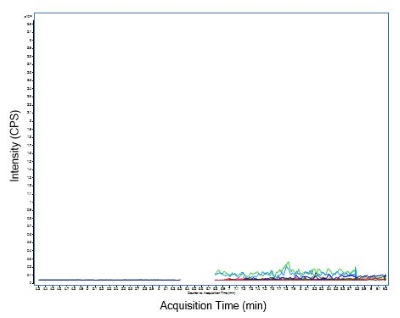
Figure 1a.MRM chromatogram of Blank injection
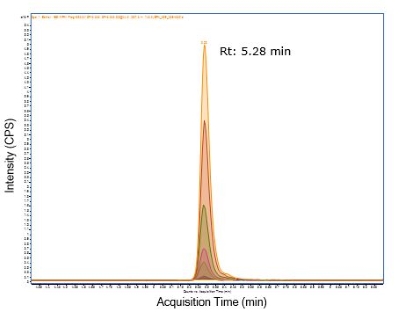
Figure 1b.Multiple reaction monitoring chromatogram of Estriol
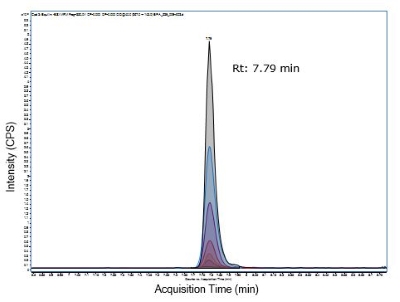
Figure 1c.MRM chromatogram of Equilin
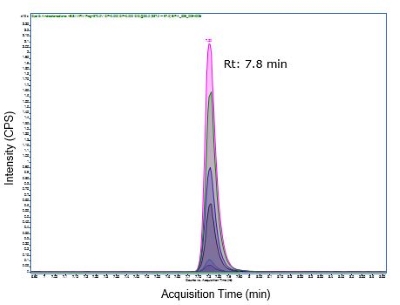
Figure 1d.MRM chromatogram of Androstenedione
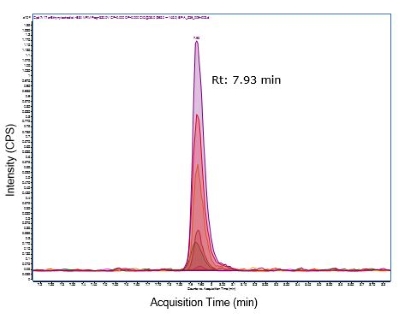
Figure 1e.MRM chromatogram of 17α-Ethynylestradiol
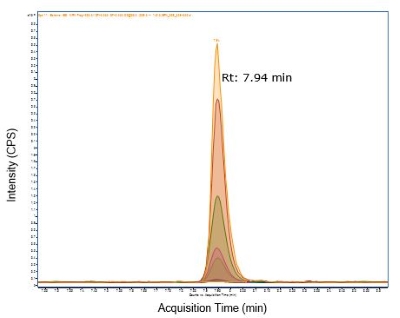
Figure 1f.MRM chromatogram of Estrone

Figure 1g.MRM chromatogram of 17β-Estradiol
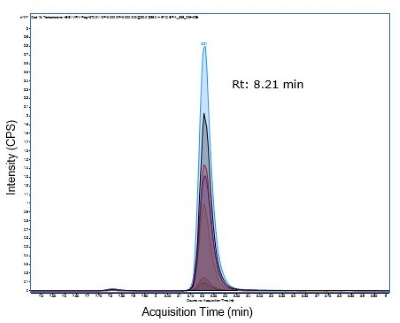
Figure 1h.MRM chromatogram of Testosterone
Conclusion for Analysis of Hormones in Drinking Water
A rapid, efficient, and highly reproducible LC-MS/MS method was developed for the analysis of the 7 regulated hormones by following EPA Method 539 to meet the current EPA drinking water requirements. The method achieves low-level quantitation at the minimum reporting levels of 0.5 ng/L (0.5 ppt) and below. The Ascentis® Express C18 column provides the necessary chromatographic resolution of the analytes and can accommodate additional analytes, if necessary, to meet current and future method demands. Individual CRM standards, internal standards, and surrogates facilitated the required accuracy, convenience, and flexibility in the preparation of calibration curves and fortifying samples while adhering to EPA method acceptance criteria.