
Evaluation of Recombinant, Chemically Treated Trypsin in Proteomics and Protein Characterization Assays
Overview
- We compared recombinant trypsin to native-source in various MS workflows.
- Native source trypsin is dimethylated to prevent autolysis and TPCK treated to inhibit chymotrypsin.
- Native and recombinant trypsins gave similar amounts of proteins and peptides identified in a complex mixture.
- TIC of a single-protein digest revealed more complete peptide processing by recombinant trypsins relative to native trypsin.
- Trypsin dimethylation leads to slower processing but with fewer autolytic peptides present.
Introduction

Figure 1.Porcine Pancreatic Trypsin
Proteomics grade trypsin is:
- Dimethylated (prevent autolysis)
- TPCK treated (inhibit chymotrypsin)

Figure 2.Dimethylated
Are there better options?
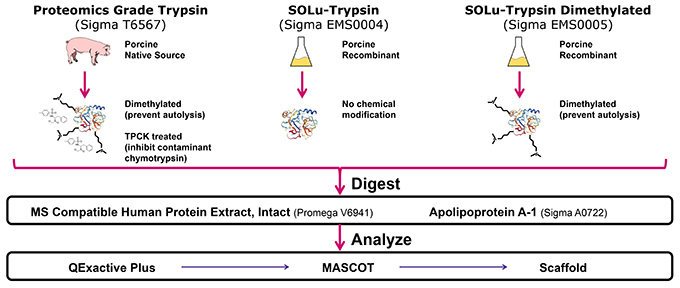
Figure 3.Materials and Methods
Results

Figure 4.SOLu-Trypsin Stability
Human protein extract was digested using native and recombinant trypsins in a traditional overnight 37 °C digest and a rapid 2 hr
45 °C protocol. In all cases, similar numbers of proteins were identified.
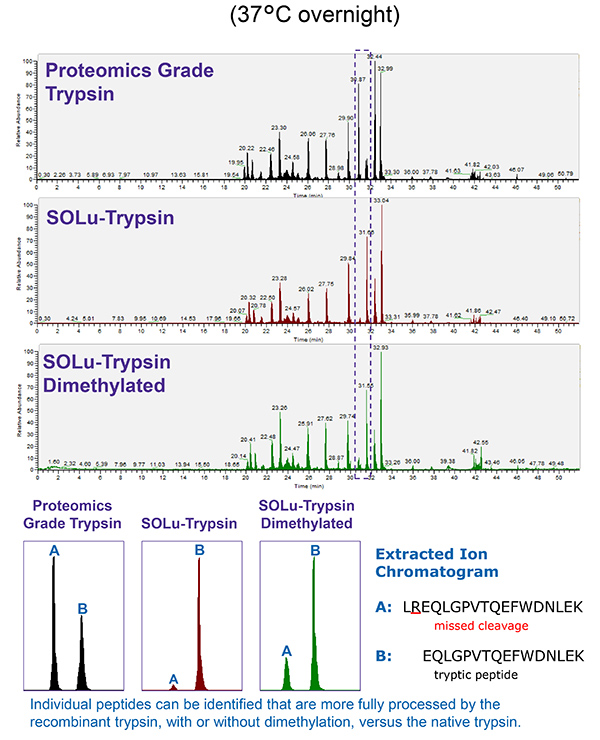
Figure 5.Apolipoprotein A-1 Digest
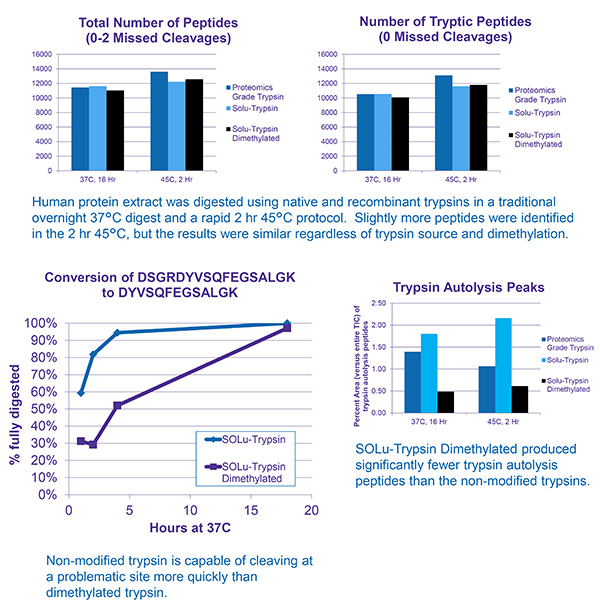
Figure 6.To Dimethylate or Not Dimethylate
Conclusions
- Recombinant trypsin digests yielded comparable amounts of peptides and proteins identified across all conditions tested versus standard sequencing-grade trypsin.
- Dimethylation was shown to reduce the presence of autolytic fragments, whereas unmodified enzyme yielded faster processing of certain cut sites.
- SOLu-Trypsin is solution-stable for >49 days at 37 °C and >800 days at 4 °C based on accelerated stability studies.
- Recombinant solution-stable trypsin can be used in lieu of native trypsin with no changes to work flow.
Materials
Loading