
Skip to Content
Merck
CN

252271

α-Bromoisobutyryl bromide

98%

Synonym(s):

2-Bromo-2-methylpropionyl bromide, BIBB

Sign In to View Organizational & Contract Pricing.

Select a Size

Change View

About This Item

Linear Formula:
(CH3)2CBrCOBr
CAS Number:
Molecular Weight:
229.90
UNSPSC Code:
12352100
NACRES:
NA.22
PubChem Substance ID:
EC Number:
244-017-3
Beilstein/REAXYS Number:
1746128
MDL number:
Assay:
98%
Form:
liquid
Technical Service
Need help? Our team of experienced scientists is here for you.
Let Us Assist


Quality Level

assay

98%

form

liquid

refractive index

n20/D 1.507 (lit.)

bp

162-164 °C (lit.)

density

1.86 g/mL at 25 °C (lit.)

functional group

acyl bromide, bromo

SMILES string

CC(C)(Br)C(Br)=O

InChI

1S/C4H6Br2O/c1-4(2,6)3(5)7/h1-2H3

InChI key

YOCIJWAHRAJQFT-UHFFFAOYSA-N

General description

BIBB is an important reagent in the synthesis of amides, macrocyclic amides, ketenes, and alkynic ketones.

Application

α-Bromoisobutyryl bromide has been used:
  • as atom transfer radical polymerization (ATRP) initiator for functionalization of hydroxyl groups present on the surface of graphene oxide
  • to form an N-protected halodienamide which provided four- and five-membered lactams in the presence of copper (I) and a tertiary amine
  • in preparation of polycaprolactone macroinitiator via reaction with oligomeric caprolactone diol and mesoporous silica nanoparticles with ATRP initiator anchored on the exterior surface
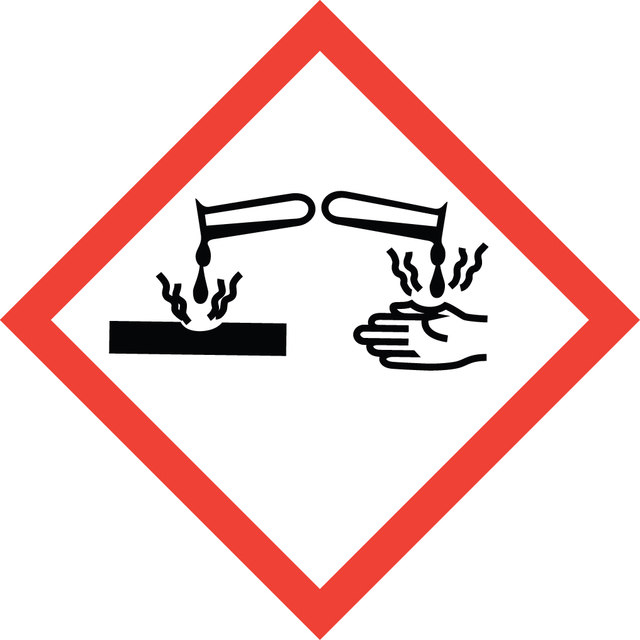

pictograms

Corrosion

signalword

Danger

hcodes

Hazard Classifications

Eye Dam. 1 - Skin Corr. 1B

Storage Class

8A - Combustible corrosive hazardous materials

wgk

WGK 3

flash_point_f

>230.0 °F

flash_point_c

> 110 °C

ppe

Faceshields, Gloves, Goggles, type ABEK (EN14387) respirator filter


Choose from one of the most recent versions:

Certificates of Analysis (COA)

Lot/Batch Number

Don't see the Right Version?

If you require a particular version, you can look up a specific certificate by the Lot or Batch number.

Already Own This Product?

Find documentation for the products that you have recently purchased in the Document Library.

Visit the Document Library


Protocols

Polymerization via ATRP procedures demonstrated by Prof. Dave Haddleton's research group at the University of Warwick.

ARGET ATRP procedure facilitates PMMA polymer brush growth with surface cleaning and initiator monolayer deposition.


Shih-Jer Huang et al.
International journal of nanomedicine, 8, 2011-2027 (2013-06-08)
Cationic polymers are one of the major nonviral gene delivery vectors investigated in the past decade. In this study, we synthesized several cationic copolymers using atom transfer radical polymerization (ATRP) for gene delivery vectors: pluronic F127-poly(dimethylaminoethyl methacrylate) (PF127-pDMAEMA), pluronic F127-poly
Nicklas N Poulsen et al.
Journal of separation science, 40(3), 779-788 (2016-11-22)
Many bioanalytical methods rely on electrophoretic separation of structurally labile and surface active biomolecules such as proteins and peptides. Often poor separation efficiency is due to surface adsorption processes leading to protein denaturation and surface fouling in the separation channel.
Sun Hwa Lee et al.
Macromolecular rapid communications, 31(3), 281-288 (2010-02-02)
A method for growing polymers directly from the surface of graphene oxide is demonstrated. The technique involves the covalent attachment of an initiator followed by the polymerization of styrene, methyl methacrylate, or butyl acrylate using atom transfer radical polymerization (ATRP).


Global Trade Item Number

SKUGTIN
252271-500G04061837376641
252271-100G04061825961729