
376779

2,3,5,6-Tetrafluoro-7,7,8,8-tetracyanoquinodimethane
97%
Synonym(s):
(2,3,5,6-Tetrafluoro-2,5-cyclohexadiene-1,4-diylidene)dimalononitrile, 7,7,8,8-Tetracyano-2,3,5,6-tetrafluoroquinodimethane, F4TCNQ
Sign In to View Organizational & Contract Pricing.
Select a Size
Change View
About This Item
Empirical Formula (Hill Notation):
C12F4N4
CAS Number:
Molecular Weight:
276.15
UNSPSC Code:
12352103
NACRES:
NA.23
PubChem Substance ID:
MDL number:
Beilstein/REAXYS Number:
2157887
Quality Segment
assay
97%
form
solid
mp
285-290 °C (lit.)
SMILES string
FC1=C(F)C(\C(F)=C(F)/C1=C(\C#N)C#N)=C(\C#N)C#N
InChI
1S/C12F4N4/c13-9-7(5(1-17)2-18)10(14)12(16)8(11(9)15)6(3-19)4-20
InChI key
IXHWGNYCZPISET-UHFFFAOYSA-N
General description
2,3,5,6-Tetrafluoro-7,7,8,8-tetracyanoquinodimethane (F4-TCNQ) is a dopant used in the fabrication of organic semiconductors. It can tune the electronic properties as its lowest unoccupied molecular orbital is at a desirable energy level required to oxidize a wide range of semiconductors.
2,3,5,6-tetrafluoro-7,7,8,8-tetracyanoquinodimethane (F4-TCNQ) are p-type molecules, used as a strong acceptor dopant , it generates free holes.
Application
F4-TCNQ can be doped with poly[bis(4-phenyl)(2,4,6-trimethylphenyl)amine] (PTAA) to form a hole transport material (HTL), which can be used to achieve an energy efficiency of 16% for a semi-transparent perovskite solar cell. It can be used as a p-type dopant to form a blended composite film with poly(3-hexylthiophene) (P3HT) having enhanced charge mobility, which can be potentially useful in organic photovoltaics.
F4-TCNQ is the p-type dopant for hole-only devices and field effect transistors with organic hole transport layers (HTL). It is used in the preparation of a bilayer structure of F4-TCNQ and pentacene to study improved thermoelectric performance of organic thin films.
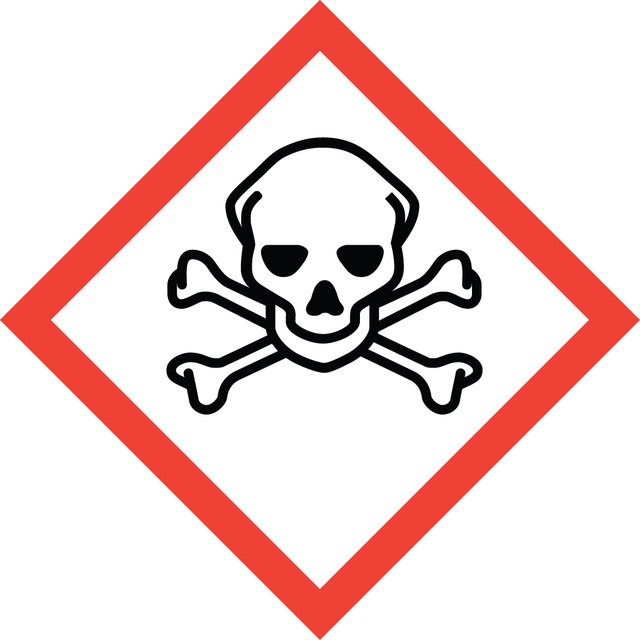
signalword
Danger
hcodes
Hazard Classifications
Acute Tox. 3 Dermal - Acute Tox. 3 Inhalation - Acute Tox. 3 Oral
Storage Class
6.1C - Combustible acute toxic Cat.3 / toxic compounds or compounds which causing chronic effects
wgk
WGK 3
flash_point_f
Not applicable
flash_point_c
Not applicable
ppe
Eyeshields, Faceshields, Gloves, type P2 (EN 143) respirator cartridges
Choose from one of the most recent versions:
Already Own This Product?
Find documentation for the products that you have recently purchased in the Document Library.