
Skip to Content
Merck
CN

723037

2-Cyano-2-propyl dodecyl trithiocarbonate

97% (HPLC)

Synonym(s):

S-(2-Cyanoprop-2-yl)-S-dodecyltrithiocarbonate

Sign In to View Organizational & Contract Pricing.

Select a Size

Change View

About This Item

Empirical Formula (Hill Notation):
C17H31NS3
CAS Number:
Molecular Weight:
345.63
NACRES:
NA.23
PubChem Substance ID:
UNSPSC Code:
12352100
MDL number:
Technical Service
Need help? Our team of experienced scientists is here for you.
Let Us Assist


Quality Level

assay

97% (HPLC)

form

liquid

refractive index

n20/D 1.535

density

0.991 g/mL at 25 °C

storage temp.

2-8°C

SMILES string

CCCCCCCCCCCCSC(=S)SC(C)(C)C#N

InChI

1S/C17H31NS3/c1-4-5-6-7-8-9-10-11-12-13-14-20-16(19)21-17(2,3)15-18/h4-14H2,1-3H3

InChI key

QSVOWVXHKOQYIP-UHFFFAOYSA-N

General description

Need help choosing the correct RAFT Agent? Please consult the RAFT Agent to Monomer compatibility table.

Application

2-Cyano-2-propyl dodecyl trithiocarbonate is used as a RAFT agent for controlled radical polymerization; especially suited for the polymerization of methacrylate, methacrylamide, and styrene monomers. It is also used as a Chain Transfer Agent (CTA).
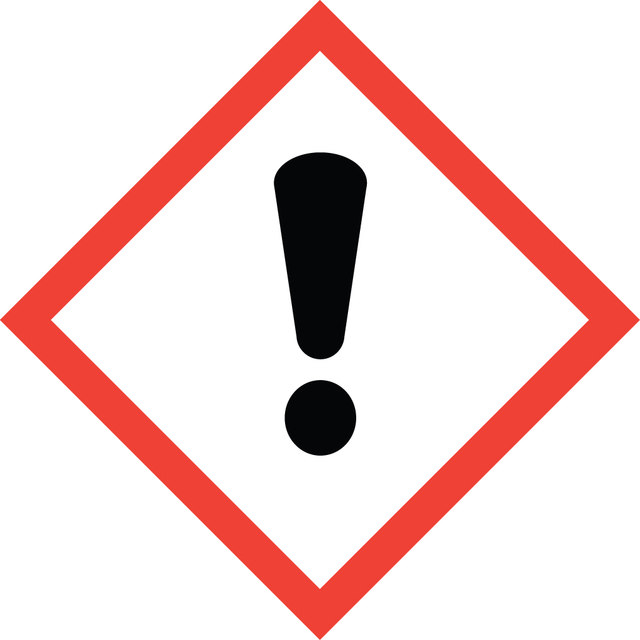

pictograms

Exclamation mark

signalword

Warning

hcodes

Hazard Classifications

Acute Tox. 4 Oral

Storage Class

10 - Combustible liquids

wgk

WGK 1

flash_point_f

Not applicable

flash_point_c

Not applicable


Choose from one of the most recent versions:

Certificates of Analysis (COA)

Lot/Batch Number

Don't see the Right Version?

If you require a particular version, you can look up a specific certificate by the Lot or Batch number.

Already Own This Product?

Find documentation for the products that you have recently purchased in the Document Library.

Visit the Document Library


Protocols

RAFT(可逆加成-断裂链转移)是一种活性自由基聚合反应,在有适合的连转移(RAFT)试剂存在下发生的非传统的取代单体自由基聚合反应。

We present an article about RAFT, or Reversible Addition/Fragmentation Chain Transfer, which is a form of living radical polymerization.

We presents an article featuring procedures that describe polymerization of methyl methacrylate and vinyl acetate homopolymers and a block copolymer as performed by researchers at CSIRO.

View All Protocols

Articles

RAFT(可逆加成断裂链转移)聚合是一种可逆的去活化自由基聚合(RDRP),是给自由基聚合赋予活性的通用方法之一。

The modification of biomacromolecules, such as peptides and proteins, through the attachment of synthetic polymers has led to a new family of highly advanced biomaterials with enhanced properties.

RAFT polymerization offers living characteristics to radical polymerization, contributing versatility to reversible deactivation radical polymerization methods.

View All Articles

Jeonghun Lee et al.
Journal of controlled release : official journal of the Controlled Release Society, 304, 164-172 (2019-05-15)
A blood clot (thrombus) is formed as a final product of the hemostatic process with two major components, a mesh of cross-linked fibrin and platelets activated by high concentration of hydrogen peroxide (H2O2). Thrombus formation impedes blood flow to brain
Liqin Mei et al.
Journal of materials chemistry. B, 8(25), 5434-5440 (2020-06-13)
Zwitterionic polymers have attracted increasing attention due to their excellent fouling resistance ability and eco-friendliness. Yet, their non-degradability and hydrophilic nature limit their applications. In this study, we have prepared a novel surface-fragmenting hyperbranched copolymer with tertiary carboxybetaine ester (TCB)
Munziya Abutalip et al.
Langmuir : the ACS journal of surfaces and colloids, 35(25), 8389-8397 (2019-06-15)
In this work, we report the first molecular weight-controlled amphiphilic polybetaine synthesis using various hydrocarbons via reversible addition?fragmentation chain-transfer (RAFT) polymerization. The experimental separation of the alkyl aminocrotonate tautomers, which has been the subject of debate, was completed for the


Global Trade Item Number

SKUGTIN
723037-1G04061826280539
723037-5G04061832861012