Skip to Content
Merck
CN

S2002

Sodium azide

ReagentPlus®, ≥99.5%

Synonym(s):

Hydrazoic acid sodium salt

Sign In to View Organizational & Contract Pricing.

Select a Size

Change View

About This Item

Linear Formula:
NaN3
CAS Number:
Molecular Weight:
65.01
NACRES:
NA.21
PubChem Substance ID:
UNSPSC Code:
12352201
EC Number:
247-852-1
MDL number:
Technical Service
Need help? Our team of experienced scientists is here for you.
Let Us Assist


biological source

synthetic (inorganic)

Quality Level

product line

ReagentPlus®

assay

≥99.5%

form

powder

storage condition

(Tightly closed. Dry. Keep in a well-ventilated place. Do not store near acids.)

technique(s)

cell based assay: suitable, immunohistochemistry: suitable

color

white

mp

370-425 °C

solubility

soluble 65 g/L at 20 °C (completely)

suitability

suitable for chromatography, suitable for derivatization

application(s)

sample preparation

SMILES string

[Na]N=[N+]=[N-]

InChI

1S/N3.Na/c1-3-2;/q-1;+1

InChI key

PXIPVTKHYLBLMZ-UHFFFAOYSA-N

General description

Sodium Azide (NaN3) is a potent inhibitor – a water-soluble crystalline powder that′s odorless. Widely recognized for its versatile applications, it plays a pivotal role across molecular biology, cell culture, and biochemical research. It is also a metabolic inhibitor, which inhibits oxidative phosphorylation. In cell culture, it maintains the integrity of your cell lines.

Application

Baylis-Hillman acetates such as ethyl 2-(acetoxyphenylmethyl)acrylate can undergo nucleophilic displacement by sodium azide in aqueous medium to form ethyl (E)-2-azidomethyl-3-phenylpropenoate.
Sodium azide is suitable for use in histopathology to prepare and store tissue samples. Also used as a component of staining buffer (HEPES buffer) for whole mount immunolabelling.
Catalyst for:

  • Oxidative decarboxylation
  • Michael addition reactions

Reagent for synthesis of
  • Blue fluorescent copolymers
  • Metal phosphonates
  • Arenes via aminations

Biochem/physiol Actions

Sodium azide is clinically used as a preservative in diluting fluid for counting red blood cells. It prevents capping and internalization of fluorescent surface-bound antibodies in various scientific applications, including flow cytometry.

Other Notes

For additional information on our range of Biochemicals, please complete this form.

Legal Information

ReagentPlus is a registered trademark of Merck KGaA, Darmstadt, Germany


Still not finding the right product?

Explore all of our products under Sodium azide


signalword

Danger

Hazard Classifications

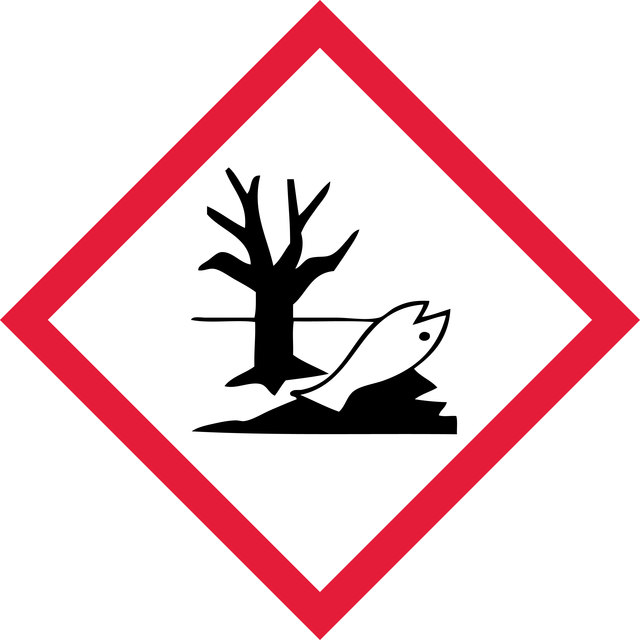
Acute Tox. 1 Dermal - Acute Tox. 2 Inhalation - Acute Tox. 2 Oral - Aquatic Acute 1 - Aquatic Chronic 1 - STOT RE 2 Oral

target_organs

Brain

supp_hazards

Storage Class

6.1A - Combustible acute toxic Cat. 1 and 2 / very toxic hazardous materials

flash_point_f

Not applicable

flash_point_c

Not applicable

Regulatory Information

监管及禁止进口产品

This item has


Choose from one of the most recent versions:

Certificates of Analysis (COA)

Lot/Batch Number

Don't see the Right Version?

If you require a particular version, you can look up a specific certificate by the Lot or Batch number.

Already Own This Product?

Find documentation for the products that you have recently purchased in the Document Library.

Visit the Document Library


Protocols

ELISA实验方案提供了进行间接ELISA和捕获ELISA的详细说明。了解进行夹心式ELISA和间接ELISA实验的推荐产品和技术信息。

Detailed ELISA protocols cover indirect and capture ELISA techniques, recommending products for sandwich and indirect ELISA experiments.

Antibody purification protocols yield preparations containing endogenous IgG alongside specific antibodies.


Sodium azide, a bacteriostatic preservative contained in commercially available laboratory reagents, influences the responses of human platelets via the cGMP/PKG/VASP pathway.
Russo I, et al.
Clinical Biochemistry, 41(4), 343-349 (2008)
Calcium uptake by rat kidney mitochondria.
DeLuca HF and Engstrom GW.
Proceedings of the National Academy of Sciences of the USA, 47(11), 1744-1750 (1961)
Nucleophilic displacement by azide and cyanide on Baylis-Hillman acetates in water.
Yadav JS, et al.
Tetrahedron Letters, 46(16), 2761-2763 (2005)


Global Trade Item Number

SKUGTIN
S2002-2KG04061836916053
S2002-100G04061835549283
S2002-25G04061835549290
S2002-500G04061835549306
S2002-5G04061835549313
S2002-25KG04061833512913