Skip to Content
Merck
CN

S4972

Styrene

≥99%, liquid, ReagentPlus®, contains 4-tert-butylcatechol as stabilizer

Synonym(s):

Phenylethylene, Vinylbenzene

Sign In to View Organizational & Contract Pricing.

Select a Size

Change View

About This Item

Linear Formula:
C6H5CH=CH2
CAS Number:
Molecular Weight:
104.15
NACRES:
NA.21
PubChem Substance ID:
UNSPSC Code:
12352100
EC Number:
202-851-5
MDL number:
Beilstein/REAXYS Number:
1071236
Assay:
≥99%
Form:
liquid
Technical Service
Need help? Our team of experienced scientists is here for you.
Let Us Assist


Product Name

Styrene, ReagentPlus®, contains 4-tert-butylcatechol as stabilizer, ≥99%

vapor density

3.6 (vs air)

Quality Level

vapor pressure

12.4 mmHg ( 37.7 °C), 4.3 mmHg ( 15 °C)

product line

ReagentPlus®

assay

≥99%

form

liquid

autoignition temp.

914 °F

contains

4-tert-butylcatechol as stabilizer

expl. lim.

6.1 %

refractive index

n20/D 1.546 (lit.)

bp

145-146 °C (lit.)

mp

−31 °C (lit.)

density

0.906 g/mL at 25 °C

functional group

phenyl

storage temp.

2-8°C

SMILES string

C=Cc1ccccc1

InChI

1S/C8H8/c1-2-8-6-4-3-5-7-8/h2-7H,1H2

InChI key

PPBRXRYQALVLMV-UHFFFAOYSA-N

General description

Removal of styrene from textile dyeing wastewater treatment plants (TDWTPs) has been investigated. Catalytic potential of the Co-SBA-15 for the oxidation of styrene with hydrogen peroxide has been investigated. Screening of asymmetric epoxidation of styrene by gas chromatography-mass spectrometry (GC-MS) with selected ion monitoring (SIM) has been reported. The homogeneous atom transfer radical polymerization (ATRP) of styrene by employing solubilizing 4,4′-dialkyl substituted 2,2′-bipyridines affords well-defined polymers. The Heck reaction of chlorobenzene and substituted chlorobenzenes with styrene in water using catalytic palladium on carbon affords 1,2-diphenylethane.

Application

Styrene has been used as a test styrene sample in a study involving the effect of reversible addition-fragmentation chain transfer (RAFT) controllers on its RAFT polymerization in supercritical carbon dioxide in the presence of poly(styrene-block-dimethylsiloxane) (PSDMS) as a stabilizer.
Styrene was used in the preparation of well-defined homopolymers, diblock copolymers and triblock copolymers of tert-butyl acrylate, methyl acrylate and styrene.

Other Notes

Inhibitor depletes over time especially at higher temperatures

Legal Information

ReagentPlus is a registered trademark of Merck KGaA, Darmstadt, Germany


Still not finding the right product?

Explore all of our products under Styrene
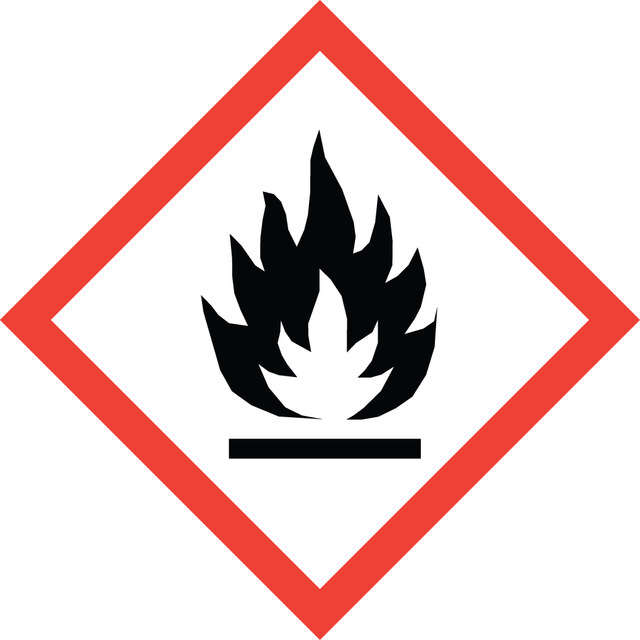

signalword

Danger

Hazard Classifications

Acute Tox. 4 Inhalation - Aquatic Chronic 3 - Asp. Tox. 1 - Eye Irrit. 2 - Flam. Liq. 3 - Repr. 2 - Skin Irrit. 2 - STOT RE 1 Inhalation - STOT SE 3

target_organs

hearing organs, Respiratory system

Storage Class

3 - Flammable liquids

wgk

WGK 2

flash_point_f

89.6 °F - closed cup

flash_point_c

32.0 °C - closed cup

ppe

Eyeshields, Faceshields, Gloves, type ABEK (EN14387) respirator filter

Regulatory Information

危险化学品

This item has


Choose from one of the most recent versions:

Certificates of Analysis (COA)

Lot/Batch Number

Don't see the Right Version?

If you require a particular version, you can look up a specific certificate by the Lot or Batch number.

Already Own This Product?

Find documentation for the products that you have recently purchased in the Document Library.

Visit the Document Library


Heterogeneous palladium-catalysed heck reaction of aryl chlorides and styrene in water under mild conditions.
Mukhopadhyay S, et al.
Advanced Synthesis & Catalysis, 344(3-4), 348-354 (2002)
Xun-An Ning et al.
Chemosphere, 136, 50-55 (2015-05-02)
The occurrence and removal of benzene, toluene, ethylbenzene, xylenes, styrene and isopropylbenzene (BTEXSI) from 6 textile dyeing wastewater treatment plants (TDWTPs) were investigated in this study. The practical capacities of the 6 representative plants, which used the activated sludge process
Yao Mu et al.
Se pu = Chinese journal of chromatography, 32(12), 1385-1389 (2015-04-24)
A screening method by gas chromatography-mass spectrometry (GC-MS) with selected ion monitoring (SIM) has been developed for asymmetric epoxidation of styrene. All samples were analyzed by GC-MS with the mode of SIM by using ethylbenzene as the internal standard, by


Global Trade Item Number

SKUGTIN
S4972-100ML04061837358609
S4972-1L04061837373275
S4972-2.5L04061836933906
S4972-16.5L04061836933845
S4972-4L04061837373305
S4972-500ML04061837373312
S4972-5ML04061837373329