Skip to Content
Merck
CN

695092

Acetic acid

glacial, ACS reagent, ≥99.7%

Synonym(s):

Glacial acetic acid

Sign In to View Organizational & Contract Pricing.

Select a Size

Change View

About This Item

Linear Formula:
CH3CO2H
CAS Number:
Molecular Weight:
60.05
UNSPSC Code:
12352106
NACRES:
NA.21
PubChem Substance ID:
EC Number:
200-580-7
Beilstein/REAXYS Number:
506007
MDL number:
Assay:
≥99.7%
Form:
liquid
Grade:
ACS reagent
Technical Service
Need help? Our team of experienced scientists is here for you.
Let Us Assist


grade

ACS reagent

Quality Level

vapor density

2.07 (vs air)

vapor pressure

11.4 mmHg ( 20 °C)

assay

≥99.7%

form

liquid

autoignition temp.

800 °F

expl. lim.

16 %, 92 °F, 4 %, 59 °F

technique(s)

mass spectrometry (MS): suitable

impurities

Cr2O72- reducers, passes test, MnO4- reducers, passes test, ≤0.0004 meq/g Titr. base, ≤0.01% acetic anhydride

evapn. residue

≤0.001%

color

APHA: ≤10

refractive index

n20/D 1.371 (lit.)

pH

2.5 (20 °C, 50 g/L)

bp

117-118 °C (lit.)

mp

16.2 °C (lit.)

solubility

water: soluble (602.9 g/l at 25 °C)

density

1.04 g/mL at 25 °C (lit.)

anion traces

chloride (Cl-): ≤1 ppm, sulfate (SO42-): ≤1 ppm

cation traces

Fe: ≤0.2 ppm, heavy metals: ≤0.5 ppm (by ICP)

SMILES string

[F2C(F2C)13F3C]C(O)=O

InChI

1S/C2H4O2/c1-2(3)4/h1H3,(H,3,4)

InChI key

QTBSBXVTEAMEQO-UHFFFAOYSA-N

General description

Acetic acid is an organic carboxylic acid. It is a pungent smelling hygroscopic liquid. Glacial acetic acid is the anhydrous acetic acid. It forms dimers linked by hydrogen bonds in solution and gaseous commonly referred as phases. It is weakly acidic in nature.

Application

Acetic acid is widely employed as solvent for various oxidation reactions. It may be used in the analysis of synthetic peptides by electron transfer dissociation (ETD) tandem mass spectrometry (MS/MS). It may be used in the preparation of peroxyacetic acid (disinfectant), via reaction with perhydrol (30% hydrogen peroxide).

Other Notes

4L and 4X4L are packaged in poly bottles


Still not finding the right product?

Explore all of our products under Acetic acid
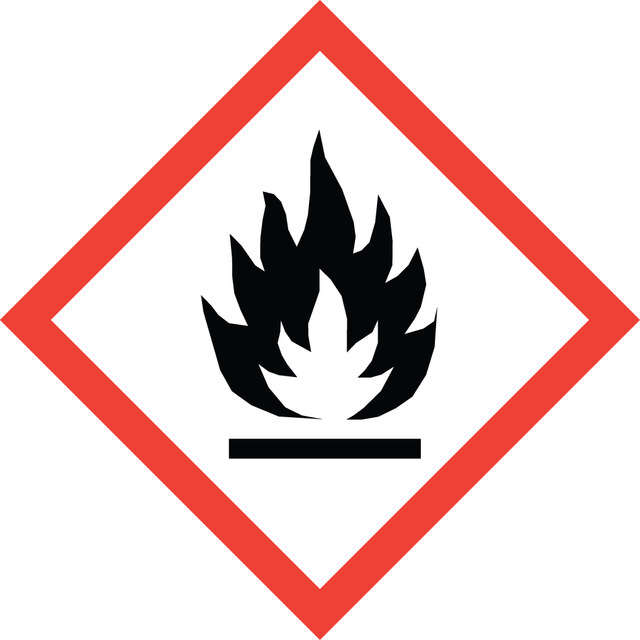

pictograms

FlameCorrosion

signalword

Danger

hcodes

Hazard Classifications

Eye Dam. 1 - Flam. Liq. 3 - Skin Corr. 1A

Storage Class

3 - Flammable liquids

wgk

WGK 1

flash_point_f

102.2 °F - closed cup

flash_point_c

39 °C - closed cup

Regulatory Information

危险化学品

This item has


Choose from one of the most recent versions:

Certificates of Analysis (COA)

Lot/Batch Number

Don't see the Right Version?

If you require a particular version, you can look up a specific certificate by the Lot or Batch number.

Already Own This Product?

Find documentation for the products that you have recently purchased in the Document Library.

Visit the Document Library


Protocols

A step-by-step protocol for released N-linked glycan analysis of the monoclonal antibody adalimumab, based on UHPLC-FLR-MS and procainamide labeling.

Articles

Learn about the impact of filtration on hematopoietic cell culture media containing vital T cell factors and other media components.

Effective in key synthesis reactions like Knoevenagel condensation, thalidomide synthesis, and Suzuki coupling for sustainable chemical transformations.

Learn to separate and quantify B vitamins and preservatives in capsules with HPLC-UV and Purospher® STAR RP-8 column. Validated for precision.

View All Articles

Related Content

PFAS,也被称为“永久化学物质”,会在环境中永久性存在,威胁人类健康。我们提供PFAS定量的环境监测工具,助力研究人员、监管人员和实验室的PFAS检测。


Didem Karakaş et al.
Turkish journal of biology = Turk biyoloji dergisi, 43(4), 256-263 (2019-10-05)
Breast cancer is the most-diagnosed cancer type among women. The triple-negative subtype is an especially aggressive type of breast cancer. Although chemotherapy is almost the only option for the treatment of triple-negative breast cancer (TNBC), currently used chemotherapeutics are not
John E P Syka et al.
Proceedings of the National Academy of Sciences of the United States of America, 101(26), 9528-9533 (2004-06-24)
Peptide sequence analysis using a combination of gas-phase ion/ion chemistry and tandem mass spectrometry (MS/MS) is demonstrated. Singly charged anthracene anions transfer an electron to multiply protonated peptides in a radio frequency quadrupole linear ion trap (QLT) and induce fragmentation
Eagleson M.
Concise Encyclopedia Chemistry, 5-5 (1994)


Global Trade Item Number

SKUGTIN
695092-100ML04061837737183
695092-2.5L-GL04061832779324
695092-4L04061832779331
695092-6X2.5L-GL04061837737282
695092-2.5L04061837737206
695092-4X100ML04061832779348
695092-4X4L04061832779355
695092-500ML04061837737244
695092-500ML-GL04061832779423
695092-6X2.5L04061837737275
695092-6X500ML04061832779430
695092-6X500ML-GL04061832779454