


Quality Level
grade
battery grade
assay
≥99.9% trace metals basis
form
powder
reaction suitability
core: lithium
greener alternative product characteristics
Design for Energy Efficiency
Learn more about the Principles of Green Chemistry.
sustainability
Greener Alternative Product
impurities
≤1000 ppm (trace metals analysis)
mp
423 °C
solubility
H2O: soluble ((lit.)), ethanol: slightly soluble ((lit.)), methanol: soluble ((lit.))
anion traces
chloride (Cl-): ≤50 ppm, sulfate (SO42-): ≤50 ppm
application(s)
battery precursors
catalysts
material synthesis precursor
greener alternative category
SMILES string
[Li+].O.[OH-]
InChI
1S/Li.2H2O/h;2*1H2/q+1;;/p-1
InChI key
GLXDVVHUTZTUQK-UHFFFAOYSA-M
General description
Lithium hydroxide monohydrate is a white-to-colorless, crystalline salt. The monohydrate is hygroscopic. It is soluble in water and generates heat when dissolving. It is also soluble in methanol, somewhat soluble in ethanol, but only sparingly soluble in isopropanol.
Lithium hydroxide is produced in several ways. Most commonly, lithium carbonate is reacted with calcium hydroxide in a metathesis reaction. This directly yields lithium hydroxide hydrate, which is separated from the insoluble calcium carbonate byproduct and purified. Alternatively, when the source of lithium is spodumene ore, the ore can be converted to lithium hydroxide without first forming the carbonate. In the process, the lithium ore is treated with high-temperatures and sulfuric acid to form lithium sulfate; then the lithium sulfate is reacted with sodium hydroxide to form lithium hydroxide hydrate, which is purified.
Lithium hydroxide is produced in several ways. Most commonly, lithium carbonate is reacted with calcium hydroxide in a metathesis reaction. This directly yields lithium hydroxide hydrate, which is separated from the insoluble calcium carbonate byproduct and purified. Alternatively, when the source of lithium is spodumene ore, the ore can be converted to lithium hydroxide without first forming the carbonate. In the process, the lithium ore is treated with high-temperatures and sulfuric acid to form lithium sulfate; then the lithium sulfate is reacted with sodium hydroxide to form lithium hydroxide hydrate, which is purified.
We are committed to bringing you Greener Alternative Products, which adhere to one or more of The 12 Principles of Greener Chemistry. This product has been enhanced for energy efficiency. Click here for more information.
Application
The primary application of battery-grade lithium hydroxide is in the synthesis and manufacturing of cathode materials for lithium-ion batteries. In particular, lithium hydroxide is the reagent of choice for making nickel-rich cathodes like nickel-manganese-cobalt oxide (NMC) and nickel-cobalt-aluminum oxide (NCA). For these materials, the nickel-rich precursors must be fired in oxygen at relatively low temperatures (~500 °C) in order to promote higher oxidation states of nickel while suppressing cation mixing. Lithium hydroxide, which melts at 462 °C, is preferred because it melts at these temperatures, yielding more complete reactions and superior crystallinity, than reactions using lithium carbonate. Lithium carbonate, which melts at 723 °C, is still a solid at these temperatures.
Our battery grade lithium hydroxide monohydrate is well-suited for synthesis of nickel-rich metal oxides, like lithium nickel-manganese-aluminum oxide (NMA) and complex quaternary transition metal oxides like Zr-doped or Ti-doped nickel-manganese oxide.
Our lithium hydroxide monohydrate can also be used to synthesize lithium iron phosphates like LiFePO4 or lithium manganese oxides like Li2Mn2O4.
Our battery grade lithium hydroxide monohydrate is well-suited for synthesis of nickel-rich metal oxides, like lithium nickel-manganese-aluminum oxide (NMA) and complex quaternary transition metal oxides like Zr-doped or Ti-doped nickel-manganese oxide.
Our lithium hydroxide monohydrate can also be used to synthesize lithium iron phosphates like LiFePO4 or lithium manganese oxides like Li2Mn2O4.
Still not finding the right product?
Explore all of our products under 氢氧化锂 一水合物
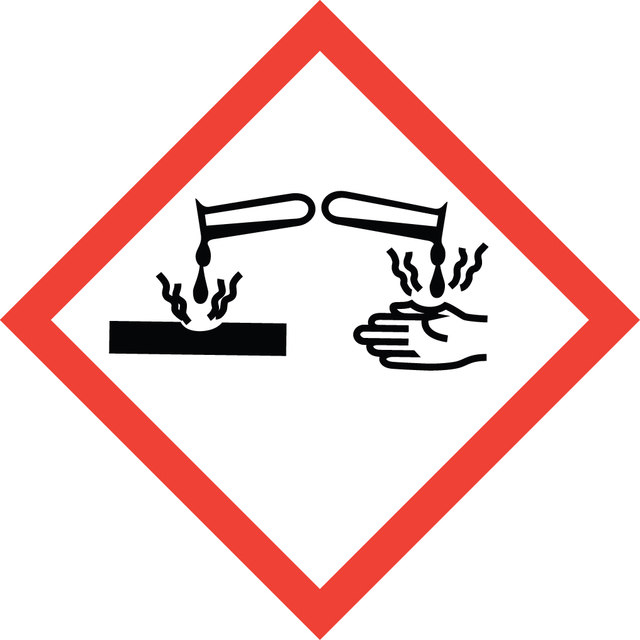

signalword
Danger
hcodes
Hazard Classifications
Acute Tox. 4 Oral - Eye Dam. 1 - Skin Corr. 1B
存储类别
8A - Combustible corrosive hazardous materials
wgk
WGK 1
flash_point_f
Not applicable
flash_point_c
Not applicable
法规信息
危险化学品
此项目有
Wangda Li et al.
Advanced materials (Deerfield Beach, Fla.), 32(33), e2002718-e2002718 (2020-07-07)
High-nickel LiNi1- x - y Mnx Coy O2 (NMC) and LiNi1- x - y Cox Aly O2 (NCA) are the cathode materials of choice for next-generation high-energy lithium-ion batteries. Both NMC and NCA contain cobalt, an expensive and scarce metal
全球贸易项目编号
| 货号 | GTIN |
|---|---|
| 930903-100G | 04065268960233 |
| 930903-1KG | 04065268960240 |