
931578

氯化钌 (III) 水合物
≥99.9% trace metals basis
别名:
三氯化钌
登录 查看组织和合同定价。
选择尺寸
变更视图
关于此项目
线性分子式:
RuCl3 · xH2O
化学文摘社编号:
分子量:
207.43 (anhydrous basis)
UNSPSC Code:
12352302
NACRES:
NA.21
MDL number:
Assay:
≥99.9% trace metals basis
Form:
powder
Solubility:
acetone: soluble ((lit.)), ethanol: soluble, water: soluble
Quality Level
assay
≥99.9% trace metals basis
form
powder
reaction suitability
core: ruthenium
impurities
≤1000.0 ppm (trace metals analysis)
solubility
acetone: soluble ((lit.)), ethanol: soluble, water: soluble
density
3.11 g/cm3
application(s)
PEM fuel cells
homogeneous catalyst
material synthesis precursor
SMILES string
O.Cl[Ru](Cl)Cl
InChI
1S/3ClH.H2O.Ru/h3*1H;1H2;/q;;;;+3/p-3
InChI key
BIXNGBXQRRXPLM-UHFFFAOYSA-K
General description
Ruthenium chloride hydrate is a dark brown or black solid often used as a powder. The hydrate is hygroscopic and is soluble in water, ethanol, acetone, and a wide range of polar organic solvents. The anhydrous form is insoluble.
Industrially, ruthenium trichloride hydrate is produced by dissolving ruthenium oxides in hydrochloric acid. The hydrated salt is obtained by recrystallization.
Industrially, ruthenium trichloride hydrate is produced by dissolving ruthenium oxides in hydrochloric acid. The hydrated salt is obtained by recrystallization.
Application
Ruthenium chloride is most used as a precursor for the synthesis of ruthenium complexes. Our RuCl3·H2O with 99.9% trace metals purity is well-suited for applications in materials science. One common application of ruthenium trichloride hydrate is in the synthesis of ruthenium nanoparticles, which are used as catalysts or composited with other materials and used as co-catalysts for both oxygen and hydrogen evolution reactions. Researchers have used our ruthenium chloride hydrate to produce high-quality, catalytically active ruthenium nanoparticles and ruthenium oxide nanoparticles.
Another common application of ruthenium chloride hydrate is as a precursor for single-atom catalysts. For example, scientists have used ruthenium chloride hydrate for the synthesis of ruthenium single-atom-doped ZrO2 particles to catalyze nitrogen fixation and for the synthesis of ruthenium single-atom-doped MXenes to catalyze hydrogen evolution. A third common application of ruthenium chloride hydrate is in the synthesis of metal alloys, like PtRuIr, or PtRuFe, which are investigated for electrocatalysis, usually the oxidation of simple organics like methanol or formic acid.
For use in all these applications, also consider our higher-purity ruthenium chloride hydrate, 463779, with trace metals purity greater than 99.98%, which offers the best reproducibility and purity.
Another common application of ruthenium chloride hydrate is as a precursor for single-atom catalysts. For example, scientists have used ruthenium chloride hydrate for the synthesis of ruthenium single-atom-doped ZrO2 particles to catalyze nitrogen fixation and for the synthesis of ruthenium single-atom-doped MXenes to catalyze hydrogen evolution. A third common application of ruthenium chloride hydrate is in the synthesis of metal alloys, like PtRuIr, or PtRuFe, which are investigated for electrocatalysis, usually the oxidation of simple organics like methanol or formic acid.
For use in all these applications, also consider our higher-purity ruthenium chloride hydrate, 463779, with trace metals purity greater than 99.98%, which offers the best reproducibility and purity.
Still not finding the right product?
Explore all of our products under 氯化钌 (III) 水合物


signalword
Danger
hcodes
Hazard Classifications
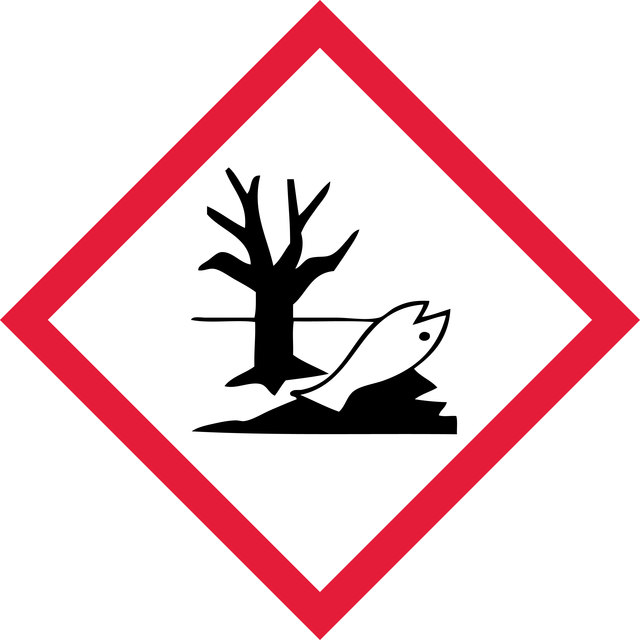
Acute Tox. 4 Oral - Aquatic Chronic 2 - Eye Dam. 1 - Skin Corr. 1B
存储类别
8A - Combustible corrosive hazardous materials
wgk
WGK 3
flash_point_f
Not applicable
flash_point_c
Not applicable
商品
Discover the ways in which high-purity metal salts improve the selectivity, yields, and catalytic efficacy of organic synthesis reactions.
Fabing Su et al.
Journal of the American Chemical Society, 129(46), 14213-14223 (2007-11-02)
We report here a thermal reduction method for preparing Ru catalysts supported on a carbon substrate. Mesoporous SBA-15 silica, surface-carbon-coated SBA-15, templated mesoporous carbon, activated carbon, and carbon black with different pore structures and compositions were employed as catalyst supports
全球贸易项目编号
| 货号 | GTIN |
|---|---|
| 931578-10G | 04065269000822 |
| 931578-2G | 04065269000839 |