
424641

二硫化碳
ReagentPlus®, purified by redistillation, ≥99.9%
登录 查看组织和合同定价。
选择尺寸
变更视图
关于此项目
经验公式(希尔记法):
CS2
化学文摘社编号:
分子量:
76.14
UNSPSC Code:
12352100
NACRES:
NA.21
PubChem Substance ID:
EC Number:
200-843-6
Beilstein/REAXYS Number:
1098293
MDL number:
Assay:
≥99.9%
Bp:
46 °C (lit.)
Vapor pressure:
5.83 psi
vapor density
2.67 (vs air)
vapor pressure
5.83 psi
product line
ReagentPlus®
assay
≥99.9%
form
liquid
autoignition temp.
212 °F
purified by
redistillation
expl. lim.
50 %
dilution
(for general lab use)
impurities
≤0.03% (water), ≤1.5 ppm hydrogen sulfide, ≤2.5 ppm sulfur dioxide, <100 ppb benzene (No single impurity > 100 ppb, measured as benzene), <500 ppb total hydrocarbon content
color
APHA: ≤10
refractive index
n20/D 1.627 (lit.)
bp
46 °C (lit.)
mp
−112-−111 °C (lit.)
solubility
alcohol: miscible(lit.), benzene: miscible(lit.)
density
1.266 g/mL at 25 °C (lit.)
SMILES string
S=C=S
InChI
1S/CS2/c2-1-3
InChI key
QGJOPFRUJISHPQ-UHFFFAOYSA-N
General description
Carbon disulfide is a toxic, highly volatile, flammable liquid with low ignition temperature. It can be synthesized by reacting hydrocarbon gas with sulfur. It is an important raw material for preparing viscose rayon and cellophane film. It shows fat solvent property. CS2 in water assists the peptide bond formation in amino acids.
Application
Carbon disulfide may be used in the xanthogenation of cellulose and in the synthesis of poly(ethylene trithiocarbonate).
Suitable for industrial hygiene analysis
Legal Information
ReagentPlus is a registered trademark of Merck KGaA, Darmstadt, Germany
Still not finding the right product?
Explore all of our products under 二硫化碳
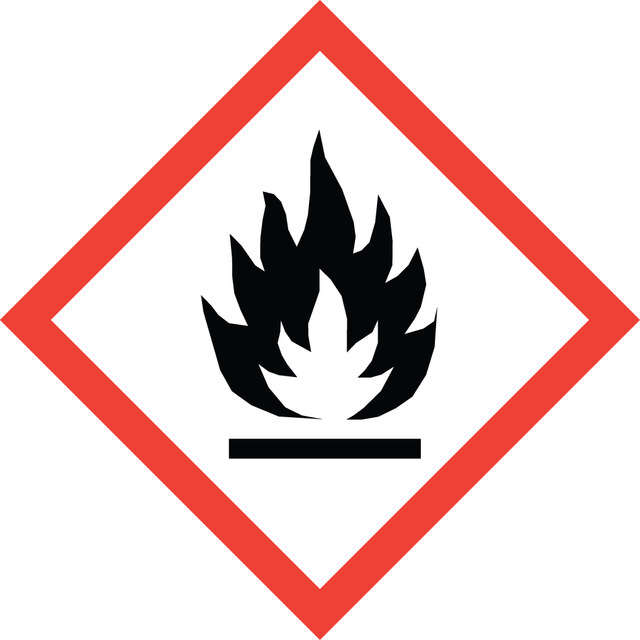
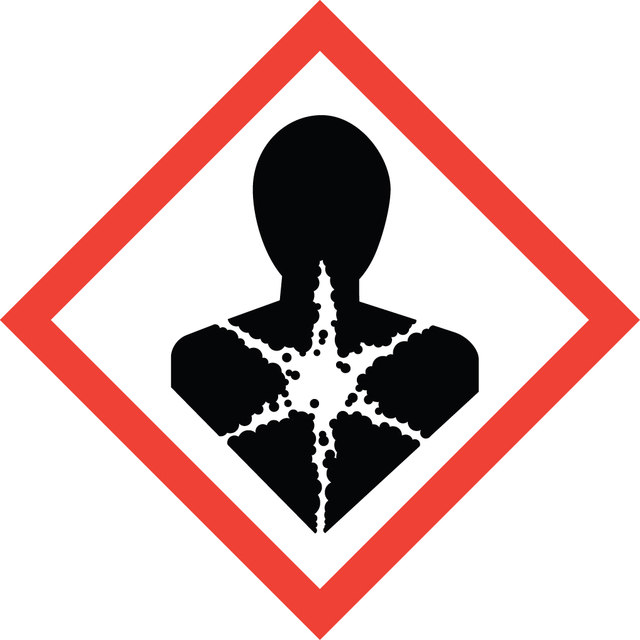

signalword
Danger
Hazard Classifications
Acute Tox. 4 Inhalation - Eye Irrit. 2 - Flam. Liq. 2 - Repr. 2 - Skin Irrit. 2 - STOT RE 1
target_organs
Peripheral nervous system,Central nervous system,Cardio-vascular system,Eyes
存储类别
3 - Flammable liquids
wgk
WGK 2
flash_point_f
-22.0 °F - closed cup
flash_point_c
-30 °C - closed cup
法规信息
新产品
此项目有
Luke J Leman et al.
Astrobiology, 15(9), 709-716 (2015-08-27)
Demonstrating plausible nonenzymatic polymerization mechanisms for prebiotic monomers represents a fundamental goal in prebiotic chemistry. While a great deal is now known about the potentially prebiotic synthesis of amino acids, our understanding of abiogenic polymerization processes to form polypeptides is
Carbon Disulfide.
Smith DE and Timmerman RW.
Kirk-Othmer Encyclopedia of Chemical Technology (2003)
Copolymerization of ethylene sulfide and carbon disulfide.
Soga K, et al.
Journal of Polymer Science Part A: Polymer Chemistry, 14(3), 677-684 (1976)
全球贸易项目编号
| 货号 | GTIN |
|---|---|
| 424641-100ML | 04061837234019 |