
126373

3,4-Dimethylaniline
98%
Synonym(s):
3,4-Xylidine, 4-Amino-1,2-dimethylbenzene, 4-Amino-o-xylene
Sign In to View Organizational & Contract Pricing.
Select a Size
Change View
About This Item
Linear Formula:
(CH3)2C6H3NH2
CAS Number:
Molecular Weight:
121.18
UNSPSC Code:
12352100
NACRES:
NA.22
PubChem Substance ID:
EC Number:
202-437-4
Beilstein/REAXYS Number:
507414
MDL number:
Assay:
98%
Quality Level
assay
98%
bp
226 °C (lit.)
mp
49-51 °C (lit.)
solubility
H2O: slightly soluble, alcohol: soluble
SMILES string
Cc1ccc(N)cc1C
InChI
1S/C8H11N/c1-6-3-4-8(9)5-7(6)2/h3-5H,9H2,1-2H3
InChI key
DOLQYFPDPKPQSS-UHFFFAOYSA-N
Application
3,4-Dimethylaniline (3,4-DMA) has been used to study the electron donor-acceptor (EDA) interaction between 2,3-dicyano-1,4-naphthoquinone (DCNQ) and 3,4-dimethylaniline, in chloroform and dichloromethane. It can also be used for reactions with MoO(X)2(dtc)2 (X = Cl or Br; dtc = diethyldithiocarbamate) in methanol to form ionic imido complexes of the type [MoNAr(dtc)3]2[Mo6O19] or MoNAr(dtc)3]4[Mo8O26].
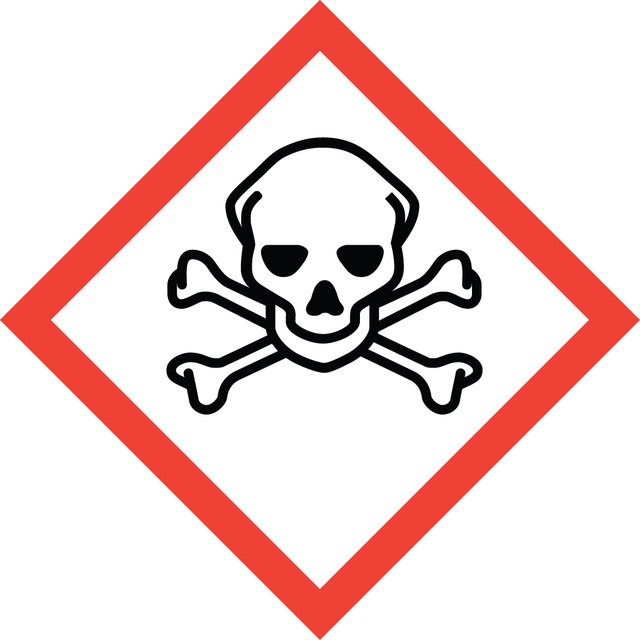
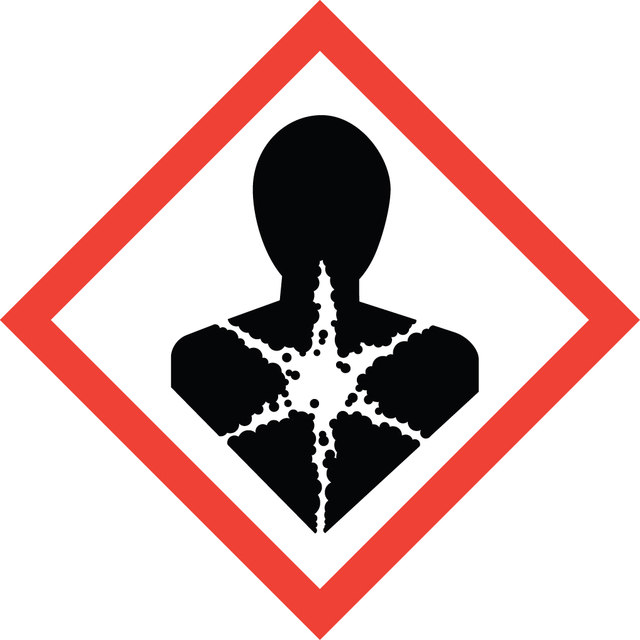

signalword
Danger
Hazard Classifications
Acute Tox. 3 Dermal - Acute Tox. 3 Inhalation - Acute Tox. 3 Oral - Aquatic Chronic 2 - STOT RE 2
Storage Class
6.1A - Combustible acute toxic Cat. 1 and 2 / very toxic hazardous materials
wgk
WGK 3
flash_point_f
224.6 °F - closed cup
flash_point_c
107 °C - closed cup
ppe
dust mask type N95 (US), Eyeshields, Faceshields, Gloves, type P2 (EN 143) respirator cartridges
Regulatory Information
新产品
This item has
Choose from one of the most recent versions:
Already Own This Product?
Find documentation for the products that you have recently purchased in the Document Library.
Martin Minelli et al.
Inorganic chemistry, 41(23), 5954-5960 (2002-11-12)
Anilines with alkyl substituents on the phenyl ring (ArNH2 = 2,4,6-trimethylaniline; 2,3-, 2,4-, 2,6-, and 3,4-dimethylaniline; and 2,6-diisopropylaniline) react with MoO(X)2(dtc)2 (X = Cl or Br; dtc = diethyldithiocarbamate) in methanol in the presence of 2 equiv of triethylamine to
Gururaj M Neelgund et al.
Spectrochimica acta. Part A, Molecular and biomolecular spectroscopy, 78(1), 480-487 (2010-12-15)
The electron donor-acceptor (EDA) interaction between 2,3-dicyano-1,4-naphthoquinone (DCNQ) and 3,4-dimethylaniline (3,4-DMA) is studied in chloroform, dichloromethane and 1:1 (v/v) mixture of chloroform and dichloromethane. The rate of formation of the product was measured as a function of time using UV-vis
Akito Takeuchi et al.
Journal of occupational health, 53(3), 230-233 (2011-03-23)
The purpose of this research was to develop a determination method for xylidines (XLDs) in workplace air for risk assessment. The characteristics of the proposed method, such as recovery, detection limit, reproducibility, and storage stability of the samples were examined.
Global Trade Item Number
| SKU | GTIN |
|---|---|
| 126373-100G | 04061838724106 |