Skip to Content
Merck
CN

191973

Poly(2-acrylamido-2-methyl-1-propanesulfonic acid) solution

average Mw 2,000,000, 15 wt. % in H2O

Synonym(s):

2-Acrylamido-2-methyl-1-propanesulfonic acid polymer, 2-Acrylamido-2-methylpropanesulfonic acid polymer, PolyAMPS

Sign In to View Organizational & Contract Pricing.

Select a Size

Change View

About This Item

CAS Number:
NACRES:
NA.23
PubChem Substance ID:
UNSPSC Code:
12162002
MDL number:
Technical Service
Need help? Our team of experienced scientists is here for you.
Let Us Assist


mol wt

average Mw 2,000,000

Quality Level

concentration

15 wt. % in H2O

pH

1.0-3.0

surface tension

79.8 dyn/cm, 1 wt. %

viscosity

~200,000 cP, Brookfield RVT(lit.)

acid number

41‑45 mg KOH/g

SMILES string

CC(C)(CS(O)(=O)=O)NC(=O)C=C

InChI

1S/C7H13NO4S/c1-4-6(9)8-7(2,3)5-13(10,11)12/h4H,1,5H2,2-3H3,(H,8,9)(H,10,11,12)

InChI key

XHZPRMZZQOIPDS-UHFFFAOYSA-N

Application

Thickening agent for acidic or basic cleaning agents, friction reducing agent, water-based lubricant, mineral scale remover and suspension aid for pigments and fillers. Rheology control agent in water and some organic solvents.

Features and Benefits

Solutions are pseudoplastic but not thixotropic. Stable in 50% HCl solutions. Compatible with anionic and non-ionic thickeners, surfactants and preservatives.


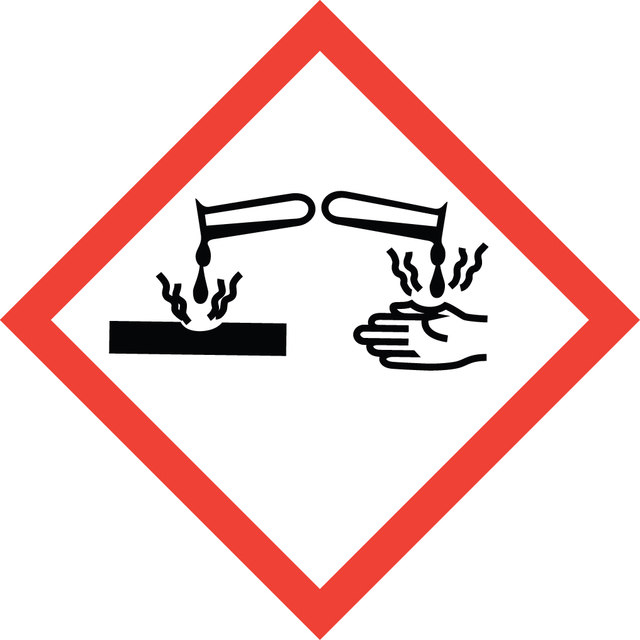
pictograms

Corrosion

signalword

Danger

hcodes

Hazard Classifications

Skin Corr. 1A

Storage Class

8A - Combustible corrosive hazardous materials

wgk

WGK 3

flash_point_f

Not applicable

flash_point_c

Not applicable


Choose from one of the most recent versions:

Certificates of Analysis (COA)

Lot/Batch Number

Don't see the Right Version?

If you require a particular version, you can look up a specific certificate by the Lot or Batch number.

Already Own This Product?

Find documentation for the products that you have recently purchased in the Document Library.

Visit the Document Library


Articles

We present an article that discusses two applications in particular; first, using these layers as polyelectrolyte membranes to control permeability.


Yoshie Tanabe et al.
Journal of materials science. Materials in medicine, 19(3), 1379-1387 (2007-10-05)
The study evaluated biological reaction of four types of novel double network gels in muscle and subcutaneous tissues, using implantation tests according to the international guideline. The implantation tests demonstrated that, although poly (2-acrylamide-2-metyl-propane sulfonic acid)/poly (N,N'-dimetyl acrylamide) (PAMPS/PDMAAm) gel
Hidetoshi Matsuda et al.
BMC musculoskeletal disorders, 14, 50-50 (2013-02-02)
A double-network (DN) gel, which is composed of poly(2-acrylamido-2-methylpropanesulfonic acid) and poly(N,N'-dimethyl acrylamide), can induce hyaline cartilage regeneration in vivo in a large osteochondral defect. The purpose of this study was to clarify the influence of the thickness of the
Carolyn L Bayer et al.
Journal of biomaterials science. Polymer edition, 21(5), 623-634 (2010-03-27)
Conductive polymers can be utilized as unique functional elements in future intelligent biomaterials required for tissue engineering, cell stimulation and drug delivery. Research in these areas could be limited by established methods of conductive polymer synthesis which do not provide


Global Trade Item Number

SKUGTIN
191973-100G04061838760395
191973-250G04061833595275