Skip to Content
Merck
CN

203572

Lead(II) chloride

99.999% trace metals basis

Synonym(s):

Cotunnite

Sign In to View Organizational & Contract Pricing.

Select a Size

Change View

About This Item

Linear Formula:
PbCl2
CAS Number:
Molecular Weight:
278.11
NACRES:
NA.23
PubChem Substance ID:
UNSPSC Code:
12352302
EC Number:
231-845-5
MDL number:
Assay:
99.999% trace metals basis
Form:
powder and chunks
Solubility:
aliphatic hydrocarbons: slightly soluble(lit.)
Technical Service
Need help? Our team of experienced scientists is here for you.
Let Us Assist


vapor pressure

1 mmHg ( 547 °C)

Quality Level

assay

99.999% trace metals basis

form

powder and chunks

reaction suitability

core: lead, reagent type: catalyst

impurities

≤15.0 ppm Trace Metal Analysis

bp

950 °C (lit.)

mp

501 °C (lit.)

solubility

aliphatic hydrocarbons: slightly soluble(lit.)

density

5.85 g/mL at 25 °C (lit.)

application(s)

material synthesis precursor
perovskite solar cells

SMILES string

Cl[PbH2]Cl

InChI

1S/2ClH.Pb/h2*1H;/q;;+2/p-2

InChI key

HWSZZLVAJGOAAY-UHFFFAOYSA-L

General description

Prepared by reacting lead(II) oxide /acetate or carbonate with HCl. In crystalline PbCl2, each atom is coordinated by nine Cl atoms, six of which lie at the apices of a trigonal prism and the remaining three beyond the centers of the three prism faces. Each Cl is coordinated by four or five Pb atoms. Upon exposure to air it form basic chlorides such as PbCl2.Pb(OH)2.

Application

Lead(II) chloride (PbCl2) (99.999%) is a lead halide that can be used in the formation of a precursor solution to form perovskite films. These films and sheets can be used in the fabrication of hybride solar absorbers and photodetectors. It also has potential application as a thermoelectric material.


Still not finding the right product?

Explore all of our products under Lead(II) chloride
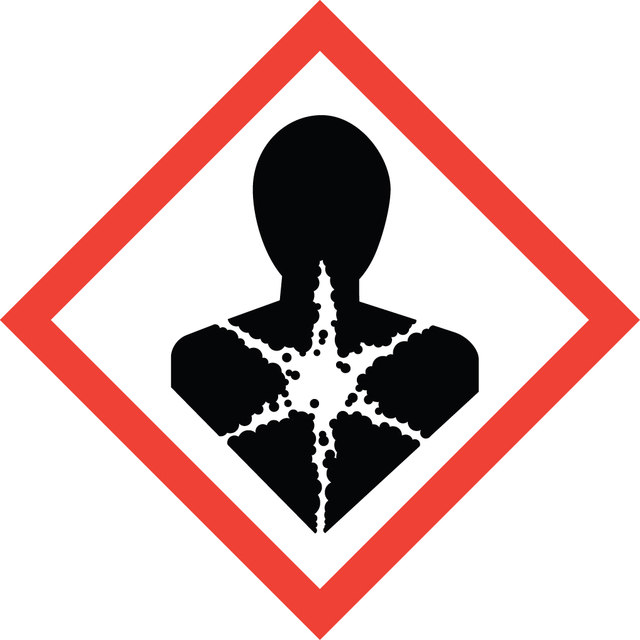

signalword

Danger

Storage Class

6.1C - Combustible acute toxic Cat.3 / toxic compounds or compounds which causing chronic effects

flash_point_f

Not applicable

flash_point_c

Not applicable

ppe

Eyeshields, Gloves, type P3 (EN 143) respirator cartridges

target_organs

Central nervous system,Kidney,Blood

Hazard Classifications

Acute Tox. 4 Inhalation - Acute Tox. 4 Oral - Aquatic Acute 1 - Aquatic Chronic 1 - Carc. 2 - Lact. - Repr. 1A - STOT RE 1


Choose from one of the most recent versions:

Certificates of Analysis (COA)

Lot/Batch Number

Don't see the Right Version?

If you require a particular version, you can look up a specific certificate by the Lot or Batch number.

Already Own This Product?

Find documentation for the products that you have recently purchased in the Document Library.

Visit the Document Library


Articles

近几十年来,人们对于环境可持续、商业可行的能源的迫切需求,催生并推动了大量致力实现低生产成本、高能效发电系统的研究工作。

Controlled synthesis of metal clusters regulates ligands and atoms, advancing metal nanomaterial synthesis.

Colloidal quantum dots (CQDs) are semiconducting crystals of only a few nanometers (ca. 2–12 nm) coated with ligand/surfactant molecules to help prevent agglomeration.

View All Articles

Takashi Okada et al.
Journal of environmental management, 110, 207-214 (2012-07-14)
This study investigated the effect of the chemical composition of incineration fly ash on the leaching characteristics of Pb from melting furnace fly ash generated by melting incineration fly ash. Melting furnace fly ash from both a real-scale melting process
Ingrid Carruyo et al.
Biological trace element research, 125(3), 276-285 (2008-07-19)
The present study determines lead content in onion root tip cells (Allium cepa L.), correlating it with its toxicity. The treatment was carried at 25 +/- 0.5 degrees C using aqueous solutions of lead chloride at 0.1, 0.25, 0.50, 0.75
I Sá et al.
Toxicology and industrial health, 28(2), 108-113 (2011-06-15)
The increasing use of lead (Pb) for industrial purposes has resulted in the significant increase in environmental contamination of our planet especially in concern to water and food. In this study using the electron scanning microscopy (SEM), the authors showed


Global Trade Item Number

SKUGTIN
203572-10G04061838766083
203572-50G04061838766090