
218928

Sodium dichloroisocyanurate
96%
Synonym(s):
NaDCC, 3,5-Dichloro-2-hydroxy-4,6-s-triazinedione sodium salt, Dichloro-s-triazinetrione sodium salt
Sign In to View Organizational & Contract Pricing.
Select a Size
Change View
About This Item
Empirical Formula (Hill Notation):
C3Cl2N3NaO3
CAS Number:
Molecular Weight:
219.95
NACRES:
NA.22
PubChem Substance ID:
UNSPSC Code:
12352005
EC Number:
220-767-7
MDL number:
Assay:
96%
Form:
(Granules or Granular Powder)
Quality Level
assay
96%
form
(Granules or Granular Powder)
reaction suitability
reagent type: oxidant
SMILES string
[Na]N1C(=O)N(Cl)C(=O)N(Cl)C1=O
InChI
1S/C3HCl2N3O3.Na/c4-7-1(9)6-2(10)8(5)3(7)11;/h(H,6,9,10);/q;+1/p-1
InChI key
MSFGZHUJTJBYFA-UHFFFAOYSA-M
General description
Sodium dichloroisocyanurate (NaDCC) is also used as a precursor to produce hypochlorous acid, a known oxidizing agent used in organic synthesis.
Application
NaDCC can be used as:
It can also be used to prepare NaDCC immobilized magnetic nano-Fe3O4 material, which is used as an excellent disinfectant as well as a wastewater treatment agent.
- An oxidizing reagent for the preparation of tetrazene(N–N=N–N)-linked bi(1,2,4-triazole) from 4-amino-1,2,4-triazole by oxidizing N-NH2 functional group.
- A chlorinating agent for the N-monochlorination of α-amino esters and α-amino-β-diesters.
It can also be used to prepare NaDCC immobilized magnetic nano-Fe3O4 material, which is used as an excellent disinfectant as well as a wastewater treatment agent.
-Reactant or reagent for:
- N-monochlorination and dehydrochlorination of amino esters
- Chlorination to detect ammonium via formation of colored zebra-bands in a deteting tube
- Synthesis of antimicrobial polyurethane additives to control biofilm
- Preparation of bromochloroisocyanurate for electrophilic cobromination of alkenes and bromination of arenes
Disclaimer
The product is not intended for use as a biocide under global biocide regulations, including but not limited to US EPA′s Federal Insecticide Fungicide and Rodenticide Act, European Biocidal Products Regulation, Canada’s Pest Management Regulatory Agency, Turkey’s Biocidal Products Regulation, Korea’s Consumer Chemical Products and Biocide Safety Management Act (K-BPR) and others.
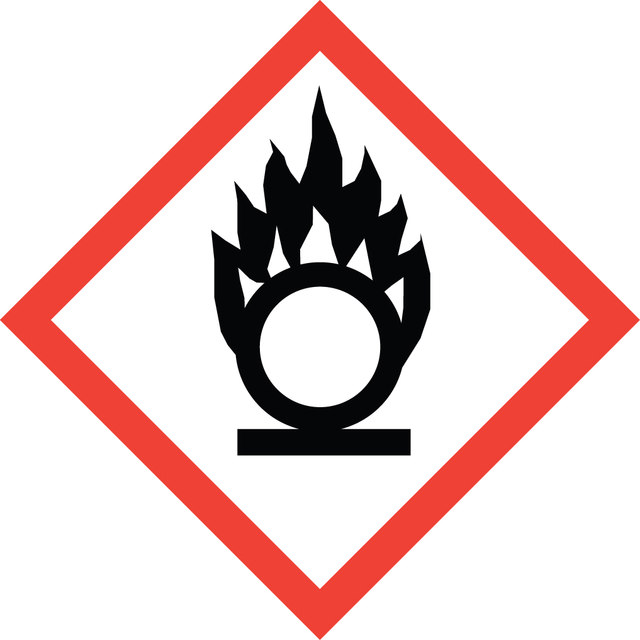



signalword
Danger
hcodes
Hazard Classifications
Acute Tox. 4 Oral - Aquatic Acute 1 - Aquatic Chronic 1 - Eye Dam. 1 - Ox. Sol. 2 - Skin Corr. 1A - STOT SE 3
target_organs
Respiratory system
supp_hazards
Storage Class
4.1A - Other explosive hazardous materials
wgk
WGK 2
flash_point_f
Not applicable
flash_point_c
Not applicable
ppe
Eyeshields, Gloves, type P3 (EN 143) respirator cartridges
Choose from one of the most recent versions:
Already Own This Product?
Find documentation for the products that you have recently purchased in the Document Library.
Steffen Werner et al.
Environmental pollution (Barking, Essex : 1987), 233, 561-568 (2017-11-06)
In many water-scarce countries, waste water is used for irrigation which poses a health risk to farmers and consumers. At the same time, it delivers nutrients to the farming systems. In this study, we tested the hypotheses that biochar can
Thinikan Thongkam et al.
Analytical methods : advancing methods and applications, 12(38), 4649-4656 (2020-09-09)
This study reports a convenient and low cost paper-based analytical device (PAD) for measuring ammonium in soil. This PAD has been developed using an inexpensive UV resin solution, as a new hydrophobic material, with a screen-printing method to create hydrophobic
Levent Kenar et al.
Military medicine, 172(6), 616-621 (2007-07-10)
Because of spore formation, Bacillus anthracis is considered the most resistant biological warfare agent known. The present study aimed to assess and compare well-known decontamination routes to inactivate the spores on daily-use environmental tools contaminated previously. To simulate the agent
Global Trade Item Number
| SKU | GTIN |
|---|---|
| 218928-500G | 04061838775733 |
| 218928-25G | 04061838775726 |