
255645

Cesium carbonate
99.995% trace metals basis
Synonym(s):
Carbonic acid dicesium
Sign In to View Organizational & Contract Pricing.
Select a Size
Change View
About This Item
Linear Formula:
Cs2CO3
CAS Number:
Molecular Weight:
325.82
UNSPSC Code:
26111700
NACRES:
NA.23
PubChem Substance ID:
EC Number:
208-591-9
Beilstein/REAXYS Number:
4546405
MDL number:
Quality Level
assay
99.995% trace metals basis
form
powder
reaction suitability
core: Cesium
mp
610 °C (dec.) (lit.)
application(s)
battery manufacturing
SMILES string
[Cs+].[Cs+].[O-]C([O-])=O
InChI
1S/CH2O3.2Cs/c2-1(3)4;;/h(H2,2,3,4);;/q;2*+1/p-2
InChI key
FJDQFPXHSGXQBY-UHFFFAOYSA-L
General description
Cesium carbonate is a mild inorganic base widely used inelectroluminescent devices and organic synthesis. Due to its excellent electroninjection capability, it is used as an interface modifying material in organiclight-emitting diodes (OLED), organic field effect transistors (OFET), organicsolar cells (OSCs), and perovskite solar cells.
Application
Cesium carbonate can be used as:
- A cathode buffer layer to enhance device stability and power conversion efficiency in polymer solar cells.
- A precursor to prepare alkali-based electrolyte for selective reduction of CO2 by electrocatalysis.
- A base in many organic transformations such as C, N, O alkylation, and arylation reactions.
Promotes the efficient O-alkylation of alcohols to form mixed alkyl carbonates.
Still not finding the right product?
Explore all of our products under Cesium carbonate
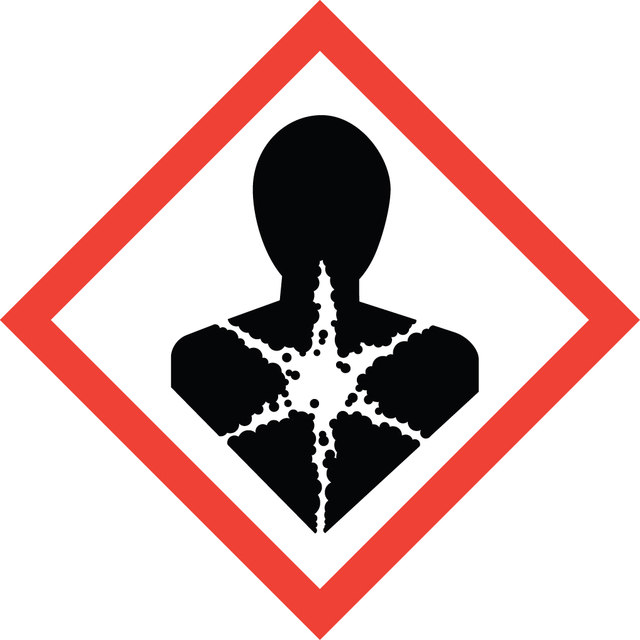

signalword
Danger
hcodes
Hazard Classifications
Eye Dam. 1 - Repr. 2 - STOT RE 2 Oral
target_organs
Kidney,Adrenal gland,Testes
Storage Class
13 - Non Combustible Solids
wgk
WGK 2
flash_point_f
Not applicable
flash_point_c
Not applicable
ppe
dust mask type N95 (US), Eyeshields, Gloves
Choose from one of the most recent versions:
Already Own This Product?
Find documentation for the products that you have recently purchased in the Document Library.
Articles
Professor Aran discusses engineering graphene-based materials through careful functionalization, enabling diverse applications.
Qi Wang et al.
ChemSusChem, 14(4), 1131-1139 (2021-01-08)
Photocatalytic reduction of CO2 into value-added chemical fuels is an appealing approach to address energy crisis and global warming. CsPbBr3 quantum dots (QDs) are good candidates for CO2 reduction because of their excellent photoelectric properties, including high molar extinction coefficient
Yb3+ and Yb3+/Er3+ Doping for Near-Infrared Emission and Improved Stability of CsPbCl3 Nanocrystals.
Xiangtong Zhang et al.
Journal of materials chemistry. C, 6(37), 10101-10105 (2018-12-07)
Lead halide perovskite nanocrystals (NCs) exhibit excellent tunable emissions covering the entire visible spectral region, but they do not emit near-infrared (NIR) light. We synthesized rare earth element doped CsPbCl3 NCs for NIR emission. The Yb3+ doped CsPbCl3 NCs emitted
Chu, F. et al.
Tetrahedron Letters, 40, 1847-1847 (1999)
Global Trade Item Number
| SKU | GTIN |
|---|---|
| 255645-10G | 04061826016404 |
| 255645-50G | 04061826016411 |