Skip to Content
Merck
CN

257354

1-Pyrenebutyric acid

97%

Synonym(s):

4-(1-Pyrenyl)butyric acid, PyBA

Sign In to View Organizational & Contract Pricing.

Select a Size

Change View

About This Item

Empirical Formula (Hill Notation):
C20H16O2
CAS Number:
Molecular Weight:
288.34
Beilstein/REAXYS Number:
2140554
UNSPSC Code:
12352103
NACRES:
NA.23
PubChem Substance ID:
EC Number:
222-354-7
MDL number:
Technical Service
Need help? Our team of experienced scientists is here for you.
Let Us Assist


Quality Level

assay

97%

form

powder

mp

184-186 °C (lit.)

fluorescence

λex 341 nm; λem 376 nm in methanol, λex 342 nm; λem 395 nm (Reaction product)

SMILES string

OC(=O)CCCc1ccc2ccc3cccc4ccc1c2c34

InChI

1S/C20H16O2/c21-18(22)6-2-3-13-7-8-16-10-9-14-4-1-5-15-11-12-17(13)20(16)19(14)15/h1,4-5,7-12H,2-3,6H2,(H,21,22)

InChI key

QXYRRCOJHNZVDJ-UHFFFAOYSA-N

General description

1-Pyrenebutyric acid (PBA) is a conjugated polymer that has a large π system and a carboxylic group. It is majorly used in surface functionalization. It has a high fluorescence efficiency and stability that make it useful in optoelectronic applications.

Application

PBA can be grafted on the surface of graphene and can be used in sensors. It can also be in the fabrication of ultracapacitor electrodes as alternative storage systems. It can also be used in the formation of multi-layered film for photovoltaic applications.


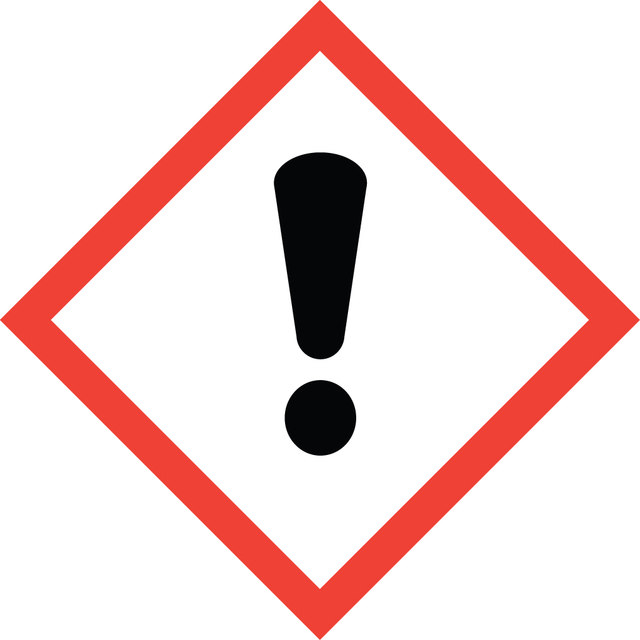
pictograms

Exclamation mark

signalword

Warning

Hazard Classifications

Eye Irrit. 2 - Skin Irrit. 2 - STOT SE 3

target_organs

Respiratory system

Storage Class

11 - Combustible Solids

wgk

WGK 3

flash_point_f

Not applicable

flash_point_c

Not applicable

ppe

dust mask type N95 (US), Eyeshields, Gloves


Choose from one of the most recent versions:

Certificates of Analysis (COA)

Lot/Batch Number

Don't see the Right Version?

If you require a particular version, you can look up a specific certificate by the Lot or Batch number.

Already Own This Product?

Find documentation for the products that you have recently purchased in the Document Library.

Visit the Document Library


Articles

一氧化氮 (NO) 是神经元、内皮细胞和免疫系统中的信号转运分子。

Nitric oxide (NO) as a signal transporter in neurons, endothelial cells and in the immune system.


Ming-Yuan Wei et al.
Biosensors & bioelectronics, 24(9), 2909-2914 (2009-03-27)
A redox-labeled direct competitive electrochemical immunoassay for polycyclic aromatic hydrocarbons (PAHs) was developed. A ruthenium tris(bipyridine)-pyrenebutyric acid conjugate was synthesized as the redox-labeled tracer. Its recognition by an anti-PAH monoclonal antibody was confirmed by surface plasmon resonance. In the immunoassay
Yongzheng Yang et al.
Organic & biomolecular chemistry, 4(9), 1746-1754 (2006-04-25)
FRET-based fluorogenic substrates for lipases and esterases were prepared in four steps from commercially available building blocks. The substrates are pyrenebutyric acid monoesters of aliphatic 1,2-diols bearing a dinitrophenylamino group as a quencher. The most enzyme-reactive substrate is ester 2a.
Peter Guterstam et al.
Biochimica et biophysica acta, 1788(12), 2509-2517 (2009-10-03)
Cell-penetrating peptides (CPPs) are membrane permeable vectors recognized for their intrinsic ability to gain access to the cell interior. The hydrophobic counter-anion, pyrenebutyrate, enhances cellular uptake of oligoarginine CPPs. To elucidate CPP uptake mechanisms, the effect of pyrenebutyrate on well-recognized


Global Trade Item Number

SKUGTIN
257354-1G04061826059319
257354-5G04061826059333