
Sign In to View Organizational & Contract Pricing.
Select a Size
Change View
About This Item
Linear Formula:
Br2C6H3OH
CAS Number:
Molecular Weight:
251.90
UNSPSC Code:
12352100
NACRES:
NA.22
PubChem Substance ID:
EC Number:
210-436-5
Beilstein/REAXYS Number:
1861291
MDL number:
Assay:
95%
Form:
solid
assay
95%
form
solid
bp
154 °C/11 mmHg (lit.)
mp
35-38 °C (lit.)
functional group
bromo
SMILES string
Oc1ccc(Br)cc1Br
InChI
1S/C6H4Br2O/c7-4-1-2-6(9)5(8)3-4/h1-3,9H
InChI key
FAXWFCTVSHEODL-UHFFFAOYSA-N
Gene Information
human ... ALOX12(239), ALOX15(246)
General description
The electrochemical hydrodehalogenation of 2,4-dibromophenol has been studied by electrochemical reduction in H-cells and solid polymer electrolyte cells using catalyzed cathodes. 2,4-Dibromophenol inhibits the microbial activity in marine sediments.
signalword
Danger
hcodes
Hazard Classifications
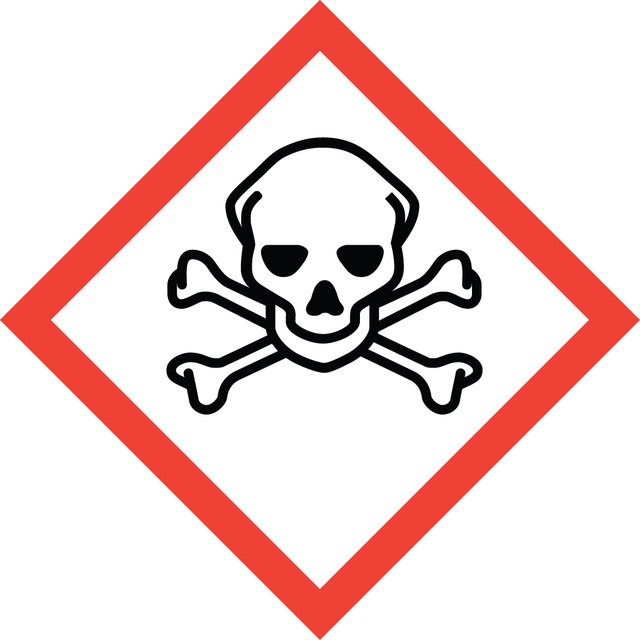
Acute Tox. 2 Oral - Eye Irrit. 2 - Skin Irrit. 2 - STOT SE 3
target_organs
Respiratory system
Storage Class
6.1A - Combustible acute toxic Cat. 1 and 2 / very toxic hazardous materials
wgk
WGK 3
flash_point_f
235.4 °F - closed cup
flash_point_c
113 °C - closed cup
ppe
Eyeshields, Faceshields, Gloves, type P2 (EN 143) respirator cartridges
Choose from one of the most recent versions:
Already Own This Product?
Find documentation for the products that you have recently purchased in the Document Library.
Inhibition of microbial activity in marine sediments by a bromophenol from a hemichordate.
King GM.
Nature, 323(6085), 257-259 (1986)
H Cheng et al.
Environmental science & technology, 38(2), 638-642 (2004-01-31)
A new technology for remediation of halogenated organics-oil systems, which can cause serious environmental problems, has been demonstrated using the electrochemical hydrodehalogenation of 2,4-dibromophenol (DBP) in paraffin oil in a solid polymer electrolyte reactor. The reactor has been evaluated in
G M King
Applied and environmental microbiology, 54(12), 3079-3085 (1988-12-01)
Halophenols such as 2,4-dibromophenol (DBP) occur naturally in some marine sediments, as a consequence of various animal and algal activities. In an earlier study, DBP was observed in the burrow microenvironment of the hemichordate Saccoglossus kowalewskii. At the concentrations found
Global Trade Item Number
| SKU | GTIN |
|---|---|
| 258164-100G | 04061826061435 |
| 258164-5G | 04061826061459 |