Sign In to View Organizational & Contract Pricing.
Select a Size
Change View
About This Item
Linear Formula:
[H2C=C(CH3)CO]2O
CAS Number:
Molecular Weight:
154.16
UNSPSC Code:
12162002
NACRES:
NA.23
PubChem Substance ID:
MDL number:
Beilstein/REAXYS Number:
1761982
Quality Level
assay
≥98%
form
liquid
contains
2,000 ppm topanol A as inhibitor
refractive index
n20/D 1.453 (lit.)
bp
87 °C/13 mmHg (lit.)
density
1.035 g/mL at 25 °C (lit.)
SMILES string
CC(=C)C(=O)OC(=O)C(C)=C
InChI
1S/C8H10O3/c1-5(2)7(9)11-8(10)6(3)4/h1,3H2,2,4H3
InChI key
DCUFMVPCXCSVNP-UHFFFAOYSA-N
General description
Methacrylic anhydride is an organic compound derived from methacrylic acid, which belongs to the class of acrylic acids. It is primarily employed as a monomer in the production of polymers, particularly poly(methacrylic acid) and its copolymers. These polymers find applications in a wide range of industries, including bio-renewable resins, pH-sensitive hydrogels, thermosets, coatings, adhesives, and plastics, due to their excellent chemical and thermal stability. In the polymerization of methacrylic anhydride, the most common inhibitor used is Topanol A. It is typically added in small quantities (2,000 ppm) to hinder undesirable side reactions during the polymerization, ensuring controlled and high-quality polymer formation.
Application
Methacrylic anhydride can be used as a starting material to synthesize:
- Methacrylated chondroitin sulfate pH-sensitive hydrogels by copolymerization reaction. These hydrogels can be used in drug delivery systems.
- High-performance lignin-based thermosets.
- Gel polymer electrolyte, which is then integrated with the cathode to form high-performance lithium-ion batteries.
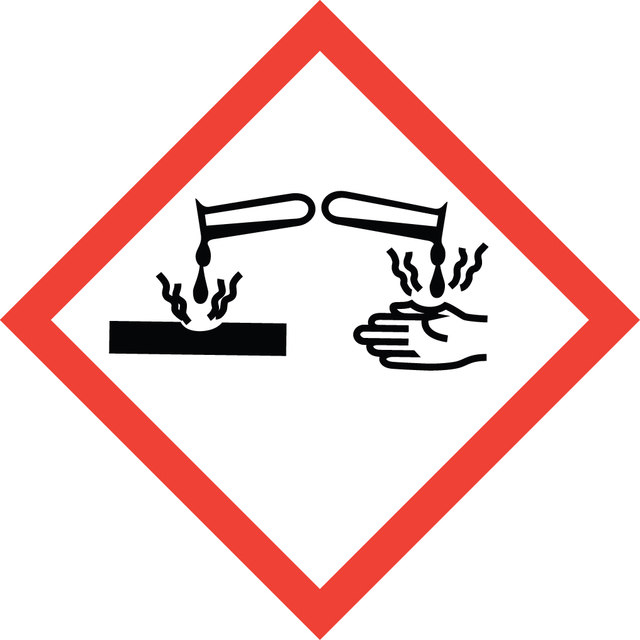
signalword
Danger
Hazard Classifications
Acute Tox. 4 Inhalation - Acute Tox. 4 Oral - Eye Dam. 1 - Skin Irrit. 2 - Skin Sens. 1 - STOT SE 3
target_organs
Respiratory system
Storage Class
10 - Combustible liquids
wgk
WGK 2
flash_point_f
183.2 °F - closed cup
flash_point_c
84 °C - closed cup
ppe
Eyeshields, Faceshields, Gloves, type ABEK (EN14387) respirator filter
Choose from one of the most recent versions:
Already Own This Product?
Find documentation for the products that you have recently purchased in the Document Library.
Articles
Discussion of synthetic modifications to gelatin, improving the three-dimensional (3D) print resolution, and resulting material properties.
A I Van Den Bulcke et al.
Biomacromolecules, 1(1), 31-38 (2001-11-17)
Dynamic shear oscillation measurements at small strain were used to characterize the viscoelastic properties and related differences in the molecular structure of hydrogels based on gelatin methacrylamide. Gelatin was derivatized with methacrylamide side groups and was subsequently cross-linked by radical
G Bahcecioglu et al.
Biomaterials, 218, 119361-119361 (2019-07-25)
A PCL/hydrogel construct that would mimic the structural organization, biochemistry and anatomy of meniscus was engineered. The compressive (380 ± 40 kPa) and tensile modulus (18.2 ± 0.9 MPa) of the PCL scaffolds were increased significantly when constructs were printed with a shifted design and circumferential
Efficient catechol functionalization of biopolymeric hydrogels for effective multiscale bioadhesion.
Kunyu Zhang et al.
Materials science & engineering. C, Materials for biological applications, 103, 109835-109835 (2019-07-28)
Hydrogels are promising soft materials for the delivery of therapeutic cells and cargo molecules. Inspired by mussel adhesion chemistry, hydrogels based on catechol (Cat)-modified polysaccharides have been developed to enhance hydrogel-tissue interactions. However, due to the inevitable side reactions such
Global Trade Item Number
| SKU | GTIN |
|---|---|
| 276685-100ML | 04061826185865 |
| 276685-500ML | 04061826185872 |