
289132

Urea hydrogen peroxide
97%
Synonym(s):
Hydrogen peroxide–Urea adduct, Carbamide Per hydrate, Carbamide peroxide, Percarbamide, Urea hydrogen peroxide
Sign In to View Organizational & Contract Pricing.
Select a Size
Change View
About This Item
Linear Formula:
CO(NH2)2 · H2O2
CAS Number:
Molecular Weight:
94.07
UNSPSC Code:
12352111
NACRES:
NA.22
PubChem Substance ID:
EC Number:
204-701-4
Beilstein/REAXYS Number:
3680414
MDL number:
Assay:
97%
Form:
solid
vapor pressure
23.3 mmHg ( 30 °C)
Quality Level
assay
97%
form
solid
reaction suitability
reagent type: oxidant
mp
90-93 °C (lit.)
functional group
amine
storage temp.
room temp
SMILES string
OO.NC(N)=O
InChI
1S/CH4N2O.H2O2/c2-1(3)4;1-2/h(H4,2,3,4);1-2H
InChI key
AQLJVWUFPCUVLO-UHFFFAOYSA-N
General description
Urea hydrogen peroxide (UHP) is an oxidizing agent consisting of urea and hydrogen peroxide. In the presence of carboxylic anhydrides, UHP is employed in a variety of oxidative conversions in anhydrous organic solvents. UHP is used as a hydrogen peroxide source in the oxidation reaction.
Application
Urea hydrogen peroxide can be used as an oxidizing agent:
- In the conversion of sulfides to sulfoxides or sulfones under solvent free condition.
- In the conversion of nitrogen heterocycles to their corresponding N-oxides.
- In the epoxidation of various alkene in combination with number of carboxylic anhydrides and disodium hydrogen phosphate in anhydrous organic solvents.
- In the Baeyer–Villiger oxidation reaction where in aldehydes and ketones undergo oxidation to produce esters and lactones using various peroxycarboxylic acids.
Features and Benefits
UHP is:
- Inexpensive.
- Stable.
- Easy handling reagent.
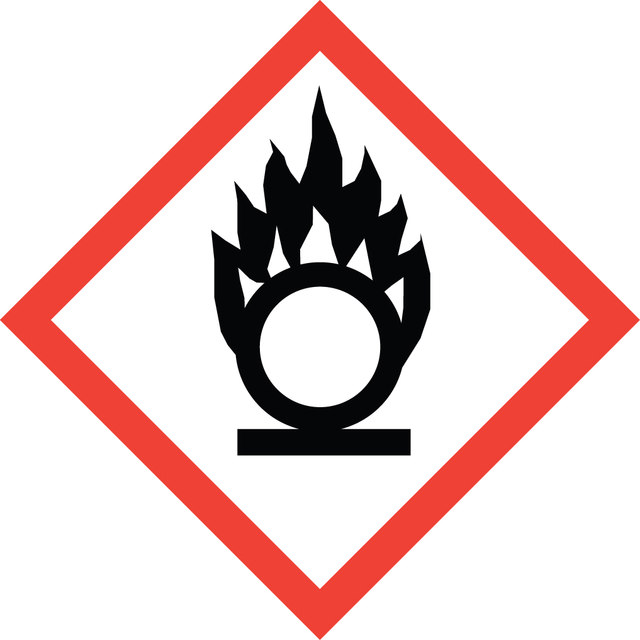
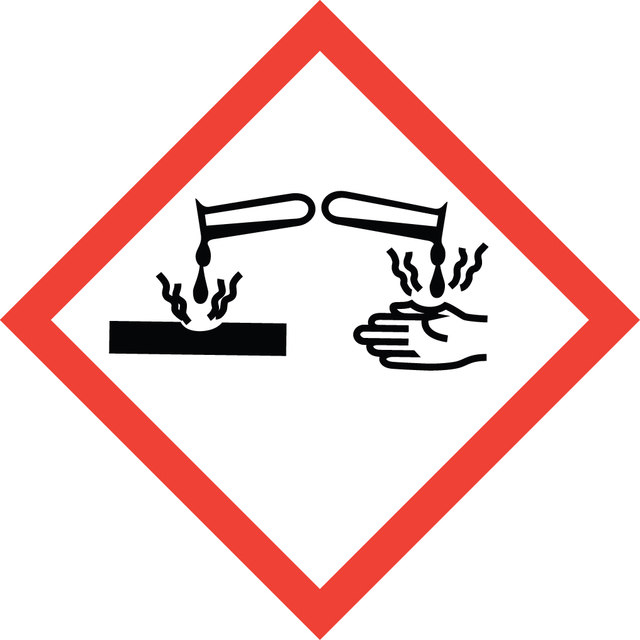
signalword
Danger
hcodes
Hazard Classifications
Eye Dam. 1 - Ox. Sol. 3 - Skin Irrit. 2
Storage Class
5.1B - Oxidizing hazardous materials
flash_point_f
Not applicable
flash_point_c
Not applicable
ppe
Eyeshields, Faceshields, Gloves, type P3 (EN 143) respirator cartridges
Regulatory Information
易制爆化学品
危险化学品
This item has
Choose from one of the most recent versions:
Already Own This Product?
Find documentation for the products that you have recently purchased in the Document Library.
Synthetic Communications, 37, 87-87 (2007)
Synthesis, 3153-3153 (2006)
Jiaolong Qin et al.
Journal of hazardous materials, 396, 122762-122762 (2020-05-04)
Reducing the emissions of soil fumigants such as 1,3-dichloropropene (1,3-D) is essential to protecting air quality. Although biochar is useful in reducing such emissions, biochar-adsorbed fumigants may desorb and cause secondary air pollution. This study investigated the degradation of 1,3-D
Global Trade Item Number
| SKU | GTIN |
|---|---|
| 289132-100G | 04061835554904 |
| 289132-250G | 04061835554911 |
| 289132-5G | 04061826276228 |