
335681

Ethylene glycol dimethacrylate
98%, cross-linking reagent polymerization reactions, methacrylate, 90-110 ppm monomethyl ether hydroquinone as inhibitor
Synonym(s):
Polyethylene glycol, 1,2-Ethanediol dimethacrylate, Ethylene dimethacrylate
Select a Size
About This Item
Product Name
Ethylene glycol dimethacrylate, 98%, contains 90-110 ppm monomethyl ether hydroquinone as inhibitor
vapor density
>1 (vs air)
Quality Level
vapor pressure
<0.1 mmHg ( 21.1 °C)
assay
98%
form
liquid
contains
90-110 ppm monomethyl ether hydroquinone as inhibitor
reaction suitability
reagent type: cross-linking reagent
reaction type: Polymerization Reactions
refractive index
n20/D 1.454 (lit.)
bp
98-100 °C/5 mmHg (lit.)
density
1.051 g/mL at 25 °C (lit.)
Ω-end
methacrylate
α-end
methacrylate
polymer architecture
shape: linear
functionality: homobifunctional
storage temp.
2-8°C
SMILES string
CC(=C)C(=O)OCCOC(=O)C(C)=C
InChI
1S/C10H14O4/c1-7(2)9(11)13-5-6-14-10(12)8(3)4/h1,3,5-6H2,2,4H3
InChI key
STVZJERGLQHEKB-UHFFFAOYSA-N
General description
Application
- A terpolymer system, poly(acrylonitrile-co-Ethyleneglycol dimethacrylate-co-vinylbenzyl chloride), which is applicable as a sorbentin pharmaceuticals adsorption.
- PVA (polyvinyl alcohol) based hydrogel by free-radicalcopolymerization. These PVA polymer networks can be used as drug deliverysystems.
Still not finding the right product?
Explore all of our products under Ethylene glycol dimethacrylate
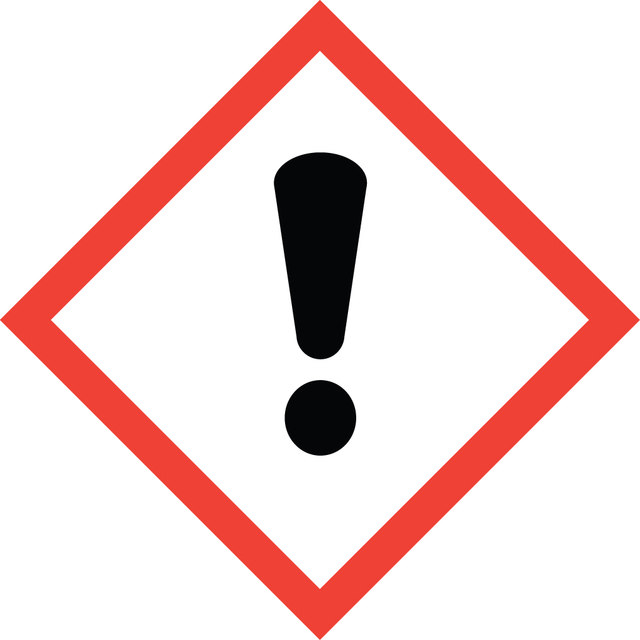
signalword
Warning
hcodes
Hazard Classifications
Skin Sens. 1 - STOT SE 3
target_organs
Respiratory system
Storage Class
10 - Combustible liquids
wgk
WGK 1
flash_point_f
219.2 °F - Pensky-Martens closed cup
flash_point_c
104 °C - Pensky-Martens closed cup
ppe
Eyeshields, Faceshields, Gloves, type ABEK (EN14387) respirator filter
Choose from one of the most recent versions:
Already Own This Product?
Find documentation for the products that you have recently purchased in the Document Library.
Articles
Monomers for ophthalmic use aim for purity, reliability, and comfort, driving innovation for affordable contact lenses.
Global Trade Item Number
| SKU | GTIN |
|---|---|
| 335681-500ML | 04061837887062 |
| 335681-100ML | 04061837887048 |
| 335681-4L | 04065274040028 |
| 335681-5ML | 04061826740200 |