
380474

2-Hydroxyethyl disulfide
technical grade
Synonym(s):
2,2′-Dithiodiethanol, Bis(2-hydroxyethyl) disulfide
Sign In to View Organizational & Contract Pricing.
Select a Size
Change View
About This Item
Linear Formula:
HOCH2CH2SSCH2CH2OH
CAS Number:
Molecular Weight:
154.25
UNSPSC Code:
12162002
NACRES:
NA.23
PubChem Substance ID:
EC Number:
217-576-6
Beilstein/REAXYS Number:
1735851
MDL number:
grade
technical grade
Quality Level
form
liquid
refractive index
n20/D 1.57 (lit.)
bp
158-163 °C/3.5 mmHg (lit.)
mp
25-27 °C (lit.)
density
1.261 g/mL at 25 °C (lit.)
SMILES string
OCCSSCCO
InChI
1S/C4H10O2S2/c5-1-3-7-8-4-2-6/h5-6H,1-4H2
InChI key
KYNFOMQIXZUKRK-UHFFFAOYSA-N
General description
2-Hydroxyethyldisulfide (HEDS) is an organosulfur compound that belongs to the class ofdialkyl disulfides and has a disulfide bond -S-S- between two hydroxyethylgroups. In material science, HEDS is used as a precursor to form self-assembledmonolayers (SAMs) on gold surfaces for applications such as corrosionprotection, lubrication, and sensors. In addition, 2-hydroxyethyl disulfide isalso used as a reducing agent in organic synthesis and as a crosslinking agentin the production of rubber compounds.
Application
2-Hydroxyethyl disulfide can be used as:
- A chain extender in the preparation of waterborne self-healing polyurethane, which is used in leather coating.
- As a precursor in the synthesis of multifunctional initiator, which is used in the preparation of star polystyrenes by atom transfer radical polymerization of styrene.
- A starting material to prepare a disulfide-based branching agent. This branching agent is used to synthesize highly branched poly(2-hydroxypropyl methacrylate).
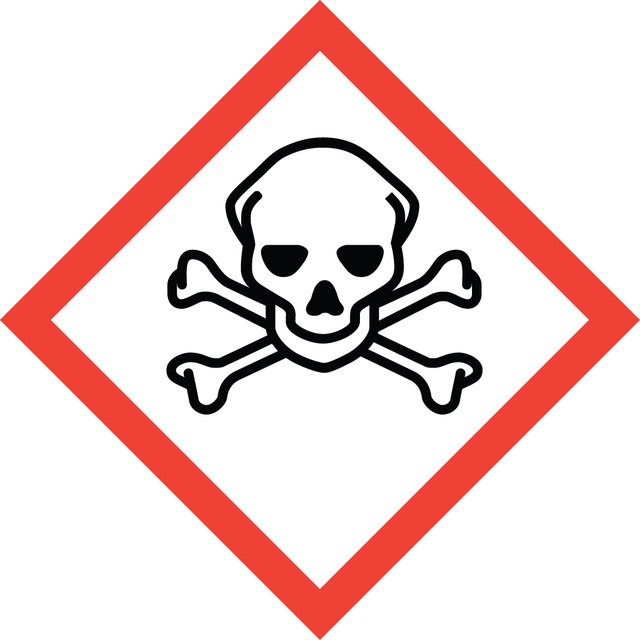

signalword
Danger
hcodes
Hazard Classifications
Acute Tox. 3 Oral - Eye Dam. 1
Storage Class
6.1C - Combustible acute toxic Cat.3 / toxic compounds or compounds which causing chronic effects
wgk
WGK 3
flash_point_f
233.6 °F - closed cup
flash_point_c
112 °C - closed cup
ppe
Eyeshields, Faceshields, Gloves, type ABEK (EN14387) respirator filter
Choose from one of the most recent versions:
Already Own This Product?
Find documentation for the products that you have recently purchased in the Document Library.
Articles
Over the past two decades, the rapid advance of controlled living polymerization (CLP) techniques.
Michael Filser et al.
Biological chemistry, 389(1), 21-32 (2007-12-22)
African trypanosomes encode three monothiol glutaredoxins (1-C-Grx1 to 3). 1-C-Grx1 has a putative CAYS active site and Cys181 as single additional cysteine. The recombinant protein forms non-covalent homodimers. As observed for other monothiol glutaredoxins, Trypanosoma brucei 1-C-Grx1 was not active
I S Ayene et al.
International journal of radiation biology, 76(11), 1523-1531 (2000-12-01)
We investigated the effect of protein- and non protein-thiol oxidation on DNA double-strand-break (DSB) rejoining after irradiation and its relevance in the survival of CHO cells. We used mutant cells null for glucose 6 phosphate dehydrogenase (G6PD) activity since reducing
Olof Björnberg et al.
Biochemistry, 45(7), 2362-2371 (2006-02-16)
Redox-sensitive yellow fluorescent protein (rxYFP) contains a dithiol disulfide pair that is thermodynamically suitable for monitoring intracellular glutathione redox potential. Glutaredoxin 1 (Grx1p) from yeast is known to catalyze the redox equilibrium between rxYFP and glutathione, and here, we have
Global Trade Item Number
| SKU | GTIN |
|---|---|
| 380474-250ML | 04061831960419 |
| 380474-50ML | 04061831960464 |