Skip to Content
Merck
CN

484059

Silver

nanopowder, <150 nm particle size, 99% trace metals basis

Sign In to View Organizational & Contract Pricing.

Select a Size

Change View

About This Item

Linear Formula:
Ag
CAS Number:
Molecular Weight:
107.87
NACRES:
NA.23
PubChem Substance ID:
UNSPSC Code:
11101802
EC Number:
231-131-3
MDL number:
Technical Service
Need help? Our team of experienced scientists is here for you.
Let Us Assist


Quality Level

assay

99% trace metals basis

form

nanopowder

resistivity

1.59 μΩ-cm, 20°C

particle size

<150 nm

bp

2212 °C (lit.)

mp

960 °C (lit.)

density

10.49 g/cm3 (lit.)

SMILES string

[Ag]

InChI

1S/Ag

InChI key

BQCADISMDOOEFD-UHFFFAOYSA-N

General description

Silver nanoparticles (Ag-NPs) have unique physical and chemical properties such as high thermal and electrical conductivity, chemical stability, catalytic activity, surface-enhanced Raman scattering, and nonlinear optical behavior. Ag-NPs are widely used in the fields of electronics, catalysis, and medicine.

Application

Silver can be used as a catalyst for the direct electroreduction ofcarbon dioxide.


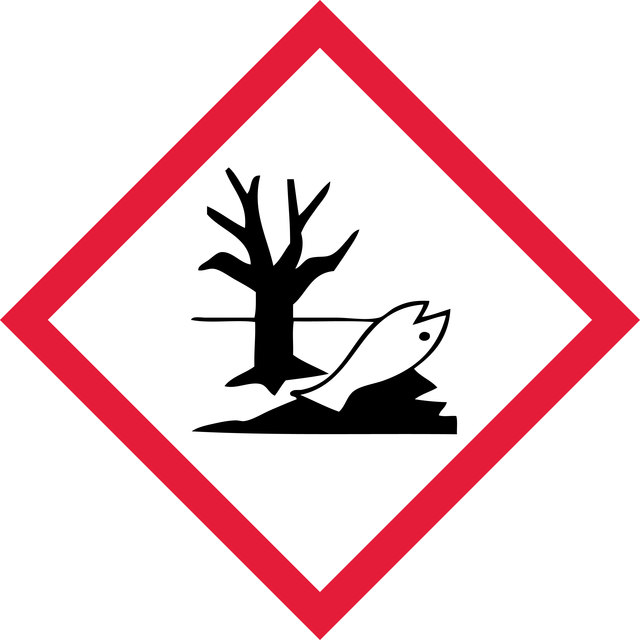
pictograms

Environment

signalword

Warning

hcodes

Hazard Classifications

Aquatic Acute 1 - Aquatic Chronic 1

Storage Class

13 - Non Combustible Solids

wgk

WGK 3

flash_point_f

Not applicable

flash_point_c

Not applicable

ppe

Eyeshields, Gloves, type N95 (US)


Choose from one of the most recent versions:

Certificates of Analysis (COA)

Lot/Batch Number

Don't see the Right Version?

If you require a particular version, you can look up a specific certificate by the Lot or Batch number.

Already Own This Product?

Find documentation for the products that you have recently purchased in the Document Library.

Visit the Document Library


Articles

银纳米材料具有独特的物理、化学以及光学性质,目前正在用于各种的生物应用。

Silver nanomaterials have unique physical, chemical, and optical properties that are currently being leveraged for a wide variety of biological applications.

Related Content

This thematic issue focuses on the emerging applications of nanomaterials. Nanomaterials are defined as substances with at least one dimension smaller than 100 nm.


Eun-Jung Park et al.
Environmental toxicology and pharmacology, 30(2), 162-168 (2011-07-27)
Toxicity of nanoparticles depends on many factors including size, shape, chemical composition, surface area, surface charge, and others. In this study, we compared the toxicity of different sized-silver nanoparticles (AgNPs) which are being widely used in consumer products due to
Effect of nanoparticle stabilization and physicochemical properties on exposure outcome: acute toxicity of silver nanoparticle preparations in zebrafish (Danio rerio)
Cunningham S, et al.
Environmental Science & Technology, 47(8), 3882-3892 (2013)
H Joel Allen et al.
Environmental toxicology and chemistry, 29(12), 2742-2750 (2010-10-05)
Relatively little is known about the behavior and toxicity of nanoparticles in the environment. Objectives of work presented here include establishing the toxicity of a variety of silver nanoparticles (AgNPs) to Daphnia magna neonates, assessing the applicability of a commonly


Global Trade Item Number

SKUGTIN
484059-25G04065273496581
484059-5G04061832390338