
637025

Cobalt(II,III) oxide
nanopowder, <50 nm particle size (SEM), 99.5% trace metals basis
Synonym(s):
Cobalt tetraoxide, Cobaltic-cobaltous oxide, Tricobalt tetraoxide
Select a Size
About This Item
Quality Level
assay
99.5% trace metals basis
form
nanopowder
reaction suitability
core: cobalt
surface area
40-70 m2/g , typical range
particle size
<50 nm (SEM)
mp
895 °C (dec.) (lit.)
density
6.11 g/mL at 25 °C (lit.)
bulk density
0.57 g/mL
application(s)
battery manufacturing
SMILES string
O=[Co].O=[Co]O[Co]=O
InChI
1S/3Co.4O
InChI key
LBFUKZWYPLNNJC-UHFFFAOYSA-N
General description
Application
- To modify the glassycarbon electrode for the detection of As(III) at nanomolar concentrationrange.
- To prepare a robust photocatalyst along withcarbon nanospheres for dye degradation and hydrogen evolution reaction.
- As an electrodematerial in the preparation of supercapacitors.
Still not finding the right product?
Explore all of our products under Cobalt(II,III) oxide
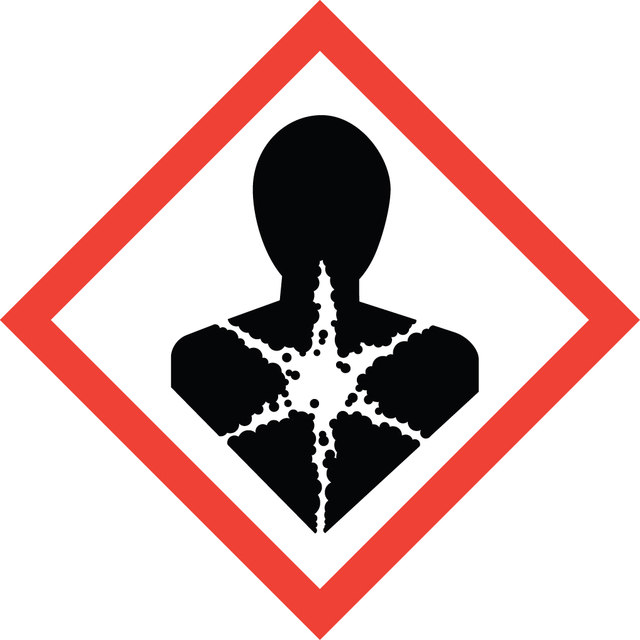
signalword
Danger
hcodes
Hazard Classifications
Aquatic Chronic 3 - Carc. 1A Inhalation - Resp. Sens. 1
Storage Class
6.1D - Non-combustible acute toxic Cat.3 / toxic hazardous materials or hazardous materials causing chronic effects
flash_point_f
Not applicable
flash_point_c
Not applicable
Choose from one of the most recent versions:
Already Own This Product?
Find documentation for the products that you have recently purchased in the Document Library.
Articles
Nanomaterials are considered a route to the innovations required for large-scale implementation of renewable energy technologies in society to make our life sustainable.
Graphene is a unique two-dimensional (2D) structure of monolayer carbon atoms packed into a dense honeycomb crystal that has attracted great interest due to its diverse and fascinating properties.
Magnetic materials find diverse applications from data storage to renewable energy.
Related Content
This thematic issue focuses on the emerging applications of nanomaterials. Nanomaterials are defined as substances with at least one dimension smaller than 100 nm.
Global Trade Item Number
| SKU | GTIN |
|---|---|
| 637025-100G | 04061832723419 |
| 637025-250G | 04061832723426 |
| 637025-25G | 04061832723433 |