
653608

Aluminum
powder, <5 μm particle size, 99.5% trace metals basis
Sign In to View Organizational & Contract Pricing.
Select a Size
Change View
About This Item
Empirical Formula (Hill Notation):
Al
CAS Number:
Molecular Weight:
26.98
UNSPSC Code:
11101705
PubChem Substance ID:
EC Number:
231-072-3
MDL number:
Quality Level
assay
99.5% trace metals basis
form
powder
autoignition temp.
1400 °F
reaction suitability
core: aluminum
resistivity
2.6548 μΩ-cm
particle size
<5 μm
bp
2460 °C (lit.)
mp
660.37 °C (lit.)
density
2.7 g/mL at 25 °C (lit.)
SMILES string
[Al]
InChI
1S/Al
InChI key
XAGFODPZIPBFFR-UHFFFAOYSA-N
Application
Aluminum powder can be used for a variety of applications, such as:
- generation of hydrogen from water
- precursor in the chemical industry
- mechanical alloying
- energy materials
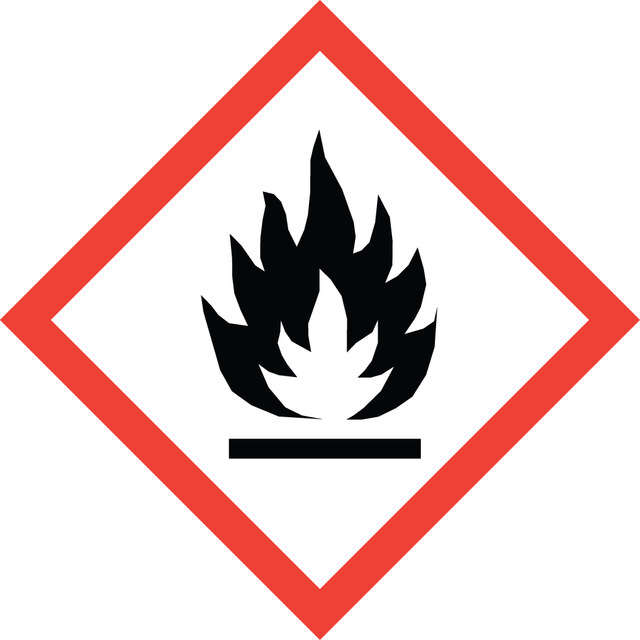
signalword
Danger
hcodes
Storage Class
4.2 - Pyrophoric and self-heating hazardous materials
wgk
nwg
flash_point_f
Not applicable
flash_point_c
Not applicable
Hazard Classifications
Pyr. Sol. 1 - Water-react. 2
Regulatory Information
新产品
This item has
Choose from one of the most recent versions:
Already Own This Product?
Find documentation for the products that you have recently purchased in the Document Library.
Articles
An article concerning self-propagating reactions induced by mechanical alloying, presented by Sigma-Aldrich.com.
Related Content
This thematic issue focuses on the emerging applications of nanomaterials. Nanomaterials are defined as substances with at least one dimension smaller than 100 nm.
Mechanical alloying of multi-walled carbon nanotubes and aluminium powders for the preparation of carbon/metal composites
Wang L, et al.
Carbon, 47(15), 3427-3433 (2009)
Thierry Deschamps et al.
Optics express, 21(7), 8382-8392 (2013-04-11)
Using a combination of experimental techniques such as optical absorption, Raman scattering, continuous wave and pulse Electron Spin Resonance (ESR), we characterize a set of γ-irradiated Yb(3+) doped silica glass preforms with different contents of phosphorous and aluminum. We demonstrate
Caitlin Carney et al.
Journal of the American Academy of Dermatology, 69(4), 578-582 (2013-07-17)
Laser treatment has emerged as a novel treatment modality for onychomycosis. We sought to determine thermal response and optical effects of a submillisecond neodymium:yttrium-aluminum-garnet (Nd:YAG) 1064-nm laser on common fungal nail pathogens, and the clinical efficacy and safety of the
Global Trade Item Number
| SKU | GTIN |
|---|---|
| 653608-5G | 04061833599877 |