Skip to Content
Merck
CN

760110

4-Cyano-4-[(dodecylsulfanylthiocarbonyl)sulfanyl]pentanol

Synonym(s):

Dodecyl Thiol Cyano Thiol

Sign In to View Organizational & Contract Pricing.

Select a Size

Change View

About This Item

Empirical Formula (Hill Notation):
C19H35NOS3
Molecular Weight:
389.68
NACRES:
NA.23
PubChem Substance ID:
UNSPSC Code:
12162002
MDL number:
Technical Service
Need help? Our team of experienced scientists is here for you.
Let Us Assist


assay

≥96.5% (HPLC)

Quality Level

form

solid or liquid (Powder or Solid or Crystals or Chunk(s) or Semi-solid or Liquid)

storage temp.

2-8°C

SMILES string

CCCCCCCCCCCCSC(=S)SC(C)(CCCO)C#N

InChI

1S/C19H35NOS3/c1-3-4-5-6-7-8-9-10-11-12-16-23-18(22)24-19(2,17-20)14-13-15-21/h21H,3-16H2,1-2H3

InChI key

SAFBIHFUHZPVOZ-UHFFFAOYSA-N

General description

Reversible addition-fragmentation chain transfer (RAFT) polymerisation is used to produce narrow polydispersity polymers of complex architecture. 4-Cyano-4-[(dodecylsulfanylthiocarbonyl)sulfanyl]pentanol is an hydroxyl functionalised trithiocarbonate RAFT agent.It is used as a dual initiator for RAFT and ring opening polymerisation to form well-defined block copolymers. They have good control of polymerisation for a wide range of vinyl monomers.

Application

Initiator for RAFT and ring opening polymerisation of block copolymers derived from vinyl monomers of styrene, metacryalte, acrylamide and cyclic monomers.

Features and Benefits

Good hydrolytic stability, suitable for a wide range of monomers and reaction conditions.


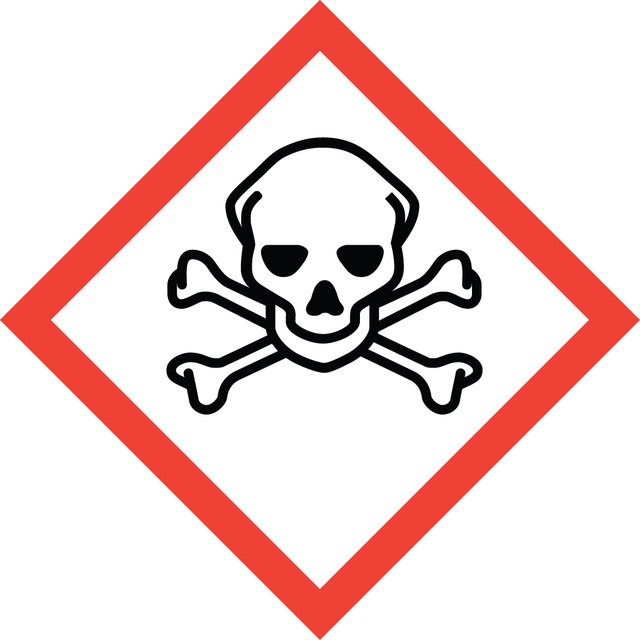
pictograms

Skull and crossbones

signalword

Danger

hcodes

Hazard Classifications

Acute Tox. 3 Oral

Storage Class

6.1C - Combustible acute toxic Cat.3 / toxic compounds or compounds which causing chronic effects

wgk

WGK 3

flash_point_f

No data available

flash_point_c

No data available


Choose from one of the most recent versions:

Certificates of Analysis (COA)

Lot/Batch Number

Don't see the Right Version?

If you require a particular version, you can look up a specific certificate by the Lot or Batch number.

Already Own This Product?

Find documentation for the products that you have recently purchased in the Document Library.

Visit the Document Library


Protocols

We present an article about RAFT, or Reversible Addition/Fragmentation Chain Transfer, which is a form of living radical polymerization.

We presents an article featuring procedures that describe polymerization of methyl methacrylate and vinyl acetate homopolymers and a block copolymer as performed by researchers at CSIRO.

Polymerization via ATRP procedures demonstrated by Prof. Dave Haddleton's research group at the University of Warwick.

Articles

The modification of biomacromolecules, such as peptides and proteins, through the attachment of synthetic polymers has led to a new family of highly advanced biomaterials with enhanced properties.

Micro review of reversible addition/fragmentation chain transfer (RAFT) polymerization.


One-step synthesis of block copolymers using a hydroxyl-functionalized trithiocarbonate RAFT agent as a dual initiator for RAFT polymerization and ROP
Kang, H. U., Yu, Y. C., Shin, S. J., & Youk, J. H.
Journal of Polymer Science Part A: Polymer Chemistry, 51(4), 774-779 (2013)
Thiocarbonylthio compounds (SC (Z) SR) in free radical polymerization with reversible addition-fragmentation chain transfer (RAFT polymerization).
Chiefari, J., Mayadunne, R. T., Moad, C. L., Moad, G., Rizzardo, E., Postma, A., & Thang, S. H.
Macromolecules, 36(7), 2273-2283 (2003)
RAFT Agent Design and Synthesis
Keddie, D. J.; et al.
Macromolecules, 45, 5321-5342 (2012)


Global Trade Item Number

SKUGTIN
760110-5G04061832978598
760110-1G04061826281154