
799661

Fe/ppm Pd for Suzuki-Miyaura Cross-Couplings
Sign In to View Organizational & Contract Pricing.
Select a Size
Change View
About This Item
EC Number:
231-729-4
UNSPSC Code:
12161600
form
powder, crystals or chunks
reaction suitability
core: iron, reaction type: Cross Couplings, reagent type: catalyst
Application
Nanoparticles (NPs) of this material contain parts per million (ppm) levels of Pd. The NPs can catalyze Suzuki-Miyaura (SM) reactions, including cases involving highly challenging reaction partners. Nano micelles are employed to both solubilize and deliver the reaction partners to the Fe/ppm Pd catalyst resulting in C-C bond formation.
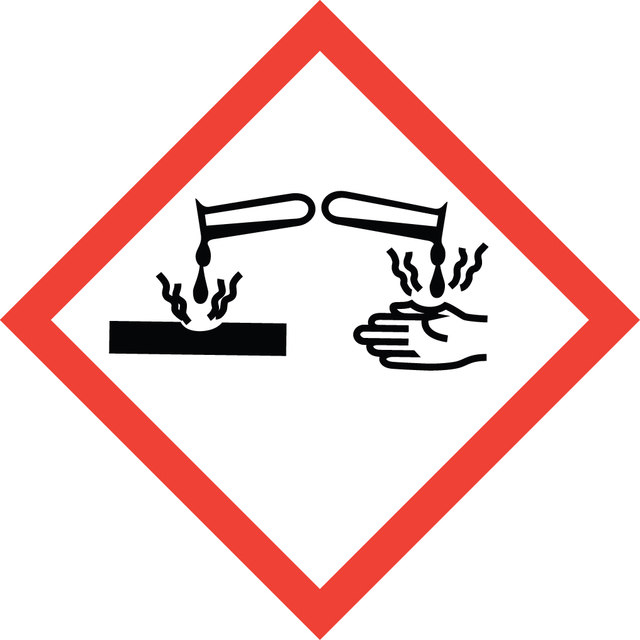

signalword
Danger
hcodes
Hazard Classifications
Acute Tox. 4 Oral - Eye Dam. 1 - Met. Corr. 1 - Skin Irrit. 2
wgk
WGK 1
flash_point_f
Not applicable
flash_point_c
Not applicable
Storage Class
13 - Non Combustible Solids
Regulatory Information
危险化学品
This item has
Choose from one of the most recent versions:
Already Own This Product?
Find documentation for the products that you have recently purchased in the Document Library.
Related Content
Designer surfactants enable diverse transformations like Suzuki-Miyaura, Olefin Metathesis, and 1,4-Addition to Enones in water by Prof. Bruce Lipshutz.
Sachin Handa et al.
Science (New York, N.Y.), 349(6252), 1087-1091 (2015-09-05)
Most of today's use of transition metal-catalyzed cross-coupling chemistry relies on expensive quantities of palladium (Pd). Here we report that nanoparticles formed from inexpensive FeCl3 that naturally contains parts-per-million (ppm) levels of Pd can catalyze Suzuki-Miyaura reactions, including cases that
Switching from organic solvents to water at an industrial scale.
Parmentier M, et al.
Current opinion in green and sustainable chemistry., 7, 13-17 (2017)
When Does Organic Chemistry Follow Nature?s Lead and ?Make the Switch?.
Lipshutz B H
The Journal of Organic Chemistry, 82(6), 2806-2816 (2017)
Global Trade Item Number
| SKU | GTIN |
|---|---|
| 799661-500MG | 04061833243435 |