
T206

D-(−)-Tartaric acid
ReagentPlus®, 99%
Synonym(s):
(2S,3S)-(−)-Tartaric acid, D-Threaric acid
Sign In to View Organizational & Contract Pricing.
Select a Size
Change View
About This Item
Linear Formula:
HO2CCH(OH)CH(OH)CO2H
CAS Number:
Molecular Weight:
150.09
UNSPSC Code:
12352300
NACRES:
NA.22
PubChem Substance ID:
EC Number:
205-695-6
Beilstein/REAXYS Number:
1725145
MDL number:
Assay:
99%
description
synthetic
Quality Level
product line
ReagentPlus®
assay
99%
optical activity
[α]20/D −12°, c = 20 in H2O
optical purity
ee: 99% (GLC)
mp
172-174 °C (lit.)
solubility
water: soluble 100 mg/mL, clear, colorless
SMILES string
O[C@@H]([C@H](O)C(O)=O)C(O)=O
InChI
1S/C4H6O6/c5-1(3(7)8)2(6)4(9)10/h1-2,5-6H,(H,7,8)(H,9,10)/t1-,2-/m0/s1
InChI key
FEWJPZIEWOKRBE-LWMBPPNESA-N
General description
D-(-)-Tartaric acid is a polycrystalline solid, widely used as food additive. It has been reported to exhibit piezoelectric effect.
D-(−)-Tartaric acid is a polyhydroxy acid. Oxidation of d-tartaric acid has been reported. Crystal structure of D-(−)-tartaric acid has been studied by X-ray and neutron diffraction. Tartaric acid is reported to be one of the constituents of soy bean Lipositol. Tartaric acid assists in the generation Y2O3:Eu3+ nanoparticles by sol–gel method. Tartaric acid is the main acid present in grapes and red wine.
Application
D-(-)-Tartaric acid has been used in the near-field, terahertz time-domain spectroscopic (THz-TDS) analysis of waveguides filled with polycrystalline D-tartaric acid, and with polyethylene and silicon powders.
D-(−)-Tartaric acid may be used in the synthesis of the HIV-protease inhibitor nelfinavir. It may be used in the synthesis of chiral aziridine derivative, a common intermediate for the synthesis of hydroxyethylamine class HIV protease inhibitors such as saquinavir, amprenavir, or nelfinavir.
Other Notes
Unnatural isomer
Legal Information
ReagentPlus is a registered trademark of Merck KGaA, Darmstadt, Germany
Still not finding the right product?
Explore all of our products under D-(−)-Tartaric acid
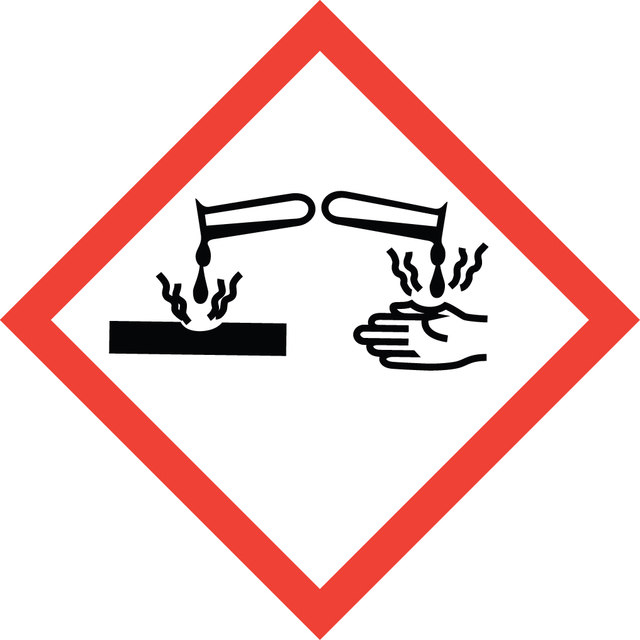
signalword
Danger
hcodes
Hazard Classifications
Eye Dam. 1
Storage Class
11 - Combustible Solids
wgk
WGK 3
ppe
dust mask type N95 (US), Eyeshields, Gloves
Choose from one of the most recent versions:
Already Own This Product?
Find documentation for the products that you have recently purchased in the Document Library.
B M Kim et al.
Organic letters, 3(15), 2349-2351 (2001-07-21)
[reaction: see text] Chiral aziridine derivative 1 was prepared from D-tartaric acid. This compound could be utilized as a common intermediate for the synthesis of hydroxyethylamine class HIV protease inhibitors such as saquinavir, amprenavir, or nelfinavir.
M I Gil et al.
Journal of agricultural and food chemistry, 48(10), 4581-4589 (2000-10-29)
The antioxidant activity of pomegranate juices was evaluated by four different methods (ABTS, DPPH, DMPD, and FRAP) and compared to those of red wine and a green tea infusion. Commercial pomegranate juices showed an antioxidant activity (18-20 TEAC) three times
Refinement of the structure of D-tartaric acid by x-ray and neutron diffraction.
Okaya Y, et al.
Acta Crystallographica, 21(2), 237-242 (1966)
Global Trade Item Number
| SKU | GTIN |
|---|---|
| T206-25G | 04061837338830 |
| T206-100G | 04061837338823 |