
1.01692

1-Chlorobutane
for liquid chromatography LiChrosolv®
Synonym(s):
1-Chlorobutane, n-Butyl chloride
Select a Size
About This Item
vapor pressure
110 hPa ( 20 °C)
Quality Level
description
isocratic
product line
LiChrosolv®
assay
≥99.8% (GC)
form
liquid
autoignition temp.
280 °C
potency
2200 mg/kg LD50, oral (Rat)
expl. lim.
1.8-10.1 % (v/v)
technique(s)
HPLC: suitable
impurities
≤0.0002 meq/g Acidity, ≤0.0002 meq/g Alkalinity, ≤0.01% Water
evapn. residue
≤2.0 mg/L
transmittance
227 nm, ≥60%, 232 nm, ≥80%, 250 nm, ≥98%
bp
79 °C/1013 hPa
mp
-123 °C
transition temp
flash point -17 °C
density
0.886 g/cm3 at 20 °C
storage temp.
2-30°C
SMILES string
ClCCCC
InChI
1S/C4H9Cl/c1-2-3-4-5/h2-4H2,1H3
InChI key
VFWCMGCRMGJXDK-UHFFFAOYSA-N
General description
Application
- Cl atoms-initiated degradation of 1-Chlorobutane and 2-Chlorobutane: This study investigates the kinetics and product analysis of the degradation of 1-Chlorobutane initiated by chlorine atoms. It provides insights into the atmospheric implications of halogenated hydrocarbons, relevant for environmental monitoring and analysis (Kar & Rajakumar, 2023).
- Efficient Remediation of p-chloroaniline Contaminated Soil: Utilizing activated persulfate in the presence of nanosized zero-valent iron/biochar composites, this study demonstrates a method that might be adaptable for the remediation of environments contaminated with similar compounds like 1-Chlorobutane. This is particularly valuable for environmental scientists and lab technicians working on soil decontamination (Guo et al., 2023).
- Rate Coefficient and Mechanism of the OH-Initiated Degradation of 1-Chlorobutane: Focusing on the atmospheric degradation of 1-Chlorobutane by hydroxyl radicals, this research provides critical data for understanding the environmental impact and the chemical behavior of 1-Chlorobutane in the atmosphere, important for researchers in environmental science and atmospheric chemistry (Jara-Toro et al., 2020).
- Genetic programming of catalytic Pseudomonas putida biofilms for boosting biodegradation of haloalkanes: This research demonstrates the genetic modification of bacteria to enhance their ability to degrade haloalkanes, including 1-Chlorobutane. This could interest principle investigators in biotech and pharma researching new methods of biodegradation for industrial applications (Benedetti et al., 2016).
Preparation Note
Analysis Note
Identity (IR): conforms
Evaporation residue: ≤ 2.0 mg/l
Water: ≤ 0.01 %
Acidity: ≤ 0.0002 meq/g
Alkalinity: ≤ 0.0002 meq/g
Transmission (at 227 nm): ≥ 60 %
Transmission (at 232 nm): ≥ 80 %
Transmission (from 250 nm): ≥ 98 %
Filtered by 0.2 µm filter
Other Notes
Legal Information
Still not finding the right product?
Explore all of our products under 1-Chlorobutane
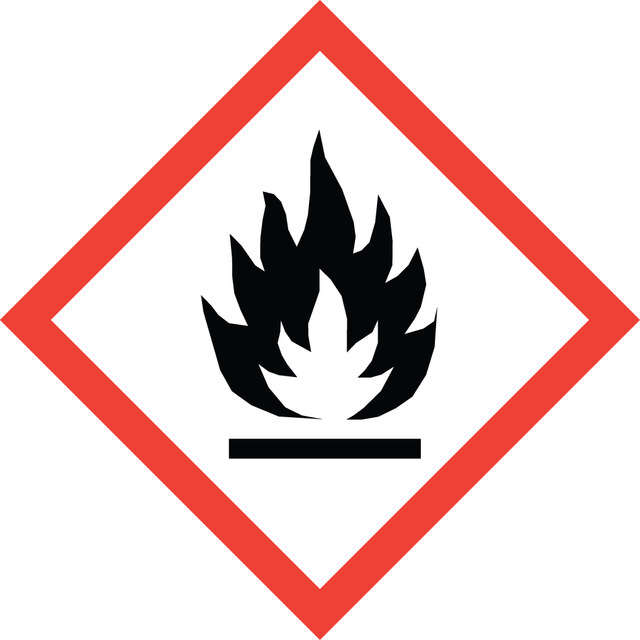

signalword
Danger
hcodes
Hazard Classifications
Aquatic Chronic 3 - Asp. Tox. 1 - Flam. Liq. 2
Storage Class
3 - Flammable liquids
wgk
WGK 2
flash_point_f
10.4 °F - closed cup
flash_point_c
-12 °C - closed cup
Regulatory Information
This item has
Certificates of Analysis (COA)
Search for Certificates of Analysis (COA) by entering the products Lot/Batch Number. Lot and Batch Numbers can be found on a product’s label following the words ‘Lot’ or ‘Batch’.
Already Own This Product?
Find documentation for the products that you have recently purchased in the Document Library.