
NA81

Anti-5-Methylcytosine Mouse mAb (162 33 D3)
liquid, clone 162 33 D3, Calbiochem®
Synonym(s):
Anti-5-mc, Anti-5-MeCyd
Select a Size
About This Item
biological source
mouse
Quality Level
antibody form
affinity isolated antibody
antibody product type
primary antibodies
clone
162 33 D3, monoclonal
form
liquid
does not contain
preservative
species reactivity (predicted by homology)
all
manufacturer/tradename
Calbiochem®
storage condition
OK to freeze, avoid repeated freeze/thaw cycles
dilution
(ELISA (0.1 µg/mL)
Flow Cytometry (1 µg/mL)
Frozen Sections (5-10 µg/mL)
Immunoblotting (5 µg/mL)
Immunofluorescence (1 µg/mL)
Paraffin Sections (5-10 µg/mL)
Radioimmunoassay (0.1 µg/mL)
Southwestern Blot (5 µg/mL))
isotype
IgG1
shipped in
wet ice
storage temp.
−20°C
target post-translational modification
unmodified
General description
Specific
• Affinity purified mouse monoclonal antibody - Detects methylated DNA from a broad range of species. Several Applications
• Flow Cytometry
• Frozen Sections
• Immunoblotting
• Immunofluorescence
• Paraffin Sections
Reliable
• Generates reproducible results.
• Clone 162 33 D3 has been used in over 50 publications.
Immunogen
Application
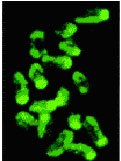
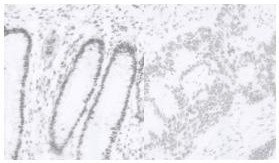
ELISA (0.1 g/ml)
Flow Cytometry (1 g/ml)
Frozen Sections (5-10 g/ml)
Immunoblotting (5 g/ml)
Immunofluorescence (1 g/ml)
Paraffin Sections (5-10 g/ml)
Radioimmunoassay (0.1 g/ml)
Southwestern Blot (5 g/ml)
Packaging
Physical form
Preparation Note
Analysis Note
NIH3T3 cells
Other Notes
Widschwendter, M. and Jones, P.A. 2002. Oncogene21, 5462. (Review)
Barton, S.C., et al. 2001. Hum. Mol. Genet.10, 2983.
Piyathilake, C.J., et al. 2001. Hum. Pathol.32, 856.
Taddei, A., et al. 2001. Nat. Cell Biol.3, 114.
Piyathilake, C.J., et al. 2000. Biotech. Histochem.75, 251.
De Capoa, A., et al. 1999. FASEB J.13, 89.
Legal Information
Disclaimer
Still not finding the right product?
Try our Product Selector Tool to narrow your options
Storage Class
11 - Combustible Solids
wgk
WGK 1
flash_point_f
Not applicable
flash_point_c
Not applicable
Certificates of Analysis (COA)
Search for Certificates of Analysis (COA) by entering the products Lot/Batch Number. Lot and Batch Numbers can be found on a product’s label following the words ‘Lot’ or ‘Batch’.
Already Own This Product?
Find documentation for the products that you have recently purchased in the Document Library.
Related Content
Global Trade Item Number
| SKU | GTIN |
|---|---|
| NA81-50UG | 04055977209792 |