Sign In to View Organizational & Contract Pricing.
Select a Size
Change View
About This Item
Linear Formula:
C6H4-1,2-(OH)2
CAS Number:
Molecular Weight:
110.11
NACRES:
NA.21
PubChem Substance ID:
UNSPSC Code:
12352100
EC Number:
204-427-5
MDL number:
Beilstein/REAXYS Number:
471401
Assay:
≥99%
Form:
solid
Product Name
1,2-Dihydroxybenzene, ReagentPlus®, ≥99%
vapor density
3.8 (vs air)
Quality Level
vapor pressure
1 mmHg ( 75 °C), 10 mmHg ( 118.3 °C)
product line
ReagentPlus®
assay
≥99%
form
solid
bp
245 °C (lit.)
mp
100-103 °C (lit.)
SMILES string
Oc1ccccc1O
InChI
1S/C6H6O2/c7-5-3-1-2-4-6(5)8/h1-4,7-8H
InChI key
YCIMNLLNPGFGHC-UHFFFAOYSA-N
General description
1,2-Dihydroxybenzene (a phenolic compound) is a useful industrial chemical. It is an ortho isomeric form of dihydroxybenzene. It is commonly referred to as catechol or pyrocatechol. Its standard molar enthalpy of combustion and sublimation at 298.15K have been evaluated by static-bomb calorimetry and microcalorimetry, respectively.
Application
1,2-Dihydroxybenzene may be used as raw material for the industrial synthesis of rubber, dyes, plastics, pharmaceuticals and cosmetics.
1,2-Dihydroxybenzene in combination with amberlite XAD-2, can be used as a chelating resin in the determination of metal ions, using atomic absorption spectrophotometry (AAS).
Legal Information

ReagentPlus is a registered trademark of Merck KGaA, Darmstadt, Germany
signalword
Danger
Hazard Classifications
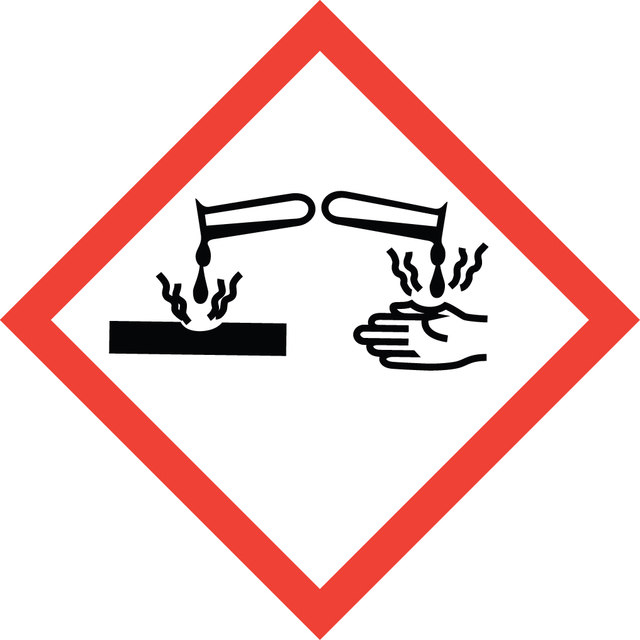
Acute Tox. 3 Dermal - Acute Tox. 3 Oral - Carc. 1B - Eye Dam. 1 - Muta. 2 - Skin Irrit. 2 - Skin Sens. 1
Storage Class
6.1C - Combustible acute toxic Cat.3 / toxic compounds or compounds which causing chronic effects
wgk
WGK 3
flash_point_f
260.6 °F - closed cup
flash_point_c
127 °C - closed cup
ppe
dust mask type N95 (US), Eyeshields, Faceshields, Gloves
Regulatory Information
危险化学品
This item has
Choose from one of the most recent versions:
Already Own This Product?
Find documentation for the products that you have recently purchased in the Document Library.
Carbon nanoparticle-chitosan composite electrode with anion, cation, and neutral binding sites: Dihydroxybenzene selectivity.
Amiri M, et al.
Sensors and Actuators B, Chemical, 162(1), 194-200 (2012)
Enthalpies of combustion of 1, 2-dihydroxybenzene and of six alkylsubstituted 1, 2-dihydroxybenzenes.
Da Silva MDMCR, et al.
The Journal of Chemical Thermodynamics, 16(12), 1149-1155 (1984)
Thiago C Canevari et al.
The Analyst, 138(1), 315-324 (2012-11-17)
This paper describes the development, characterization and application of an Nb(2)O(5) film formed on the surface of a carbon ceramic material, SiO(2)/C, obtained by a sol-gel method, using the spin-coating technique. The working electrode using this material will be designated
Global Trade Item Number
| SKU | GTIN |
|---|---|
| 135011-100G | 04061835252732 |
| 135011-3KG | 04061838730442 |
| 135011-500G | 04061835252749 |
| 135011-5G | 04061835252756 |
| 135011-5KG | 04061832747439 |