
270970

Pyridine
anhydrous, 99.8%
Sign In to View Organizational & Contract Pricing.
Select a Size
Change View
About This Item
Linear Formula:
C5H5N
CAS Number:
Molecular Weight:
79.10
UNSPSC Code:
12352005
NACRES:
NA.21
PubChem Substance ID:
EC Number:
203-809-9
Beilstein/REAXYS Number:
103233
MDL number:
Assay:
99.8%
Grade:
anhydrous
Bp:
115 °C (lit.)
Vapor pressure:
10 mmHg ( 13.2 °C), 20 mmHg ( 25 °C)
grade
anhydrous
Quality Segment
vapor density
2.72 (vs air)
vapor pressure
10 mmHg ( 13.2 °C), 20 mmHg ( 25 °C)
assay
99.8%
form
liquid
autoignition temp.
899 °F
expl. lim.
12.4 %
impurities
<0.003% water, <0.005% water (100 mL pkg)
evapn. residue
<0.0005%
color
colorless
refractive index
n
pH
~8.81 (20 °C)
bp
115 °C (lit.)
mp
−42 °C (lit.)
density
0.978 g/mL at 25 °C (lit.)
SMILES string
C1=CN=CC=C1
InChI
1S/C5H5N/c1-2-4-6-5-3-1/h1-5H
InChI key
JUJWROOIHBZHMG-UHFFFAOYSA-N
General description
Pyridine is a basic N-heterocyclic compound. It acts as nitrogen donor ligand and forms many metal-pyridine complexes. Its complexes having tetrahedral and octahedral geometries can be differentiated by infra-red spectral investigations.
Application
Pyridine (py) may be used in the preparation of vanadium oxide nanoparticles and iron benzenedicarboxylates, Fe(OH)(BDC)(py)0.85 (BDC = 1,4-benzenedicarboxylate, py = pyridine). It may be employed as catalyst in Knoevenagel condensation reaction.
Pyridine may be used as a base for the conversion of:
It may also be used to catalyze the borylation reaction of haloarenes to form arylboronates without using transition metal catalysts.
- Alkyltrichlorosilanes to trimethoxyalkylsilanes, which are used as precursors for preparing alkylsilicates.
- 1-Indanone to 1-indanone oxime, which can undergo reductive ring-expansion to form tetrahydroquinoline.
It may also be used to catalyze the borylation reaction of haloarenes to form arylboronates without using transition metal catalysts.
Packaging
Still not finding the right product?
Explore all of our products under Pyridine
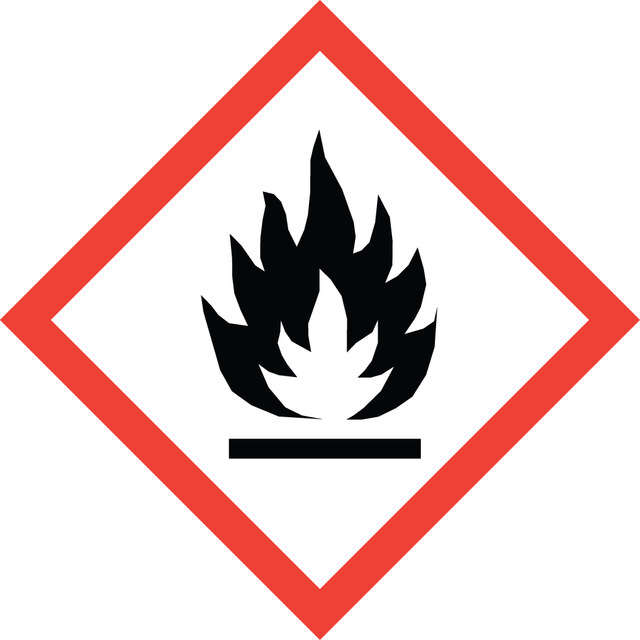
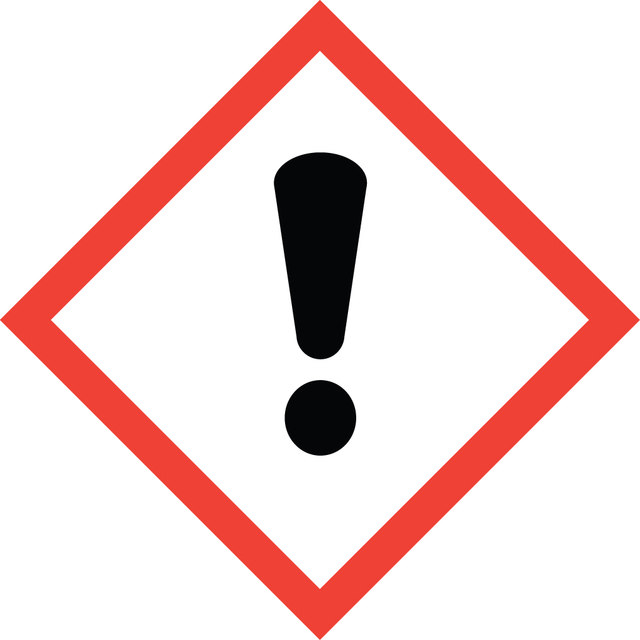
signalword
Danger
Hazard Classifications
Acute Tox. 4 Dermal - Acute Tox. 4 Inhalation - Acute Tox. 4 Oral - Eye Irrit. 2 - Flam. Liq. 2 - Skin Irrit. 2
Storage Class
3 - Flammable liquids
flash_point_f
68.0 °F - closed cup
flash_point_c
20 °C - closed cup
ppe
Faceshields, Gloves, Goggles, type ABEK (EN14387) respirator filter
Choose from one of the most recent versions:
Already Own This Product?
Find documentation for the products that you have recently purchased in the Document Library.