Skip to Content
Merck
CN

33493

2,6-TDI

analytical standard

Synonym(s):

Tolylene-2,6-diisocyanate, 2-Methyl-m-phenylene diisocyanate

Sign In to View Organizational & Contract Pricing.

Select a Size

Change View

About This Item

Linear Formula:
CH3C6H3(NCO)2
CAS Number:
Molecular Weight:
174.16
UNSPSC Code:
41116107
NACRES:
NA.24
PubChem Substance ID:
EC Number:
202-039-0
Beilstein/REAXYS Number:
2211546
MDL number:
Technical Service
Need help? Our team of experienced scientists is here for you.
Let Us Assist


grade

analytical standard

Quality Level

autoignition temp.

>1148 °F

shelf life

limited shelf life, expiry date on the label

technique(s)

HPLC: suitable, gas chromatography (GC): suitable

refractive index

n20/D 1.571 (lit.)

bp

129-133 °C/18 mmHg (lit.)

density

1.225 g/mL at 25 °C (lit.)

application(s)

cleaning products
cosmetics
environmental
food and beverages
personal care

format

neat

storage temp.

2-8°C

SMILES string

Cc1c(cccc1N=C=O)N=C=O

InChI

1S/C9H6N2O2/c1-7-8(10-5-12)3-2-4-9(7)11-6-13/h2-4H,1H3

InChI key

RUELTTOHQODFPA-UHFFFAOYSA-N

General description

This substance is listed on the positive list of the EU regulation 10/2011 for plastics intended to come into contact with food.

Find all available reference materials for compounds listed in 10/2011 here

Application

2,6-TDI may be used as a reference standard for the quantification of residual 2,6-TDI in foam samples using high performance liquid chromatography coupled to coordination-ionspray tandem mass spectrometry (HPLC-CIS-MS/MS).
Refer to the product′s Certificate of Analysis for more information on a suitable instrument technique. Contact Technical Service for further support.


wgk

WGK 2

pictograms

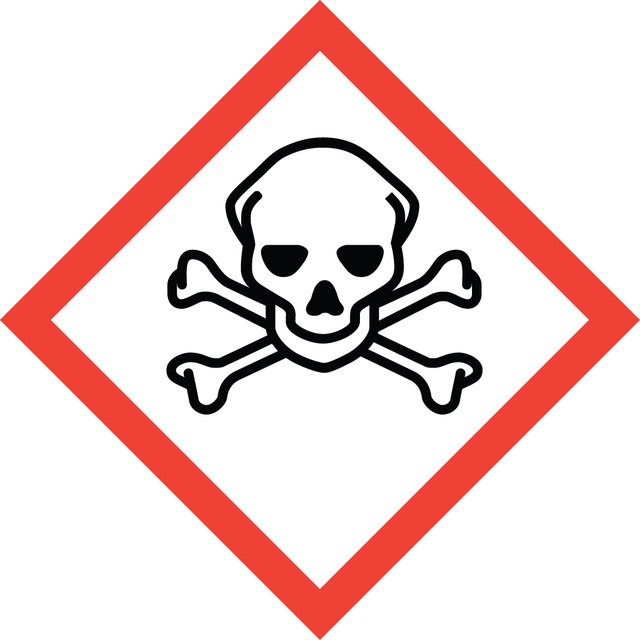
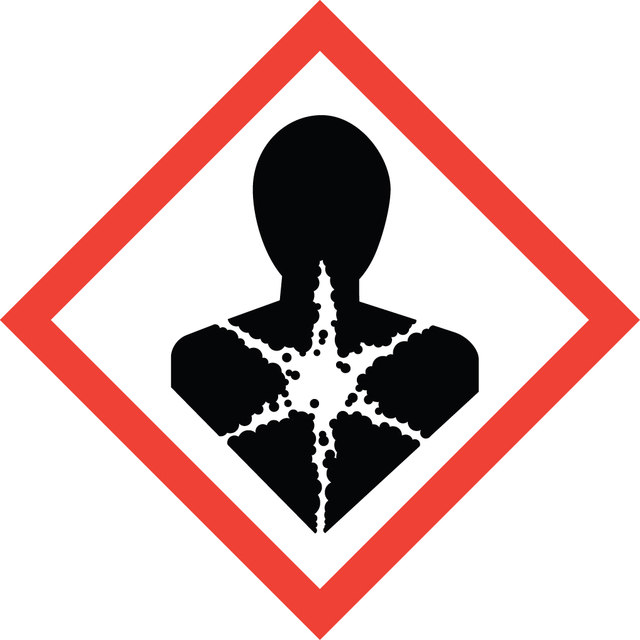
Skull and crossbonesHealth hazard

signalword

Danger

Hazard Classifications

Acute Tox. 2 Inhalation - Aquatic Chronic 3 - Carc. 2 - Eye Irrit. 2 - Resp. Sens. 1 - Skin Irrit. 2 - Skin Sens. 1 - STOT SE 3

target_organs

Respiratory system

Storage Class

6.1A - Combustible acute toxic Cat. 1 and 2 / very toxic hazardous materials

flash_point_f

230.0 °F - closed cup

flash_point_c

110 °C - closed cup

ppe

Eyeshields, Faceshields, Gloves, type ABEK (EN14387) respirator filter

Regulatory Information

危险化学品

This item has


Choose from one of the most recent versions:

Certificates of Analysis (COA)

Lot/Batch Number

Don't see the Right Version?

If you require a particular version, you can look up a specific certificate by the Lot or Batch number.

Already Own This Product?

Find documentation for the products that you have recently purchased in the Document Library.

Visit the Document Library


B W Day et al.
Chemical research in toxicology, 9(3), 568-573 (1996-04-01)
Guinea pig hemoglobin (Hb) adducts of 2,4- and 2,6-toluene diisocyanate (2,4- and 2,6-TDI) were individually prepared, each at a Hb tetramer to diisocyanate ratio of 1:1, and compared with adducts of Hb from animals exposed to 1 ppm 2,4-TDI vapor.
S Mattoli et al.
The American journal of physiology, 259(4 Pt 1), L320-L327 (1990-10-01)
Bronchial epithelial cells release chemotactic factors for lymphocytes and express HLA-DR antigens. Thus they may contribute to the T-cell-mediated inflammatory responses involved in a number of pulmonary diseases such as asthma. In this study, the in vitro exposure of human
Sébastien Gagné et al.
The Analyst, 128(12), 1447-1451 (2004-01-23)
Isocyanates can cause occupational asthma. By using available HPLC-UVF methods, isocyanates can be quantified only at levels above 1% of the Permissible Exposure Limits (PEL). Once sensitized, workers can react to concentrations below these limits of detection (LOD) making these


Global Trade Item Number

SKUGTIN
33493-100MG-R04061826738603