Skip to Content
Merck
CN

67309

Kovac′s reagent for indoles

suitable for microbiology

Synonym(s):

4-(Dimethylamino)benzaldehyde solution

Sign In to View Organizational & Contract Pricing.

Select a Size

Change View

About This Item

Empirical Formula (Hill Notation):
C9H11NO
CAS Number:
Molecular Weight:
149.19
UNSPSC Code:
41171621
NACRES:
NA.85
PubChem Substance ID:
MDL number:
Beilstein/REAXYS Number:
4132845
Technical Service
Need help? Our team of experienced scientists is here for you.
Let Us Assist


agency

according to ISO 16654:2001

Quality Level

product line

BioChemika

shelf life

limited shelf life, expiry date on the label

composition

4-(dimethlyamino)benzaldehyde, 50 g/L , hydrochloric acid, 240 g/L , isoamylic alcohol, 710 g/L

technique(s)

microbe id | specific enzyme detection: suitable

application(s)

agriculture
clinical testing
environmental
food and beverages, microbiology

storage temp.

2-8°C

suitability

Escherichia coli, coliforms

SMILES string

[H]C(=O)c1ccc(cc1)N(C)C

InChI

1S/C9H11NO/c1-10(2)9-5-3-8(7-11)4-6-9/h3-7H,1-2H3

InChI key

BGNGWHSBYQYVRX-UHFFFAOYSA-N

General description

Kovac′s reagent is prepared by mixing p-dimethylaminobenzaldehyde, isoamyl alcohol and concentrated hydrochloric acid. For identification of an organism, the formation of Indole from a tryptophan substrate is a useful diagnostic tool. Indole production is a crucial test in identification of Escherichia coli. After incubation, adding the reagent will help in determination if Indole that has been produced. The reagent turns red when reacts with Indole.

Application

In the presence of oxygen, some bacteria, like E.coli, are able to split tryptophan into indole and alpha-aminopropionic acid. This reagent is for detecting the indole and identify the indole-positive and indole-negative microorganisms.
Kovac′s reagent may be used for spot test for determination of indole by saturating filter paper with the reagent. It may also be used for initial spot test for determination of indole followed by quantification by spectrophotometric assay and HPLC-UV/Vis-MS/MS methods.


Still not finding the right product?

Explore all of our products under Kovac′s reagent for indoles
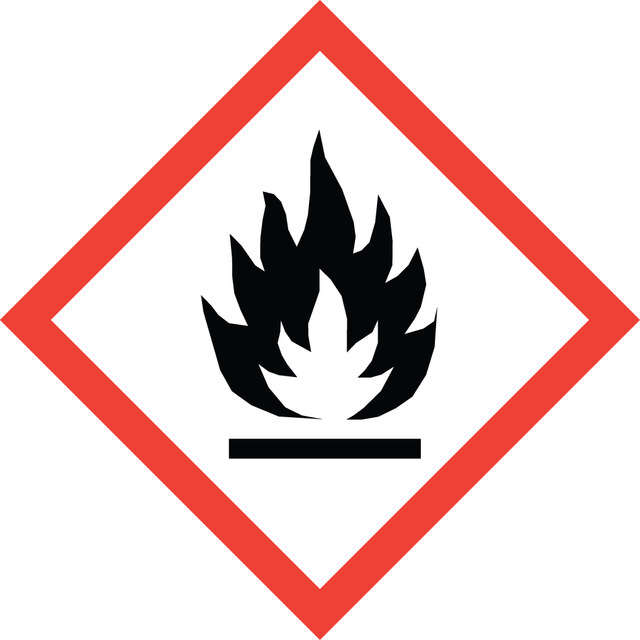

signalword

Danger

Hazard Classifications

Acute Tox. 4 Inhalation - Eye Dam. 1 - Flam. Liq. 3 - Met. Corr. 1 - Skin Corr. 1B - Skin Sens. 1 - STOT SE 3

target_organs

Respiratory system

Storage Class

3 - Flammable liquids

wgk

WGK 3

flash_point_f

109.4 °F

flash_point_c

43 °C

ppe

Faceshields, Gloves, Goggles, type ABEK (EN14387) respirator filter

Regulatory Information

易制毒化学品(3类)
危险化学品

This item has


Choose from one of the most recent versions:

Certificates of Analysis (COA)

Lot/Batch Number

Don't see the Right Version?

If you require a particular version, you can look up a specific certificate by the Lot or Batch number.

Already Own This Product?

Find documentation for the products that you have recently purchased in the Document Library.

Visit the Document Library


Articles

对于微生物学家而言,最基础的染色方法是由丹麦细菌学家Hans Christian Gram在1884年开发的。

还有许多其他检测方法来指示大肠杆菌的存在。查看这种污染物的常用检测方法和生化反应。

产气荚膜梭菌会导致未煮熟或未正确消毒的罐头食品和水受到污染。了解如何检测、鉴定和区分这种病原体。

View All Articles

Related Content


Rita R. Colwell, R. Grigorova
Methods in Microbiology, 19, 27-27 (1987)
S. Harisha
An Introduction to Practical Biotechnology, 193-193 (2005)
Patrick R Porubsky et al.
Archives of biochemistry and biophysics, 475(1), 14-17 (2008-04-22)
Cytochrome P450 2A13 (CYP2A13) is a lung specific enzyme known to activate the potent tobacco procarcinogen 4-(methylnitrosamino)-1-(3-pyridyl)-1-butanone (NNK) into two carcinogenic metabolites. CYP2A13 has been crystallized and X-ray diffraction experiments illuminated the structure of this enzyme, but with an unknown


Global Trade Item Number

SKUGTIN
67309-100ML-F04061832735283