Skip to Content
Merck
CN

78013

4-(Methylnitrosoamino)-1-(3-pyridinyl)-1-butanone

analytical standard

Synonym(s):

4-(Methylnitrosamino)-1-(3-pyridinyl)-1-butanone, NNK

Sign In to View Organizational & Contract Pricing.

Select a Size

Change View

About This Item

Empirical Formula (Hill Notation):
C10H13N3O2
CAS Number:
Molecular Weight:
207.23
NACRES:
NA.24
PubChem Substance ID:
UNSPSC Code:
41116107
MDL number:
Technical Service
Need help? Our team of experienced scientists is here for you.
Let Us Assist


grade

analytical standard

Quality Level

assay

≥98.0% (GC)

shelf life

limited shelf life, expiry date on the label

manufacturer/tradename

Manufactured by: Sigma-Aldrich Production GmbH, Switzerland

technique(s)

HPLC: suitable, gas chromatography (GC): suitable, solid phase extraction (SPE): suitable

application(s)

cleaning products
cosmetics
food and beverages
personal care

format

neat

storage temp.

2-8°C

SMILES string

CN(CCCC(=O)c1cccnc1)N=O

InChI

1S/C10H13N3O2/c1-13(12-15)7-3-5-10(14)9-4-2-6-11-8-9/h2,4,6,8H,3,5,7H2,1H3

InChI key

FLAQQSHRLBFIEZ-UHFFFAOYSA-N

General description

Nitrosamines are chemical compounds that can form during drug manufacturing and may pose health risks, including carcinogenicity.
4-(Methylnitrosoamino)-1-(3-pyridinyl)-1-butanone is commonly employed as a reference compound in analytical chemistry. It is utilized in chromatographic and spectrometric techniques for the detection and quantification of nitrosamines in chemical, pharmaceutical, and environmental matrices.

Application

4-(Methylnitrosoamino)-1-(3-pyridinyl)-1-butanone may be used as an analytical reference standard for the quantification of tobacco-specific nitrosamines in tobacco using gas chromatography.

Analysis Note

Refer to the product′s Certificate of Analysis for more information on a suitable instrument technique. Contact Technical Service for further support.


pictograms

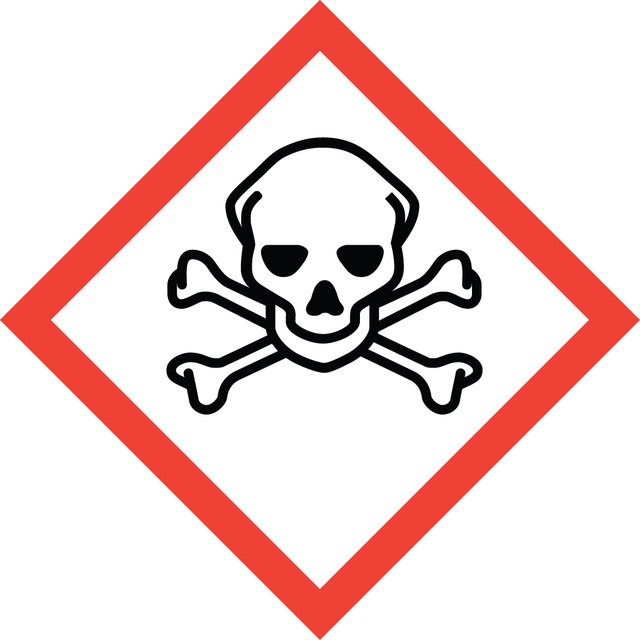
Skull and crossbonesHealth hazard

signalword

Danger

Hazard Classifications

Acute Tox. 3 Oral - Carc. 2 - Skin Sens. 1

Storage Class

6.1C - Combustible acute toxic Cat.3 / toxic compounds or compounds which causing chronic effects

wgk

WGK 3

flash_point_f

Not applicable

flash_point_c

Not applicable

ppe

Eyeshields, Faceshields, Gloves, type P3 (EN 143) respirator cartridges


Choose from one of the most recent versions:

Certificates of Analysis (COA)

Lot/Batch Number

Don't see the Right Version?

If you require a particular version, you can look up a specific certificate by the Lot or Batch number.

Already Own This Product?

Find documentation for the products that you have recently purchased in the Document Library.

Visit the Document Library


Ingrid Elisia et al.
Carcinogenesis, 40(3), 448-460 (2019-03-16)
In previous studies, we found that low-carbohydrate (CHO) diets reduced the incidence of tumors in mice genetically predisposed to cancer. However, because >90% of human cancers arise via carcinogen-induced somatic mutations, we investigated, herein, the role that different types and
Thomas Thisted et al.
BMC biotechnology, 19(1), 56-56 (2019-08-04)
Smoking and tobacco use continue to be the largest preventable causes of death globally. A novel therapeutic approach has recently been proposed: administration of an enzyme that degrades nicotine, the main addictive component of tobacco, minimizing brain exposure and reducing
Wiebke Schormann et al.
The Journal of cell biology, 219(3) (2020-01-23)
Confocal micrographs of EGFP fusion proteins localized at key cell organelles in murine and human cells were acquired for use as subcellular localization landmarks. For each of the respective 789,011 and 523,319 optically validated cell images, morphology and statistical features


Global Trade Item Number

SKUGTIN
78013-10MG04061832941264