
87920

Tetramethylsilane
analytical standard, suitable for NMR (spectroscopy), ACS reagent
Sign In to View Organizational & Contract Pricing.
Select a Size
Change View
About This Item
Linear Formula:
Si(CH3)4
CAS Number:
Molecular Weight:
88.22
UNSPSC Code:
12142201
NACRES:
NA.24
PubChem Substance ID:
EC Number:
200-899-1
Beilstein/REAXYS Number:
1696908
MDL number:
Quality Level
grade
ACS reagent, analytical standard
vapor pressure
11.66 psi ( 20 °C)
assay
≥99.5% (GC)
form
liquid
autoignition temp.
842 °F
refractive index
n20/D 1.358 (lit.), n20/D 1.359
bp
26-28 °C (lit.)
mp
−99 °C (lit.)
density
0.648 g/mL at 25 °C (lit.)
suitability
suitable for NMR (spectroscopy)
application(s)
environmental
format
neat
storage temp.
2-8°C
SMILES string
C[Si](C)(C)C
InChI
1S/C4H12Si/c1-5(2,3)4/h1-4H3
InChI key
CZDYPVPMEAXLPK-UHFFFAOYSA-N
General description
Tetramethylsilane has been recommended by the International Union of Pure and Applied Chemistry (IUPAC) as a universal reference for all nuclides. It is commonly used as a reference standard in nuclear magnetic resonance (NMR) for measuring proton chemical shifts and the temperature dependence of the 1H chemical shift of TMS in solvents such as chloroform, methanol, and dimethylsulfoxide is studied.
Application
Tetramethylsilane may be used as an internal standard for the quantitative analysis of medicinal plant extracts and herbal products using the quantitative NMR (qNMR) method. It may also be used as an internal standard to investigate peroxide-based chemical systems for the crosslinking reactions carried on isotactic polypropylene using FT-IR spectrometry and proton nuclear magnetic resonance (1H NMR) techniques.
Still not finding the right product?
Explore all of our products under Tetramethylsilane
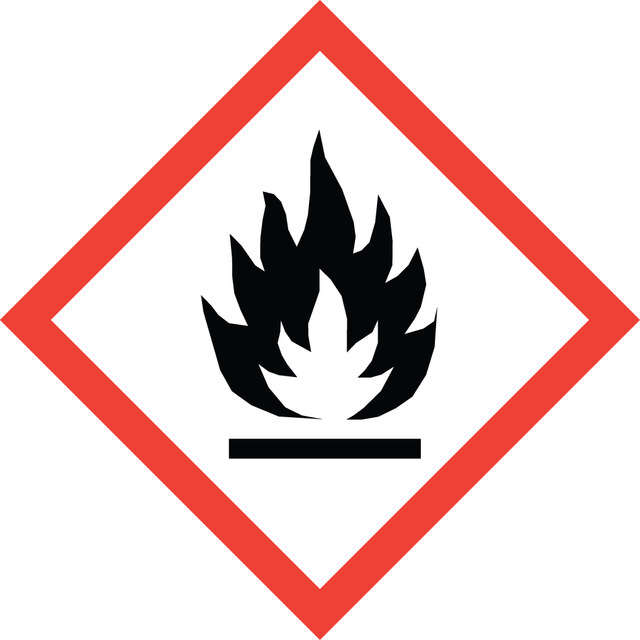
signalword
Danger
hcodes
Hazard Classifications
Flam. Liq. 1
Storage Class
3 - Flammable liquids
wgk
WGK 3
flash_point_f
-16.6 °F - closed cup
flash_point_c
-27 °C - closed cup
ppe
Eyeshields, Faceshields, Gloves
Regulatory Information
危险化学品
This item has
Choose from one of the most recent versions:
Already Own This Product?
Find documentation for the products that you have recently purchased in the Document Library.
Roy E Hoffman
Journal of magnetic resonance (San Diego, Calif. : 1997), 163(2), 325-331 (2003-08-14)
The chemical shift of TMS is commonly assumed to be zero. However, it varies by over 1 ppm for 1H and 4 ppm for 13C and shows a correlation with the physical properties of the solvent. Using the commonly accepted
Ramesh C Sharma et al.
Spectrochimica acta. Part A, Molecular and biomolecular spectroscopy, 65(3-4), 787-791 (2006-03-15)
The decomposition of trimethylsilane and tetramethylsilane has been investigated for the first time, using hot wire (catalytic) at various temperatures. Trimethylsilane is catalytic-dissociated in these species SiH(2), CH(3)SiH, CH(3), CH(2)Si. Time of flight mass spectroscopy signal of these species are
Robin K Harris et al.
Magnetic resonance in chemistry : MRC, 45 Suppl 1, S174-S186 (2007-12-25)
Computations for chemical shifts of molecular organic compounds using the gauge-including projector augmented wave method and the NMR-CASTEP code are reviewed. The methods are briefly introduced, and some general aspects involving the sources of uncertainty in the results are explored.
Global Trade Item Number
| SKU | GTIN |
|---|---|
| 87920-25ML | 04061833057049 |