Skip to Content
Merck
CN

94517

Quinoline

analytical standard

Synonym(s):

1-Benzazine, 2,3-Benzopyridine

Sign In to View Organizational & Contract Pricing.

Select a Size

Change View

About This Item

Empirical Formula (Hill Notation):
C9H7N
CAS Number:
Molecular Weight:
129.16
Beilstein/REAXYS Number:
107477
UNSPSC Code:
85151701
NACRES:
NA.24
PubChem Substance ID:
EC Number:
202-051-6
MDL number:
Technical Service
Need help? Our team of experienced scientists is here for you.
Let Us Assist


grade

analytical standard

Quality Level

vapor density

4.5 (vs air)

vapor pressure

0.07 mmHg ( 20 °C)

assay

≥98.0% (GC), 97.5-102.2% (wt., NT)

autoignition temp.

896 °F

shelf life

limited shelf life, expiry date on the label

technique(s)

HPLC: suitable, gas chromatography (GC): suitable

bp

113-114 °C/11 mmHg (lit.), 237 °C (lit.)

mp

−17-−13 °C (lit.)

density

1.093 g/mL at 25 °C (lit.)

application(s)

cleaning products
cosmetics
flavors and fragrances
food and beverages
personal care

format

neat

SMILES string

c1ccc2ncccc2c1

InChI

1S/C9H7N/c1-2-6-9-8(4-1)5-3-7-10-9/h1-7H

InChI key

SMWDFEZZVXVKRB-UHFFFAOYSA-N

Application

Refer to the product′s Certificate of Analysis for more information on a suitable instrument technique. Contact Technical Service for further support.

Other Notes

Find a digital Reference Material for this product available on our online platform ChemisTwin® for NMR. You can use this digital equivalent on ChemisTwin® for your sample identity confirmation and compound quantification (with digital external standard). An NMR spectrum of this substance can be viewed and an online comparison against your sample can be performed with a few mouseclicks. Learn more here and start your free trial.


Still not finding the right product?

Explore all of our products under Quinoline

signalword

Danger

Hazard Classifications

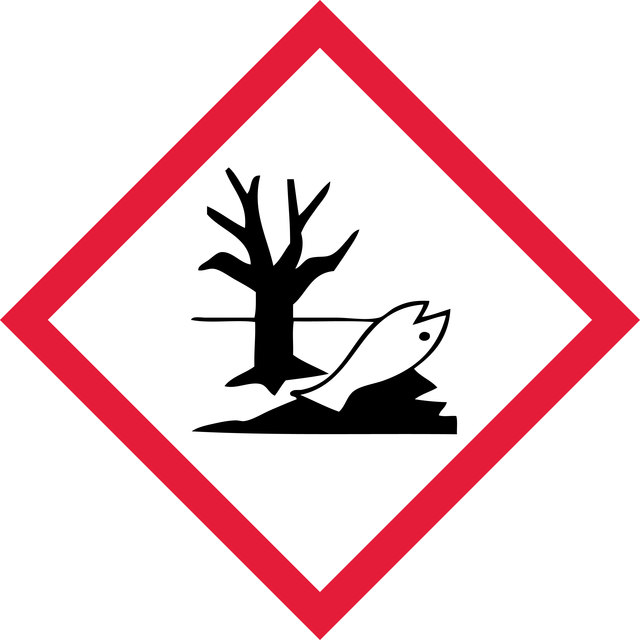
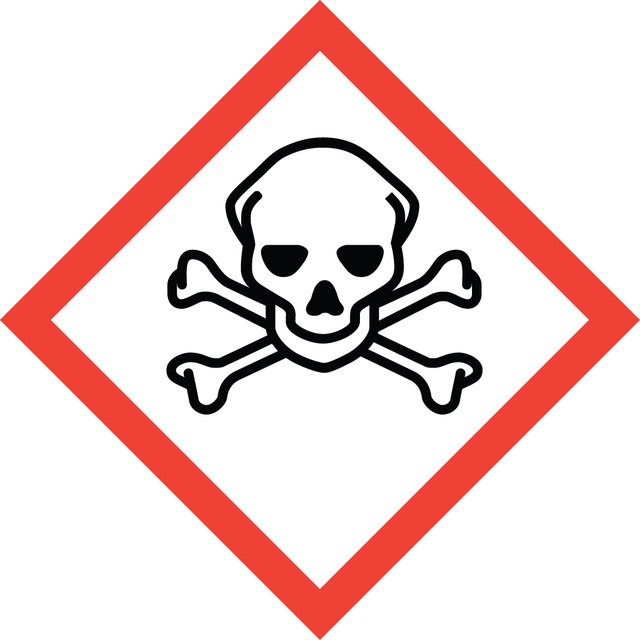
Acute Tox. 3 Oral - Acute Tox. 4 Dermal - Aquatic Chronic 2 - Carc. 1B - Eye Irrit. 2 - Muta. 2 - Skin Irrit. 2

Storage Class

6.1C - Combustible acute toxic Cat.3 / toxic compounds or compounds which causing chronic effects

wgk

WGK 2

flash_point_f

213.8 °F - closed cup

flash_point_c

101 °C - closed cup

Regulatory Information

危险化学品

This item has


Choose from one of the most recent versions:

Certificates of Analysis (COA)

Lot/Batch Number

Don't see the Right Version?

If you require a particular version, you can look up a specific certificate by the Lot or Batch number.

Already Own This Product?

Find documentation for the products that you have recently purchased in the Document Library.

Visit the Document Library


Paul D Roepe
Future microbiology, 4(4), 441-455 (2009-05-07)
30 years before the discovery of the pfcrt gene, altered cellular drug accumulation in drug-resistant malarial parasites had been well documented. Heme released from catabolized hemoglobin was thought to be a key target for quinoline drugs, and additional modifications to
Chunrong Wang et al.
Bioscience, biotechnology, and biochemistry, 79(1), 164-170 (2014-09-02)
A novel quinoline-degrading strain, named K4, was isolated from activated sludge of a coking wastewater treatment plant and identified as Brevundimonas sp. on the basis of its 16s rDNA gene sequence analysis. Its optimum temperature and pH for quinoline degradation
Mohanad Darawsheh et al.
European journal of medicinal chemistry, 82, 152-163 (2014-06-07)
Starting from the precursor [Zinc Valproate complex] (1), new mixed ligand zinc(II) complexes of valproic acid and nitrogen-based ligands, formulating as, [Zn(valp)22,9-dmphen] (2), [Zn2(valp)4(quin)2] (3), [Zn(valp)2(2-ampy)2] (4), and [Zn(valp)2(2-ampic)2] (5) (valp = valproate, 2,9-dmphen = 2,9-dimethyl-1,10-phenanthroline, quin = quinoline, 2-ampy


Global Trade Item Number

SKUGTIN
94517-1ML04061833295687