Skip to Content
Merck
CN

C9510

Pyrocatechol

≥99%

Synonym(s):

1,2-Benzenediol, 1,2-Dihydroxybenzene, 2-Hydroxyphenol, Catechol

Sign In to View Organizational & Contract Pricing.

Select a Size

Change View

About This Item

Linear Formula:
C6H4-1,2-(OH)2
CAS Number:
Molecular Weight:
110.11
UNSPSC Code:
12352104
NACRES:
NA.28
PubChem Substance ID:
EC Number:
204-427-5
Beilstein/REAXYS Number:
471401
MDL number:
Technical Service
Need help? Our team of experienced scientists is here for you.
Let Us Assist


biological source

synthetic (organic)

Quality Level

vapor density

3.8 (vs air)

vapor pressure

1 mmHg ( 75 °C), 10 mmHg ( 118.3 °C)

assay

≥99%

form

powder

color

white to faint beige

bp

245 °C (lit.)

mp

100-103 °C (lit.)

solubility

water: 50 mg/mL, clear, colorless to faintly yellow

storage temp.

room temp

SMILES string

Oc1ccccc1O

InChI

1S/C6H6O2/c7-5-3-1-2-4-6(5)8/h1-4,7-8H

InChI key

YCIMNLLNPGFGHC-UHFFFAOYSA-N

Disclaimer

May discolor on exposure to air and light.


Still not finding the right product?

Explore all of our products under Pyrocatechol
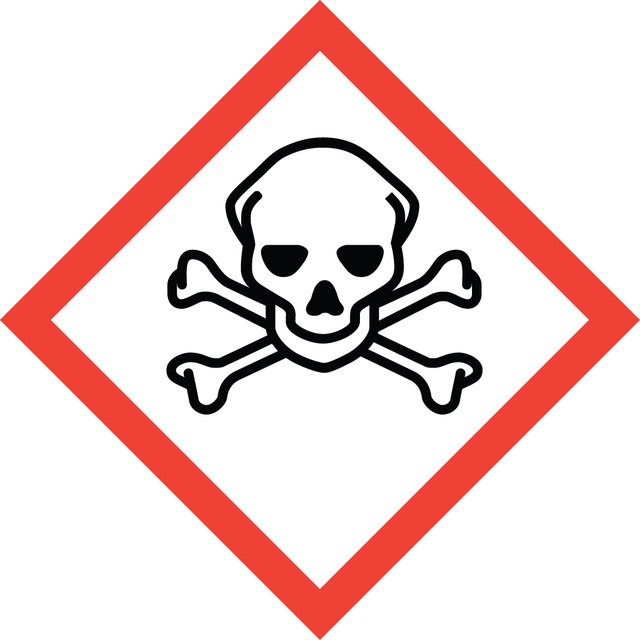

signalword

Danger

Hazard Classifications

Acute Tox. 3 Dermal - Acute Tox. 3 Oral - Carc. 1B - Eye Dam. 1 - Muta. 2 - Skin Irrit. 2 - Skin Sens. 1

Storage Class

6.1C - Combustible acute toxic Cat.3 / toxic compounds or compounds which causing chronic effects

wgk

WGK 3

flash_point_f

260.6 °F - closed cup

flash_point_c

127 °C - closed cup

ppe

dust mask type N95 (US), Eyeshields, Faceshields, Gloves

Regulatory Information

危险化学品

This item has


Choose from one of the most recent versions:

Certificates of Analysis (COA)

Lot/Batch Number

Don't see the Right Version?

If you require a particular version, you can look up a specific certificate by the Lot or Batch number.

Already Own This Product?

Find documentation for the products that you have recently purchased in the Document Library.

Visit the Document Library


R D Irons
Journal of toxicology and environmental health, 16(5), 673-678 (1985-01-01)
Occupational exposure to benzene has long been associated with toxicity to the blood and bone marrow, including lymphocytopenia, pancytopenia, aplastic anemia, acute myelogenous leukemia, and possibly lymphoma. A variety of studies have established that benzene itself is not the toxic
Christian J Kastrup et al.
Proceedings of the National Academy of Sciences of the United States of America, 109(52), 21444-21449 (2012-12-14)
The treatment of diseased vasculature remains challenging, in part because of the difficulty in implanting drug-eluting devices without subjecting vessels to damaging mechanical forces. Implanting materials using adhesive forces could overcome this challenge, but materials have previously not been shown
Myung-Hyun Ryou et al.
Advanced materials (Deerfield Beach, Fla.), 25(11), 1571-1576 (2013-01-03)
Conjugation of mussel-inspired catechol groups to various polymer backbones results in materials suitable as silicon anode binders. The unique wetness-resistant adhesion provided by the catechol groups allows the silicon nanoparticle electrodes to maintain their structure throughout the repeated volume expansion


Global Trade Item Number

SKUGTIN
C9510-100G04061835543724
C9510-1KG04061826754092
C9510-500G04061835543731