Skip to Content
Merck
CN

PHR1563

2-Butanol

Pharmaceutical Secondary Standard; Certified Reference Material

Synonym(s):

2-Butanol, sec-Butyl alcohol

Sign In to View Organizational & Contract Pricing.

Select a Size

Change View

About This Item

Linear Formula:
CH3CH2CH(OH)CH3
CAS Number:
Molecular Weight:
74.12
UNSPSC Code:
41116107
NACRES:
NA.24
PubChem Substance ID:
EC Number:
201-158-5
Beilstein/REAXYS Number:
773649
MDL number:
Technical Service
Need help? Our team of experienced scientists is here for you.
Let Us Assist


Quality Level

grade

certified reference material, pharmaceutical secondary standard

agency

traceable to USP 1081829

vapor density

2.6 (vs air)

vapor pressure

12.5 mmHg ( 20 °C)

CofA

current certificate can be downloaded

expl. lim.

9.8 %

packaging

ampule of 3x1.2 mL

technique(s)

HPLC: suitable, gas chromatography (GC): suitable

refractive index

n20/D 1.397 (lit.)

bp

98 °C (lit.)

mp

−115 °C (lit.)

density

0.808 g/mL at 25 °C (lit.)

application(s)

pharmaceutical (small molecule)

format

neat

storage temp.

2-30°C

SMILES string

CCC(C)O

InChI

1S/C4H10O/c1-3-4(2)5/h4-5H,3H2,1-2H3

InChI key

BTANRVKWQNVYAZ-UHFFFAOYSA-N

General description

Pharmaceutical secondary standards for application in quality control, provide pharma laboratories and manufacturers with a convenient and cost-effective alternative to the preparation of in-house working standards.

Application

2-Butanol may be used as a pharmaceutical reference standard for the quantification of the analyte in herbal formulations using gas chromatography technique.
These Secondary Standards are qualified as Certified Reference Materials. These are suitable for use in several analytical applications including but not limited to pharma release testing, pharma method development for qualitative and quantitative analyses, food and beverage quality control testing, and other calibration requirements.

Analysis Note

These secondary standards offer multi-traceability to the USP and EP primary standards, where they are available.

Other Notes

Find a digital Reference Material for this product available on our online platform ChemisTwin® for NMR. You can use this digital equivalent on ChemisTwin® for your sample identity confirmation and compound quantification (with digital external standard). An NMR spectrum of this substance can be viewed and an online comparison against your sample can be performed with a few mouseclicks. Learn more here and start your free trial.
This Certified Reference Material (CRM) is produced and certified in accordance with ISO 17034 and ISO/IEC 17025. All information regarding the use of this CRM can be found on the certificate of analysis.
To see an example of a Certificate of Analysis for this material enter LRAC0290 in the slot below. This is an example certificate only and may not be the lot that you receive.


Still not finding the right product?

Explore all of our products under 2-Butanol
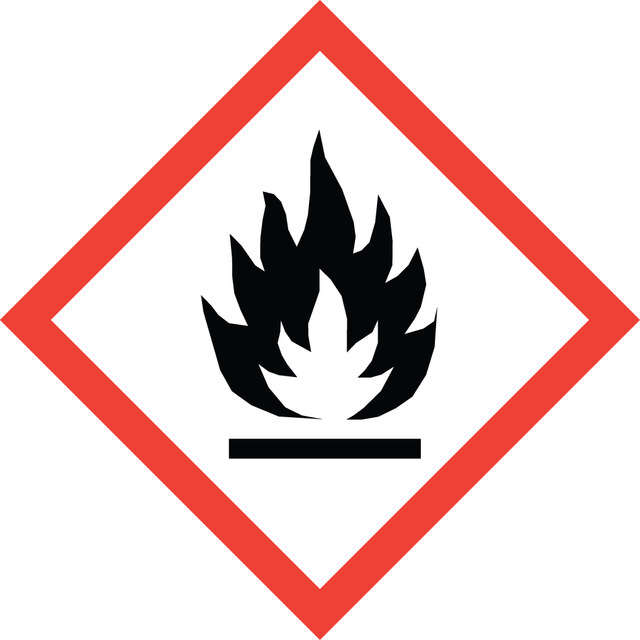

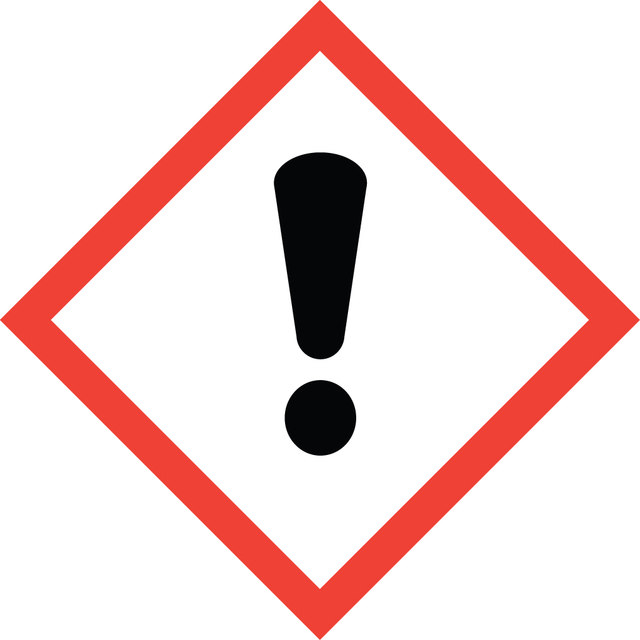
pictograms

FlameExclamation mark

signalword

Warning

Hazard Classifications

Eye Irrit. 2 - Flam. Liq. 3 - STOT SE 3

target_organs

Central nervous system, Respiratory system

Storage Class

3 - Flammable liquids

wgk

WGK 1

flash_point_f

80.6 °F - closed cup

flash_point_c

27 °C - closed cup

Regulatory Information

危险化学品

This item has


Certificates of Analysis (COA)

Search for Certificates of Analysis (COA) by entering the products Lot/Batch Number. Lot and Batch Numbers can be found on a product’s label following the words ‘Lot’ or ‘Batch’.

Already Own This Product?

Find documentation for the products that you have recently purchased in the Document Library.

Visit the Document Library


Gas chromatography method for the determination of non-ethanol volatile compounds in herbal formulation
Manwar J, et al.
International journal of analytical and bioanalytical chemistry, 1(3), 12-17 (2013)
Seon-Mi Seo et al.
Pesticide biochemistry and physiology, 113, 55-61 (2014-07-24)
This study investigated the fumigant toxicity of 4 Asteraceae plant essential oils and their constituents against the Japanese termite Reticulitermes speratus Kolbe. Fumigant toxicity varied with plant essential oils or constituents, exposure time, and concentration. Among the tested essential oils
Faiyaz Shakeel et al.
Food chemistry, 180, 244-248 (2015-03-15)
The solubility of vanillin in ten different environmentally benign solvents namely water, ethanol, ethylene glycol (EG), ethyl acetate (EA), isopropanol (IPA), propylene glycol (PG), polyethylene glycol-400 (PEG-400), Transcutol, butanol-1 and butanol-2 was measured and correlated at T=(298-318)K. The resulting experimental


Global Trade Item Number

SKUGTIN
PHR1563-3X1.2ML04061837884207