Skip to Content
Merck
CN

V0100000

Verapamil hydrochloride

European Pharmacopoeia (EP) Reference Standard

Synonym(s):

(±)-Verapamil hydrochloride, 5-[N-(3,4-Dimethoxyphenylethyl)methylamino]-2-(3,4-dimethoxyphenyl)-2-isopropylvaleronitrile hydrochloride

Sign In to View Organizational & Contract Pricing.

Select a Size

Change View

About This Item

Linear Formula:
(CH3O)2C6H3CH2CH2N(CH3)(CH2)3C[C6H3(OCH3)2][CH(CH3)2]CN · HCl
CAS Number:
Molecular Weight:
491.06
UNSPSC Code:
41116107
NACRES:
NA.24
PubChem Substance ID:
MDL number:
Beilstein/REAXYS Number:
3647093
Technical Service
Need help? Our team of experienced scientists is here for you.
Let Us Assist


grade

pharmaceutical primary standard

agency

EP Reference Standard

API family

verapamil

manufacturer/tradename

EDQM

mp

142 °C (dec.) (lit.)

application(s)

pharmaceutical (small molecule)

format

neat

storage temp.

2-8°C

SMILES string

Cl.COc1ccc(CCN(C)CCCC(C#N)(C(C)C)c2ccc(OC)c(OC)c2)cc1OC

InChI

1S/C27H38N2O4.ClH/c1-20(2)27(19-28,22-10-12-24(31-5)26(18-22)33-7)14-8-15-29(3)16-13-21-9-11-23(30-4)25(17-21)32-6;/h9-12,17-18,20H,8,13-16H2,1-7H3;1H

InChI key

DOQPXTMNIUCOSY-UHFFFAOYSA-N

Gene Information

General description

This product is provided as delivered and specified by the issuing Pharmacopoeia. All information provided in support of this product, including SDS and any product information leaflets have been developed and issued under the Authority of the Issuing Pharmacopoeia. For further information and support please go to the website of the issuing Pharmacopoeia.

Application

Verapamil hydrochloride EP Reference standard, intended for use in laboratory tests only as specifically prescribed in the European Pharmacopoeia.

Biochem/physiol Actions

α1-adrenoceptor antagonist; L-type calcium channel blocker.
α1-adrenoceptor antagonist; L-type calcium channel blocker. Blocks L-type Ca2+ channels in smooth and cardiac muscle, induces apoptosis of human primary and metastatic colon adenocarcinoma cells in vitro. Drug resistance reversal agent acting on Pgp, e.g. decrease renal tubule elimination of digoxin. Increases basal ATPase activity of Pgp. Substrate of Cyp3A4 and CYP2C6.

Packaging

The product is delivered as supplied by the issuing Pharmacopoeia. For the current unit quantity, please visit the EDQM reference substance catalogue.

Other Notes

Sales restrictions may apply.


Still not finding the right product?

Explore all of our products under Verapamil hydrochloride
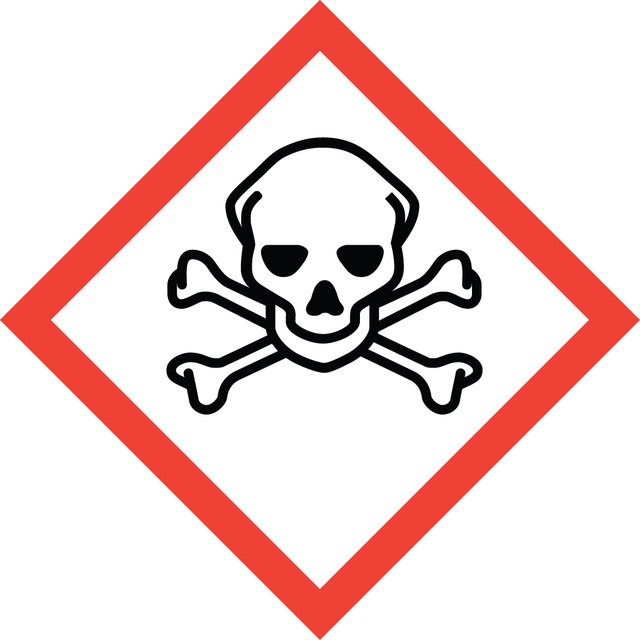

pictograms

Skull and crossbonesEnvironment

signalword

Danger

hcodes

Hazard Classifications

Acute Tox. 3 Oral - Aquatic Chronic 2

Storage Class

6.1C - Combustible acute toxic Cat.3 / toxic compounds or compounds which causing chronic effects

wgk

WGK 3

flash_point_f

Not applicable

flash_point_c

Not applicable


Choose from one of the most recent versions:

Certificates of Analysis (COA)

Lot/Batch Number

It looks like we've run into a problem, but you can still download Certificates of Analysis from our Documents section.

If you need assistance, please contact Customer Support

Already Own This Product?

Find documentation for the products that you have recently purchased in the Document Library.

Visit the Document Library


Protocols

LC/MS/MS Analysis of Interacting Cardiac Drugs Digoxin, Quinidine, Amiodarone and Verapamil on Titan™ C18


Maria Feldmann et al.
The Lancet. Neurology, 12(8), 777-785 (2013-06-22)
Studies in rodent models of epilepsy suggest that multidrug efflux transporters at the blood-brain barrier, such as P-glycoprotein, might contribute to pharmacoresistance by reducing target-site concentrations of antiepileptic drugs. We assessed P-glycoprotein activity in vivo in patients with temporal lobe
Jian-Min Shen et al.
Pharmacological research, 70(1), 102-115 (2013-02-05)
In this paper we give a method of integrated treatment for cancer and drug-induced complications in the process of cancer therapy through dual-drug delivery system (DDDS). Two hydrophilic drugs, doxorubicin (an antitumor drug) and verapamil (an antiangiocardiopathy drug) combined preliminarily
Ping Liang et al.
Circulation, 127(16), 1677-1691 (2013-03-23)
Cardiotoxicity is a leading cause for drug attrition during pharmaceutical development and has resulted in numerous preventable patient deaths. Incidents of adverse cardiac drug reactions are more common in patients with preexisting heart disease than the general population. Here we


Global Trade Item Number

SKUGTIN
V010000004061837428845