Skip to Content
Merck
CN

179957

Methanol

≥99.6%, Laboratory Reagent grade

Synonym(s):

Methyl alcohol

Sign In to View Organizational & Contract Pricing.

Select a Size

Change View

About This Item

Linear Formula:
CH3OH
CAS Number:
Molecular Weight:
32.04
NACRES:
NA.05
PubChem Substance ID:
eCl@ss:
39020101
UNSPSC Code:
12352104
EC Number:
200-659-6
MDL number:
Beilstein/REAXYS Number:
1098229
Assay:
≥99.6%
Grade:
Laboratory Reagent
Bp:
64.7 °C (lit.)
Vapor pressure:
410 mmHg ( 50 °C), 97.68 mmHg ( 20 °C)
Technical Service
Need help? Our team of experienced scientists is here for you.
Let Us Assist


Product Name

Methanol, Laboratory Reagent, ≥99.6%

grade

Laboratory Reagent

Quality Level

vapor density

1.11 (vs air)

vapor pressure

410 mmHg ( 50 °C), 97.68 mmHg ( 20 °C)

assay

≥99.6%

form

liquid

autoignition temp.

725 °F

expl. lim.

36 %

dilution

(for analytical testing)

impurities

≤0.01% alkalinity (as NH3), ≤0.03% acidity (as HCOOH), ≤0.1% water

evapn. residue

≤0.01%

refractive index

n20/D 1.329 (lit.)

bp

64.7 °C (lit.)

mp

−98 °C (lit.)

density

0.791 g/mL at 25 °C (lit.)

format

neat

storage temp.

room temp

SMILES string

CO

InChI

1S/CH4O/c1-2/h2H,1H3

InChI key

OKKJLVBELUTLKV-UHFFFAOYSA-N

General description

Methanol is an industrially important alcohol. Its thermochemical conversion to C2-C10 hydrocarbons in the presence of shape-selective zeolites has been reported. Its oxidation on Ru-Pt catalyst system by ruthenium ad-atoms has been proposed. It participates in the purification step during the synthesis of pyocyanin, a toxic compound found in Pseudomonas aeruginosa.
Methanol is an organic solvent that can be synthesized from syngas in the presence of CuO/ZnO/Al2O3 catalysts. It is an ideal candidate as a hydrogen source in fuel cell technology due to its high H/C ratio, low propensity for soot generation, relatively low reforming temperature and as it exists in liquid state at room temperature. In a direct methanol fuel cell (DMFC), methanol undergoes oxidation with air to generate electricity. The olefins (ethylene or propylene) formed from methanol via MTO (methanol-to-olefins) process, can be an alternative to oil and gas to produce hydrocarbon fuels.

Application

Methanol may be used to compose the binary mixtures with acetonitrile in a study. Experimental evaluation of the values of dielectric constant and dielectric loss of these binary mixtures at microwave frequencies at 300°C has been reported.


Still not finding the right product?

Explore all of our products under Methanol

signalword

Danger

Hazard Classifications

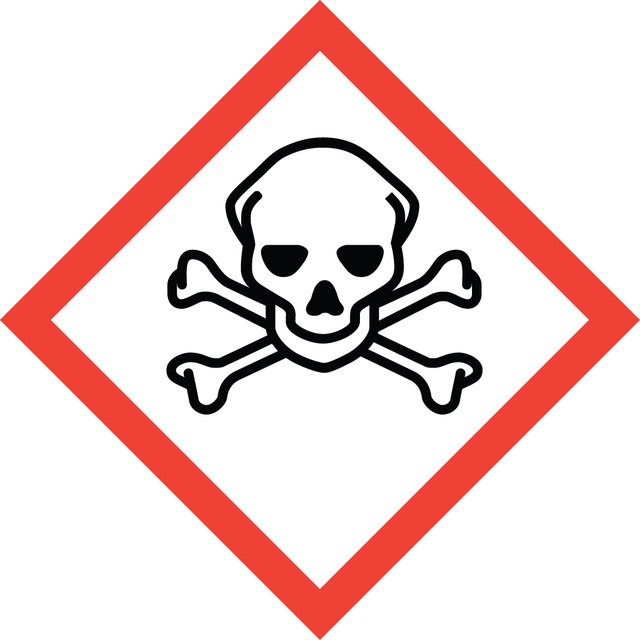
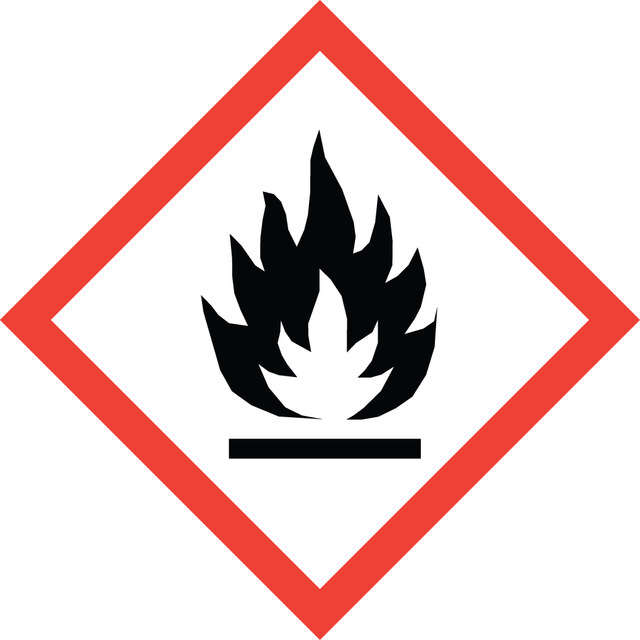
Acute Tox. 3 Dermal - Acute Tox. 3 Inhalation - Acute Tox. 3 Oral - Flam. Liq. 2 - STOT SE 1

target_organs

Eyes,Central nervous system

Storage Class

3 - Flammable liquids

wgk

WGK 2

flash_point_f

49.5 °F - closed cup

flash_point_c

9.7 °C - closed cup

Regulatory Information

危险化学品

This item has


Choose from one of the most recent versions:

Certificates of Analysis (COA)

Lot/Batch Number

Don't see the Right Version?

If you require a particular version, you can look up a specific certificate by the Lot or Batch number.

Already Own This Product?

Find documentation for the products that you have recently purchased in the Document Library.

Visit the Document Library


Standardized chemical synthesis of Pseudomonas aeruginosa pyocyanin.
Cheluvappa R.
Gastroenterologia y hepatologia, 22, 1350-1351 (2007)
Dielectric behavior of acetonitrile+ methanol binary mixtures at microwave frequency.
Jogdand AP and Kadam PL.
IOSR Journal of Applied Physics, 2278-4861 (2014)
Beyond oil and gas: the methanol economy.
Olah GA.
Angewandte Chemie (International Edition in English), 44(18), 2636-2639 (2005)


Global Trade Item Number

SKUGTIN
179957-18L-CS04061837713538
179957-4L04061838754561
179957-5L04061837224133
179957-1L04061838754554
179957-4X4L04061837224126