
319953

Benzene
ACS reagent, ≥99.0%
Sign In to View Organizational & Contract Pricing.
Select a Size
Change View
About This Item
Empirical Formula (Hill Notation):
C6H6
CAS Number:
Molecular Weight:
78.11
UNSPSC Code:
12352002
NACRES:
NA.21
PubChem Substance ID:
EC Number:
200-753-7
Beilstein/REAXYS Number:
969212
MDL number:
Assay:
≥99.0%
Grade:
ACS reagent
Vapor pressure:
166 mmHg ( 37.7 °C), 74.6 mmHg ( 20 °C)
grade
ACS reagent
Quality Level
vapor density
2.77 (vs air)
vapor pressure
166 mmHg ( 37.7 °C), 74.6 mmHg ( 20 °C)
assay
≥99.0%
form
liquid
autoignition temp.
1043 °F
expl. lim.
8 %
dilution
(for analytical testing)
impurities
H2SO4, passes test (darkened), thiophene, passes test (limit ∼1ppm), ≤0.005% S compounds, ≤0.05% water (Karl Fischer)
evapn. residue
≤0.001%
color
APHA: ≤10
mp
5.5 °C (lit.)
density
0.874 g/mL at 25 °C (lit.)
SMILES string
c1ccccc1
InChI
1S/C6H6/c1-2-4-6-5-3-1/h1-6H
InChI key
UHOVQNZJYSORNB-UHFFFAOYSA-N
General description
Benzene is a monocyclic aromatic compound used as a solvent in chemical reactions. It is an essential raw material for fuels, rubber and plastics products, detergents, pesticides, and pharmaceuticals.
Our premium ACS solvents are ideal for routine chemical synthesis, drying, purification, and critical labware cleaning. They meet or exceed the rigorous standards of the American Chemical Society (ACS), ensuring high-quality results for your research needs.
Premium ACS Solvents: Our solvents meet or exceed the stringent standards set by the American Chemical Society, ensuring high quality and reliability for your laboratory applications.
Replicable and Publishable Results: Designed for consistency, our solvents deliver results that can be reliably reproduced, making them ideal for research that requires publication.
Versatile Applications: Suitable for routine chemical synthesis, drying, purification, and critical labware cleaning, our solvents cater to a wide range of research needs in the laboratory.
Premium ACS Solvents: Our solvents meet or exceed the stringent standards set by the American Chemical Society, ensuring high quality and reliability for your laboratory applications.
Replicable and Publishable Results: Designed for consistency, our solvents deliver results that can be reliably reproduced, making them ideal for research that requires publication.
Versatile Applications: Suitable for routine chemical synthesis, drying, purification, and critical labware cleaning, our solvents cater to a wide range of research needs in the laboratory.
Application
Benzene can be used as a solvent in the:
- Heck Reaction of vinyl bromides with styrenes to synthesize functionalized 1,3-dienes.
- Gallium-catalyzed reductive lactonization of γ-keto acids to γ-lactone derivatives.
- Anionic polymerization of styrene and 1,3-butadiene in the presence of phosphazene as a base.
Still not finding the right product?
Explore all of our products under Benzene


signalword
Danger
Hazard Classifications
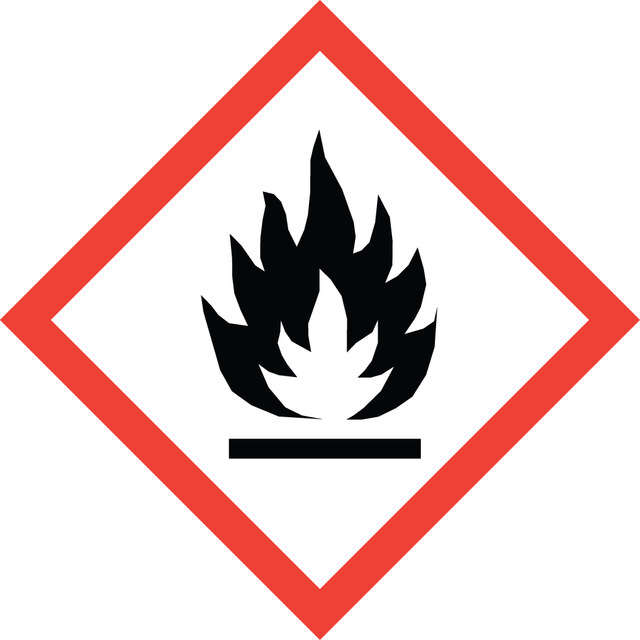
Aquatic Chronic 3 - Asp. Tox. 1 - Carc. 1A - Eye Irrit. 2 - Flam. Liq. 2 - Muta. 1B - Skin Irrit. 2 - STOT RE 1
target_organs
Blood
Storage Class
3 - Flammable liquids
flash_point_f
12.2 °F
flash_point_c
-11 °C
Regulatory Information
危险化学品
This item has
Choose from one of the most recent versions:
Already Own This Product?
Find documentation for the products that you have recently purchased in the Document Library.
Cliona M McHale et al.
Carcinogenesis, 33(2), 240-252 (2011-12-15)
Benzene causes acute myeloid leukemia and probably other hematological malignancies. As benzene also causes hematotoxicity even in workers exposed to levels below the US permissible occupational exposure limit of 1 part per million, further assessment of the health risks associated
Paula Mayorga Burrezo et al.
Journal of the American Chemical Society, 137(11), 3834-3843 (2015-03-03)
We have used Raman spectroscopy to study the molecular and electronic structures of the radical cations and dications of carbon-bridged oligo(para-phenylenevinylene)s (COPVn, n = 1-6) possessing consecutive fused pentagons and hexagons, up to 19, along with COPV derivatives having electron-donating
Deborah C Glass et al.
Occupational and environmental medicine, 71(4), 266-274 (2014-02-18)
Benzene exposure has been associated with increased risk of leukaemia and myelodysplastic syndrome. Existing studies are sparse for other lymphohaematopoietic cancer subtypes, such as myeloproliferative disease (MPD) and the related chronic myeloid leukaemia (CML). We pooled data from three petroleum
Global Trade Item Number
| SKU | GTIN |
|---|---|
| 319953-2.5L | 04061826695135 |
| 319953-4L | 04061826695142 |
| 319953-1L | 04061826695104 |
| 319953-500ML | 04061826695159 |