Skip to Content
Merck
CN

33538

1-Propanol

puriss. p.a., reag. Ph. Eur., ≥99.5% (GC)

Synonym(s):

Propyl alcohol

Sign In to View Organizational & Contract Pricing.

Select a Size

Change View

About This Item

Linear Formula:
CH3CH2CH2OH
CAS Number:
Molecular Weight:
60.10
EC Number:
200-746-9
UNSPSC Code:
12352001
PubChem Substance ID:
Beilstein/REAXYS Number:
1098242
MDL number:
Assay:
≥99.5% (GC)
Technique(s):
GC/GC: suitable
Bp:
97 °C (lit.)
Vapor pressure:
10 mmHg ( 147 °C), 14.9 mmHg ( 20 °C)
Technical Service
Need help? Our team of experienced scientists is here for you.
Let Us Assist


agency

USP/NF, reag. Ph. Eur.

vapor density

2.1 (vs air)

vapor pressure

10 mmHg ( 147 °C), 14.9 mmHg ( 20 °C)

grade

puriss. p.a.

assay

≥99.5% (GC)

autoignition temp.

700 °F

expl. lim.

13.7 %

technique(s)

GC/GC: suitable

impurities

≤0.001% free acid (as C2H5COOH), ≤0.001% non-volatile matter, ≤0.01% acetone (GC), ≤0.01% propionaldehyde, ≤0.05% 2-propanol, ≤0.05% ethanol (GC), ≤0.05% methanol (GC), ≤0.05% water (Karl Fischer)

refractive index

n20/D 1.384 (lit.)

bp

97 °C (lit.)

mp

−127 °C (lit.)

density

0.804 g/mL at 25 °C (lit.)

cation traces

Al: ≤0.5 mg/kg, B: ≤0.02 mg/kg, Ba: ≤0.1 mg/kg, Ca: ≤0.5 mg/kg, Cd: ≤0.05 mg/kg, Co: ≤0.02 mg/kg, Cr: ≤0.02 mg/kg, Cu: ≤0.02 mg/kg, Fe: ≤0.1 mg/kg, Mg: ≤0.1 mg/kg, Mn: ≤0.02 mg/kg, Ni: ≤0.02 mg/kg, Pb: ≤0.1 mg/kg, Sn: ≤0.1 mg/kg, Zn: ≤0.1 mg/kg

SMILES string

CCCO

InChI

1S/C3H8O/c1-2-3-4/h4H,2-3H2,1H3

InChI key

BDERNNFJNOPAEC-UHFFFAOYSA-N

General description

1-Propanol is a linear alcohol. It exhibits Debye-type relaxation process which resembles α-relaxation and Johari-Goldstein type β-relaxation features of supercooled liquids (nonhydrogen-bonding type). It has been tested as a solvent for direct methanol/oxygen fuel cells.

Application

1-Propanol has been employed as a solvent for the synthesis of mesoporous alumina.


Still not finding the right product?

Explore all of our products under 1-Propanol
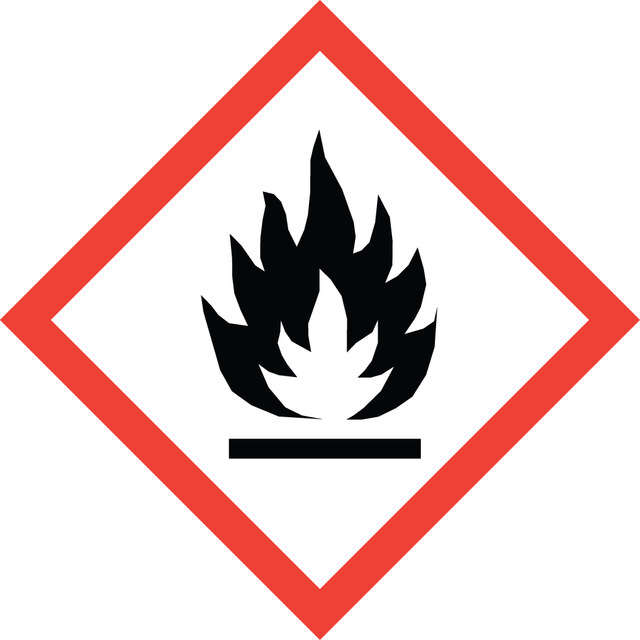

signalword

Danger

Hazard Classifications

Eye Dam. 1 - Flam. Liq. 2 - STOT SE 3

target_organs

Central nervous system

Storage Class

3 - Flammable liquids

wgk

WGK 1

flash_point_f

71.6 °F - closed cup

flash_point_c

22 °C - closed cup

Regulatory Information

新产品

This item has


Choose from one of the most recent versions:

Certificates of Analysis (COA)

Lot/Batch Number

It looks like we've run into a problem, but you can still download Certificates of Analysis from our Documents section.

If you need assistance, please contact Customer Support

Already Own This Product?

Find documentation for the products that you have recently purchased in the Document Library.

Visit the Document Library


Dynamics of glass-forming liquids. III. Comparing the dielectric α-and β-relaxation of 1-propanol and o-terphenyl.
Hansen C, et al.
J. Chem. Phys., 107, 1086-1093 (1997)
Mesoporous alumina (I): comparison of synthesis schemes using anionic, cationic, and non-ionic surfactants.
Ray JC, et al.
Microporous and Mesoporous Materials : The Official Journal of the International Zeolite Association, 100(1), 183-190 (2007)
David Fernandez Rivas et al.
Ultrasonics sonochemistry, 19(6), 1252-1259 (2012-05-23)
Micromachined pits on a substrate can be used to nucleate and stabilize microbubbles in a liquid exposed to an ultrasonic field. Under suitable conditions, the collapse of these bubbles can result in light emission (sonoluminescence, SL). Hydroxyl radicals (OH()) generated