Skip to Content
Merck
CN

33553

Pyridine

puriss. p.a., ACS reagent, reag. Ph. Eur., ≥99.5% (GC)

Sign In to View Organizational & Contract Pricing.

Select a Size

Change View

About This Item

Empirical Formula (Hill Notation):
C5H5N
CAS Number:
Molecular Weight:
79.10
UNSPSC Code:
12352005
NACRES:
NA.21
PubChem Substance ID:
EC Number:
203-809-9
Beilstein/REAXYS Number:
103233
MDL number:
Assay:
≥99.5% (GC)
Grade:
puriss. p.a., ACS reagent
Technique(s):
GC/GC: suitable
Bp:
115 °C (lit.)
Vapor pressure:
10 mmHg ( 13.2 °C), 20 mmHg ( 25 °C)
Technical Service
Need help? Our team of experienced scientists is here for you.
Let Us Assist


grade

puriss. p.a., ACS reagent

Quality Level

agency

reag. Ph. Eur.

vapor density

2.72 (vs air)

vapor pressure

10 mmHg ( 13.2 °C), 20 mmHg ( 25 °C)

assay

≥99.5% (GC)

form

liquid

autoignition temp.

899 °F

expl. lim.

12.4 %

technique(s)

GC/GC: suitable

impurities

≤0.0005% KMnO4 red. matter (as O), ≤0.002% ammonia (NH3), ≤0.002% non-volatile matter, ≤0.01% piperidine (GC), ≤0.1% water (Karl Fischer), ≤0.2% 2-picoline (GC)

refractive index

n20/D 1.509 (lit.)

pH

8.5 (25 °C, 15.82 g/L)

bp

115 °C (lit.)

mp

−42 °C (lit.)

solubility

H2O: in accordance

density

0.978 g/mL at 25 °C (lit.)

anion traces

chloride (Cl-): ≤5 mg/kg, sulfate (SO42-): ≤5 mg/kg

SMILES string

C1=CN=CC=C1

cation traces

Al: ≤0.5 mg/kg, B: ≤0.02 mg/kg, Ba: ≤0.1 mg/kg, Ca: ≤0.5 mg/kg, Cd: ≤0.05 mg/kg, Co: ≤0.02 mg/kg, Cr: ≤0.02 mg/kg, Cu: ≤0.03 mg/kg, Fe: ≤0.1 mg/kg, Mg: ≤0.1 mg/kg, Mn: ≤0.02 mg/kg, Ni: ≤0.02 mg/kg, Pb: ≤0.1 mg/kg, Sn: ≤0.1 mg/kg, Zn: ≤0.1 mg/kg

InChI

1S/C5H5N/c1-2-4-6-5-3-1/h1-5H

InChI key

JUJWROOIHBZHMG-UHFFFAOYSA-N

General description

Pyridine is a basic N-heterocyclic compound. It acts as a nitrogen donor ligand and forms many metal-pyridine complexes. Its complexes having tetrahedral and octahedral geometries can be differentiated by infrared spectral investigations.

Application

Pyridine (py) may be used in the preparation of vanadium oxide nanoparticles and iron benzenedicarboxylates, Fe(OH)(BDC)(py)0.85 (BDC = 1,4-benzenedicarboxylate, py = pyridine). It may be employed as a catalyst in Knoevenagel condensation reaction.


Still not finding the right product?

Explore all of our products under Pyridine
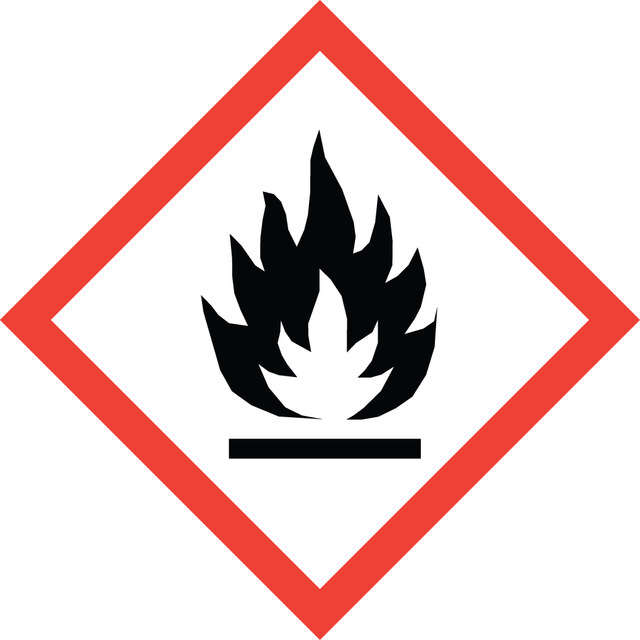

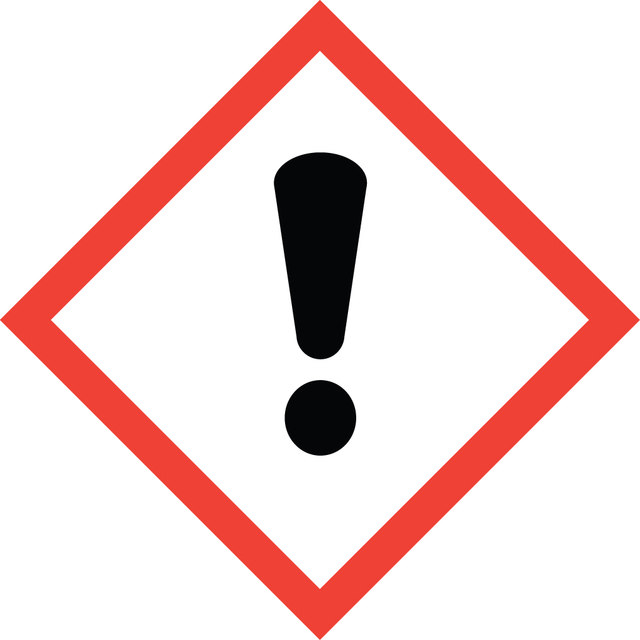
pictograms

FlameExclamation mark

signalword

Danger

Hazard Classifications

Acute Tox. 4 Dermal - Acute Tox. 4 Inhalation - Acute Tox. 4 Oral - Eye Irrit. 2 - Flam. Liq. 2 - Skin Irrit. 2

Storage Class

3 - Flammable liquids

wgk

WGK 2

flash_point_f

68.0 °F - closed cup

flash_point_c

20 °C - closed cup

Regulatory Information

危险化学品

This item has


Choose from one of the most recent versions:

Certificates of Analysis (COA)

Lot/Batch Number

Don't see the Right Version?

If you require a particular version, you can look up a specific certificate by the Lot or Batch number.

Already Own This Product?

Find documentation for the products that you have recently purchased in the Document Library.

Visit the Document Library


The far-infrared spectra of metal-halide complexes of pyridine and related ligands.
Clark RJH and Williams CS.
Inorganic Chemistry, 4(3), 350-357 (1965)
Metal-organic frameworks based on iron oxide octahedral chains connected by benzenedicarboxylate dianions.
Whitfield TR, et al.
Solid State Sciences, 7(9), 1096-1103 (2005)
An investigation of Knoevenagel condensation reaction in microreactors using a new zeolite catalyst.
Zhang X, et al.
Applied Catalysis A: General, 261(1), 109-118 (2004)


Global Trade Item Number

SKUGTIN
33553-500ML04061826739976
33553-1L04061826739914