Skip to Content
Merck
CN

34852

Ethyl alcohol, pure

greener alternative

≥99.8%, suitable for HPLC, absolute

Synonym(s):

Ethyl alcohol

Sign In to View Organizational & Contract Pricing.

Select a Size

Change View

About This Item

Linear Formula:
CH3CH2OH
CAS Number:
Molecular Weight:
46.07
NACRES:
NA.05
PubChem Substance ID:
UNSPSC Code:
41116105
EC Number:
200-578-6
MDL number:
Beilstein/REAXYS Number:
1718733
Assay:
≥99.8%
Technique(s):
HPLC: suitable
Bp:
78 °C (lit.)
Vapor pressure:
44.6 mmHg ( 20 °C)
Technical Service
Need help? Our team of experienced scientists is here for you.
Let Us Assist


Product Name

Ethanol, absolute, suitable for HPLC, ≥99.8%

vapor density

1.59 (vs air)

Quality Level

vapor pressure

44.6 mmHg ( 20 °C)

grade

absolute

assay

≥99.8%

form

liquid

autoignition temp.

683 °F

expl. lim.

19 %, 60 °F

greener alternative product characteristics

Safer Solvents and Auxiliaries
Learn more about the Principles of Green Chemistry.

technique(s)

HPLC: suitable

impurities

≤0.001% free acid (as CH3COOH), ≤0.001% non-volatile matter, ≤0.2% water (Karl Fischer), ≤1 ppb fluorescence (quinine) at 254 nm, ≤1 ppb fluorescence (quinine) at 365 nm

transmittance

210 nm, ≥20%, 225 nm, ≥50%, 240 nm, ≥80%, 260 nm, ≥98%

refractive index

n20/D 1.3600 (lit.)

bp

78 °C (lit.)

mp

−114 °C (lit.)

format

neat

greener alternative category

SMILES string

CCO

InChI

1S/C2H6O/c1-2-3/h3H,2H2,1H3

InChI key

LFQSCWFLJHTTHZ-UHFFFAOYSA-N

General description

We are committed to bringing you Greener Alternative Products, which adhere to one of the  four categories of Greener Alternatives. This product is a Biobased products, showing key improvements in Green Chemistry Principles “Less Hazardous Chemical Syntheses” and “Use of Renewable Feedstock”.

Other Notes

1Distribution and use of ethyl alcohol in Switzerland require a license from the Swiss Federal Alcohol Administration

Disclaimer

Pertains only in Germany: Nicht zu Fertigungszwecken1


Still not finding the right product?

Explore all of our products under Ethanol
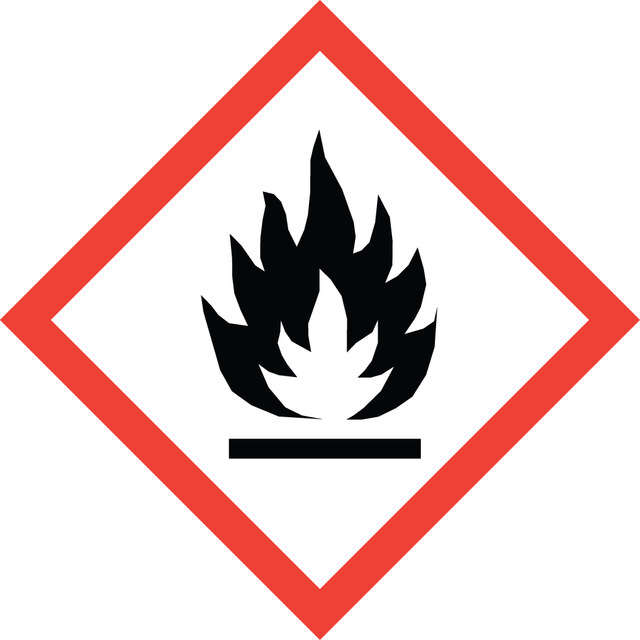

pictograms

FlameExclamation mark

signalword

Danger

hcodes

Hazard Classifications

Eye Irrit. 2 - Flam. Liq. 2

Storage Class

3 - Flammable liquids

wgk

WGK 1

flash_point_f

55.4 °F - closed cup

flash_point_c

13 °C - closed cup

Regulatory Information

新产品

This item has


Choose from one of the most recent versions:

Certificates of Analysis (COA)

Lot/Batch Number

It looks like we've run into a problem, but you can still download Certificates of Analysis from our Documents section.

If you need assistance, please contact Customer Support

Already Own This Product?

Find documentation for the products that you have recently purchased in the Document Library.

Visit the Document Library


Gian Marco Leggio et al.
Neuropsychopharmacology : official publication of the American College of Neuropsychopharmacology, 39(8), 2017-2028 (2014-03-04)
Mesolimbic dopamine (DA) controls drug- and alcohol-seeking behavior, but the role of specific DA receptor subtypes is unclear. We tested the hypothesis that D3R gene deletion or the D3R pharmacological blockade inhibits ethanol preference in mice. D3R-deficient mice (D3R(-/-)) and
Cecilia E Hanzel et al.
Neurobiology of aging, 35(10), 2249-2262 (2014-05-17)
Chronic brain inflammation is associated with Alzheimer's disease (AD) and is classically attributed to amyloid plaque deposition. However, whether the amyloid pathology can trigger early inflammatory processes before plaque deposition remains a matter of debate. To address the possibility that
N Di Girolamo et al.
Stem cells (Dayton, Ohio), 33(1), 157-169 (2014-06-27)
Stem cell (SC) division, deployment, and differentiation are processes that contribute to corneal epithelial renewal. Until now studying the destiny of these cells in a living mammal has not been possible. However, the advent of inducible multicolor genetic tagging and


Global Trade Item Number

SKUGTIN
34852S-200L04061837285868