
34866

Toluene
suitable for HPLC, 99.9%
Select a Size
About This Item
grade
HPLC grade
Quality Level
agency
suitable for EPA 1613
vapor density
3.2 (vs air)
vapor pressure
22 mmHg ( 20 °C), 26 mmHg ( 25 °C)
assay
99.9%
form
liquid
autoignition temp.
997 °F
expl. lim.
7 %
technique(s)
HPLC: suitable, UV/Vis spectroscopy: suitable
impurities
≤0.0005% non-volatile matter, ≤0.0005% thiophene, ≤0.001% free acid (as HCl), ≤0.02% water (Karl Fischer)
refractive index
n/D 1.496 (lit.)
bp
110-111 °C (lit.)
mp
-93 °C (lit.)
density
0.865 g/mL at 25 °C (lit.)
UV absorption
λ: 286 nm Amax: ≤1.00, λ: 288 nm Amax: ≤0.50, λ: 293 nm Amax: ≤0.20, λ: 300 nm Amax: ≤0.10, λ: 310 nm Amax: ≤0.05, λ: 335 nm Amax: ≤0.02, λ: 350 nm Amax: ≤0.004
application(s)
food and beverages
SMILES string
Cc1ccccc1
InChI
1S/C7H8/c1-7-5-3-2-4-6-7/h2-6H,1H3
InChI key
YXFVVABEGXRONW-UHFFFAOYSA-N
General description
Application
Packaging
As a global leader in lab reagents, we are constantly looking for new ways to optimize the safety of our products. The newly developed 4L solvent bottle design features advanced sealing technology that eliminates leaks to make the handling of solvents safer and more convenient than ever before.
See all the new features here!
Other Notes
- The article number 34866-4X2.5L will be discontinued. Please order the single bottle 34866-2.5L which is physically identical with the same exact specifications.
- The article number 34866-6X1L will be discontinued. Please order the single bottle 34866-1L which is physically identical with the same exact specifications.
Still not finding the right product?
Explore all of our products under Toluene
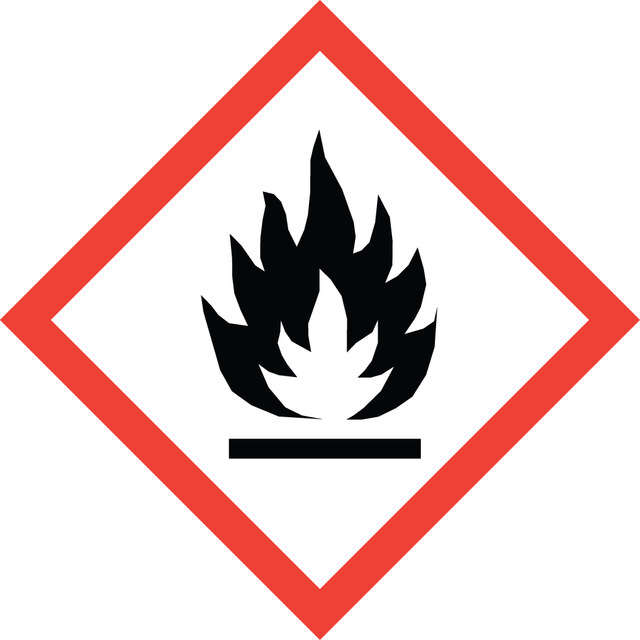
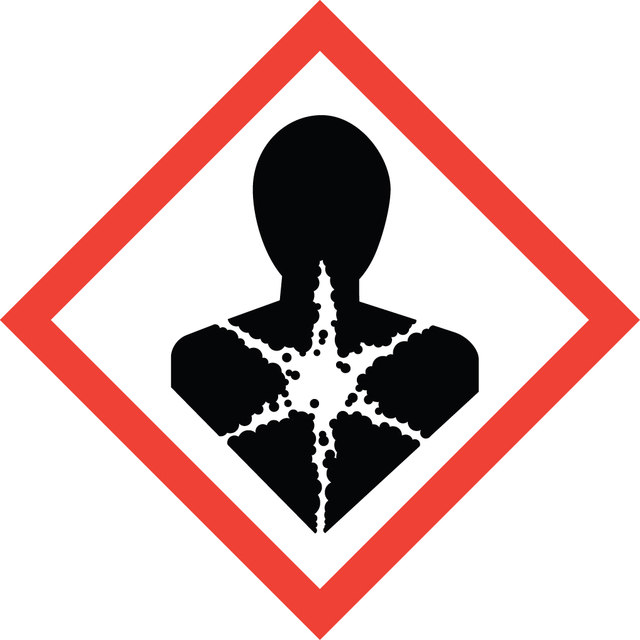

signalword
Danger
Hazard Classifications
Aquatic Chronic 3 - Asp. Tox. 1 - Flam. Liq. 2 - Repr. 2 - Skin Irrit. 2 - STOT RE 2 Inhalation - STOT SE 3
target_organs
Central nervous system
Storage Class
3 - Flammable liquids
wgk
WGK 3
flash_point_f
39.9 °F - closed cup
flash_point_c
4.4 °C - closed cup
Regulatory Information
This item has
Choose from one of the most recent versions:
Already Own This Product?
Find documentation for the products that you have recently purchased in the Document Library.
Articles
A shortened review of fundamentals of Porous Graphitic Carbon (PGC) materials. What they are and how do they work as a stationary phase material in HPLC?.
Nonylphenols (NP) are ubiquitous substances that have been detected in highly diverse foodstuff. As breakdown products of nonylphenol ethoxylates, NP could end up in the aquatic environment. This article presents a rapid method for NP detection in surface water by planar solid phase extraction – planar yeast estrogen screen (pSPE-pYES).
Related Content
This page is intended to make it easier to find the consumables you need based on the analytical method you’re using. Methods included on this page come from the EPA, Standard Methods and ASTM.
Global Trade Item Number
| SKU | GTIN |
|---|---|
| 34866-10L | 04061837477423 |
| 34866-200L-P1-LS | 04061837286728 |
| 34866-200L-RC | 04061837286735 |
| 34866-20L | 04061837477454 |
| 34866-4L | 04061837286742 |
| 34866-4X2.5L | 04061837477478 |
| 34866-4X2L | 04061837477485 |
| 34866-100ML | 04061837477416 |
| 34866-1L | 04061837477430 |
| 34866-2.5L | 04061837477447 |
| 34866-2L | 04061837477461 |
| 34866-4X4L | 04061826764374 |
| 34866-6X1L | 04061837477492 |
| 34866JP-6X1L | 04061837286773 |