Skip to Content
Merck
CN

34867

1-Butanol

suitable for HPLC, ≥99.7%

Synonym(s):

n-Butanol, Butyl alcohol

Sign In to View Organizational & Contract Pricing.

Select a Size

Change View

About This Item

Linear Formula:
CH3(CH2)3OH
CAS Number:
Molecular Weight:
74.12
UNSPSC Code:
41116105
NACRES:
NA.21
PubChem Substance ID:
EC Number:
200-751-6
Beilstein/REAXYS Number:
969148
MDL number:
Assay:
≥99.7%
Grade:
HPLC grade
Technique(s):
HPLC: suitable, UV/Vis spectroscopy: suitable
Bp:
116-118 °C (lit.)
Vapor pressure:
5.5 mmHg
Technical Service
Need help? Our team of experienced scientists is here for you.
Let Us Assist


grade

HPLC grade

vapor density

2.55 (vs air)

vapor pressure

5.5 mmHg

assay

≥99.7%

form

liquid

autoignition temp.

649 °F

expl. lim.

11.2 %

technique(s)

HPLC: suitable, UV/Vis spectroscopy: suitable

impurities

≤0.001% non-volatile matter, ≤0.002% free acid (as C3H7COOH), ≤0.1% water (Karl Fischer)

transmittance

210 nm, ≥20%, 235 nm, ≥80%, 280 nm, ≥98%

refractive index

n20/D 1.399 (lit.)

pH

7 (20 °C, 70 g/L)

bp

116-118 °C (lit.)

mp

−90 °C (lit.)

density

0.81 g/mL at 25 °C (lit.)

application(s)

food and beverages

SMILES string

CCCCO

InChI

1S/C4H10O/c1-2-3-4-5/h5H,2-4H2,1H3

InChI key

LRHPLDYGYMQRHN-UHFFFAOYSA-N

General description

1-Butanol is a linear alcohol. Its biosynthesis from glucose using a bioengineered Escherichia coli strain has been reported. Its reaction with diisocyanates in the presence of triethylamine (catalyst) has been investigated by volumetric method. Kinetic studies suggest that the reaction proceeds via competitive consecutive second order. Its dehydration reaction has been employed as a standard reaction to evaluate the acidic and basic characteristics of various silica-aluminas.

Application

1-Butanol may be used for the solid acid (an acidic salt of H3PW12O40, Cs2.5H0.5PW12O40) catalyzed esterification of acrylic acid. It may be used as a cosolvent to investigate the enantioselective separation of racemic cyclohexyl methylphosphonofluoridate (cyclosarin, GF) by an chiral supercritical fluid chromatographic (SFC) technique.
Suitable for HPLC, spectrophotometry, environmental testing

Packaging

M-Bottle for Solvents
As a global leader in lab reagents, we are constantly looking for new ways to optimize the safety of our products. The newly developed 4L solvent bottle design features advanced sealing technology that eliminates leaks to make the handling of solvents safer and more convenient than ever before.
See all the new features here!

Other Notes

Important notice
The article number 34867-4X2.5L will be discontinued. Please order the single bottle 34867-2.5L which is physically identical with the same exact specifications.
Discover LiChropur reagents ideal for HPLC or LC-MS analysis


Still not finding the right product?

Explore all of our products under 1-Butanol

signalword

Danger

Hazard Classifications

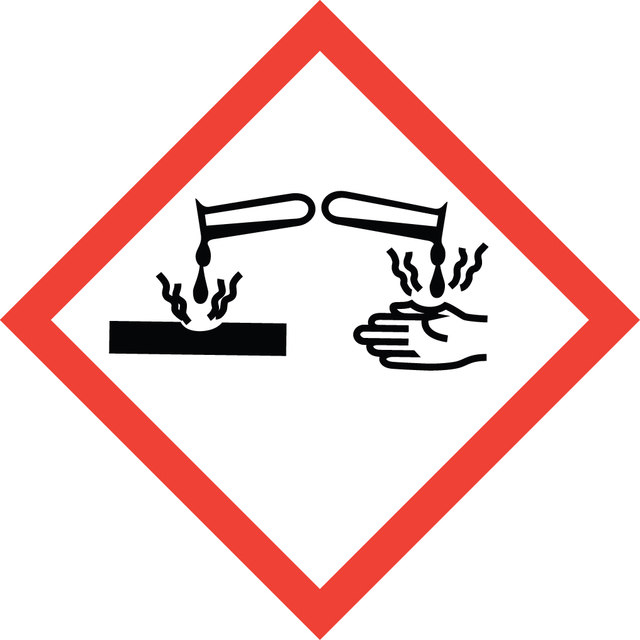
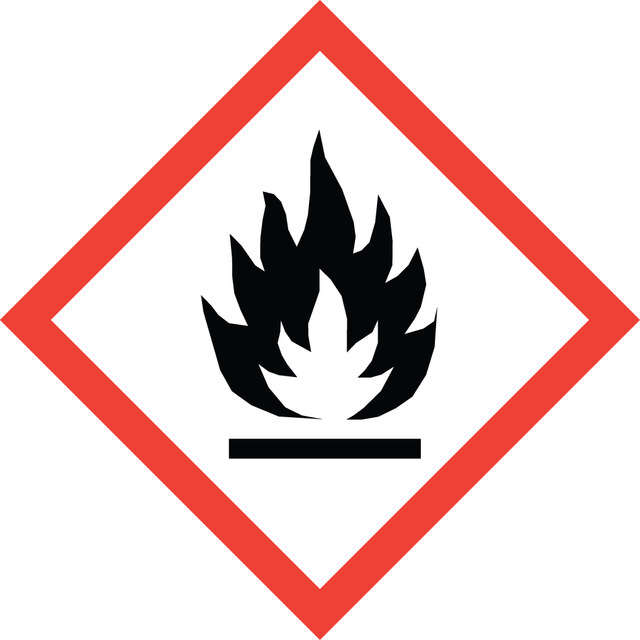
Acute Tox. 4 Oral - Eye Dam. 1 - Flam. Liq. 3 - Skin Irrit. 2 - STOT SE 3

target_organs

Central nervous system, Respiratory system

Storage Class

3 - Flammable liquids

wgk

WGK 1

flash_point_f

95.0 °F - Pensky-Martens closed cup

flash_point_c

35 °C - Pensky-Martens closed cup

Regulatory Information

危险化学品

This item has


Choose from one of the most recent versions:

Certificates of Analysis (COA)

Lot/Batch Number

Don't see the Right Version?

If you require a particular version, you can look up a specific certificate by the Lot or Batch number.

Already Own This Product?

Find documentation for the products that you have recently purchased in the Document Library.

Visit the Document Library


Shane A Kasten et al.
Chirality, 26(12), 817-824 (2014-10-10)
Chemical warfare nerve agents (CWNAs) are extremely toxic organophosphorus compounds that contain a chiral phosphorus center. Undirected synthesis of G-type CWNAs produces stereoisomers of tabun, sarin, soman, and cyclosarin (GA, GB, GD, and GF, respectively). Analytical-scale methods were developed using
Liquid phase esterification of acrylic acid with 1-butanol catalyzed by solid acid catalysts.
Chen X, et al.
Applied Catalysis A: General, 180(!), 261-269 (1999)
Acid-base properties of silica-aluminas: use of 1-butanol dehydration as a test reaction.
Berteau P, et al.
Applied Catalysis, 70(1), 307-323 (1991)


Global Trade Item Number

SKUGTIN
34867-100ML04061837477508
34867-4X2.5L04061826764428
34867-1L04061837477515
34867-2.5L04061826764411
34867-2L04061837477522
34867-4L04061837286797