
360481

1,4-Dioxane
ACS reagent, ≥99.0%, contains ≤25 ppm BHT as stabilizer
Synonym(s):
Diethylene oxide, Dioxane
Select a Size
About This Item
grade
ACS reagent
Quality Level
vapor density
3 (vs air)
vapor pressure
27 mmHg ( 20 °C), 40 mmHg ( 25 °C)
assay
≥99.0%
form
liquid
autoignition temp.
356 °F
contains
≤25 ppm BHT as stabilizer
expl. lim.
22 %
dilution
(for analytical testing)
impurities
≤0.0016 meq/g Titr. acid, ≤0.005% Peroxide (as H2O2), ≤0.01% Carbonyl (as HCHO), ≤0.05% water
evapn. residue
≤0.005%
color
APHA: ≤20
refractive index
n20/D 1.422 (lit.)
pH
6.0-8 (20 °C, 500 g/L)
bp
100-102 °C (lit.)
mp
10-12 °C (lit.)
transition temp
freezing point ≥11.0
density
1.034 g/mL at 25 °C (lit.)
SMILES string
C1COCCO1
InChI
1S/C4H8O2/c1-2-6-4-3-5-1/h1-4H2
InChI key
RYHBNJHYFVUHQT-UHFFFAOYSA-N
General description
Premium ACS Solvents: Our solvents meet or exceed the stringent standards set by the American Chemical Society, ensuring high quality and reliability for your laboratory applications.
Replicable and Publishable Results: Designed for consistency, our solvents deliver results that can be reliably reproduced, making them ideal for research that requires publication.
Versatile Applications: Suitable for routine chemical synthesis, drying, purification, and critical labware cleaning, our solvents cater to a wide range of research needs in the laboratory.
Application
- A solvent in the N-methylation of amines by reductive functionalization of CO2 in the presence of NaBH4 as the reducing reagent.
- An additive to synthesize 3-hydroxylisoindolin-1-ones via hydroxylhydrative aza-cyclization of 2-alkynylbenzamide.
A mixture of 1,4-dioxane/ethanol/formic acid solvent system can be used in the depolymerization of lignin to synthesize value-added phenolic monomers.
Still not finding the right product?
Explore all of our products under 1,4-Dioxane
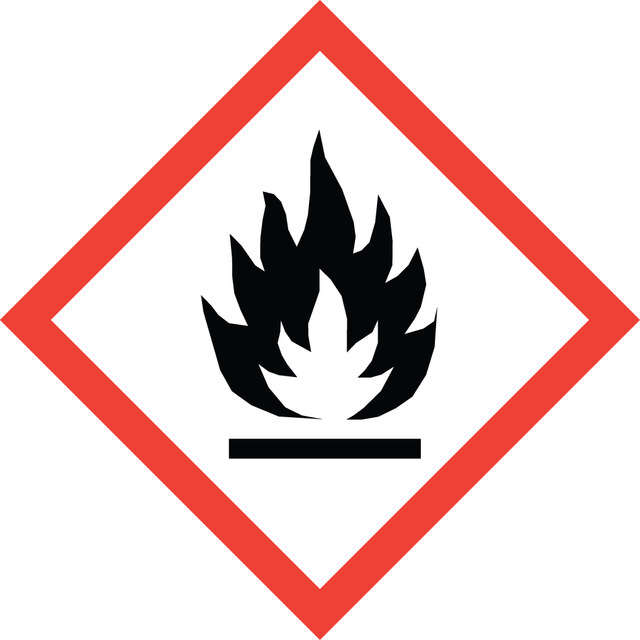


signalword
Danger
hcodes
Hazard Classifications
Carc. 1B - Eye Irrit. 2 - Flam. Liq. 2 - STOT SE 3
target_organs
Respiratory system
supp_hazards
Storage Class
3 - Flammable liquids
wgk
WGK 3
flash_point_f
51.8 °F - closed cup
flash_point_c
11 °C - closed cup
Regulatory Information
This item has
Choose from one of the most recent versions:
Already Own This Product?
Find documentation for the products that you have recently purchased in the Document Library.
Global Trade Item Number
| SKU | GTIN |
|---|---|
| 360481-18L-CS | 04061837911057 |
| 360481-1L | 04061837565991 |
| 360481-4X4L | 04061831818109 |
| 360481-1L-AB | 04065274091365 |
| 360481-4L-AB | 04065274091372 |
| 360481-2L | 04061837566004 |
| 360481-4X2.5L | 04061837566035 |
| 360481-500ML | 04061837566059 |